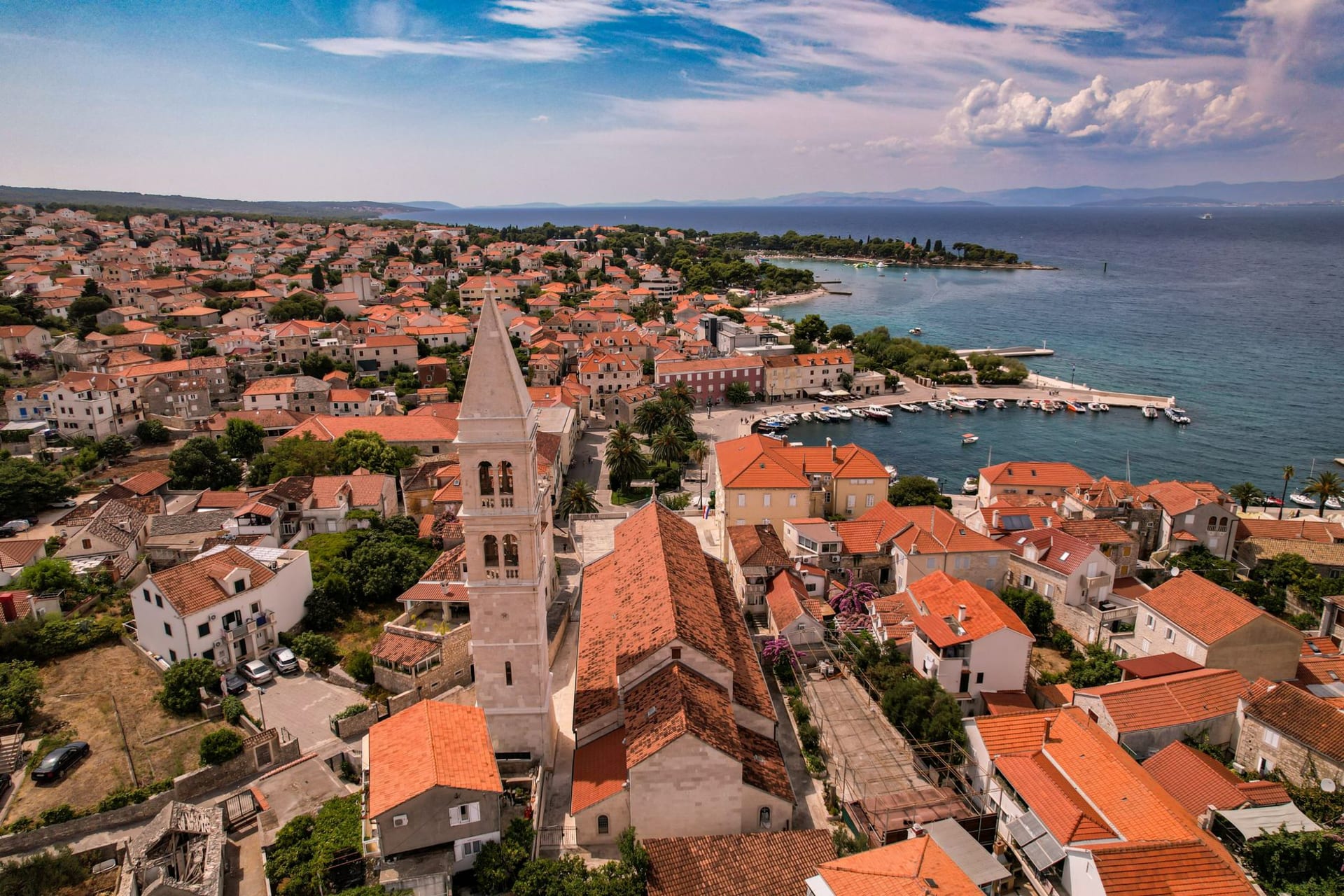
The beach at Zlatni Rat has been photographed so many times from so many angles that arriving at it in person produces the strange sensation of recognizing a place you have never been. The shingle spit extends into the sea at Bol on Brač’s southern coast and shifts slightly with each current change, which means it is never exactly where it was the last time someone photographed it. In the early morning, before the beach fills, it is genuinely magnificent — the white pebbles reflecting the light in a way that makes the water on either side appear even more transparent than it is, the two channels flanking the point a slightly different shade of blue depending on the depth. I swam out from the tip at seven in the morning and looked back at the island rising behind it, green macchia above the limestone cliffs above the beach, and thought: yes, the photographers had a point.

But Brač is not only Zlatni Rat, and most visitors who come for the beach miss the more interesting version of the island. The interior is limestone karst — white rock, sparse vegetation, dry-stone walls dividing abandoned fields — and in the villages of Škrip, Nerežišća, and Pučišća there is a building tradition that has been continuous for two thousand years, because Brač stone is among the finest limestone for construction the Adriatic produces. The same stone quarried here was used for Diocletian’s Palace in Split, and buildings across the eastern Adriatic. The quarrying continues. The stone masonry school in Pučišća is one of the few institutions in Europe that still formally trains stonemasons in traditional methods, and if you visit during the school week you can watch apprentices at work on the same limestone the Romans extracted from the same hills behind the same village.
The town of Bol, beyond the beach, is compact and old enough to have formed opinions about its own history. The Dominican monastery on the point east of Zlatni Rat houses a small museum that includes, among other things, a painting attributed to Tintoretto and a collection of prehistoric finds from the island’s caves. The monks have been there since the 15th century and the building carries that institutional gravity in the weight of its walls, the smell of its garden. It is ten minutes’ walk from the beach and most people never make the detour.

The olive oil of Brač is worth seeking out deliberately. The island’s olive cultivation goes back to Roman times, and some of the trees in the interior groves are old enough that their age becomes a philosophical rather than a botanical question. The oil is grassy and slightly bitter in the way that very fresh, unfiltered olive oil is — not the smooth commodity product most of us have come to accept as normal — and the islanders drizzle it on everything: grilled fish, bread, the dried figs that are another island product worth taking home in quantity.
When to go: June for the beach at Zlatni Rat before summer compression and for long evening swims off the rocks below Bol. September and early October for the olive harvest in the interior and for the particular quietness the island achieves when the Zlatni Rat sunbeds are stacked away for winter. The car ferry from Split runs year-round and takes about an hour; there is also a fast catamaran to Bol in summer.