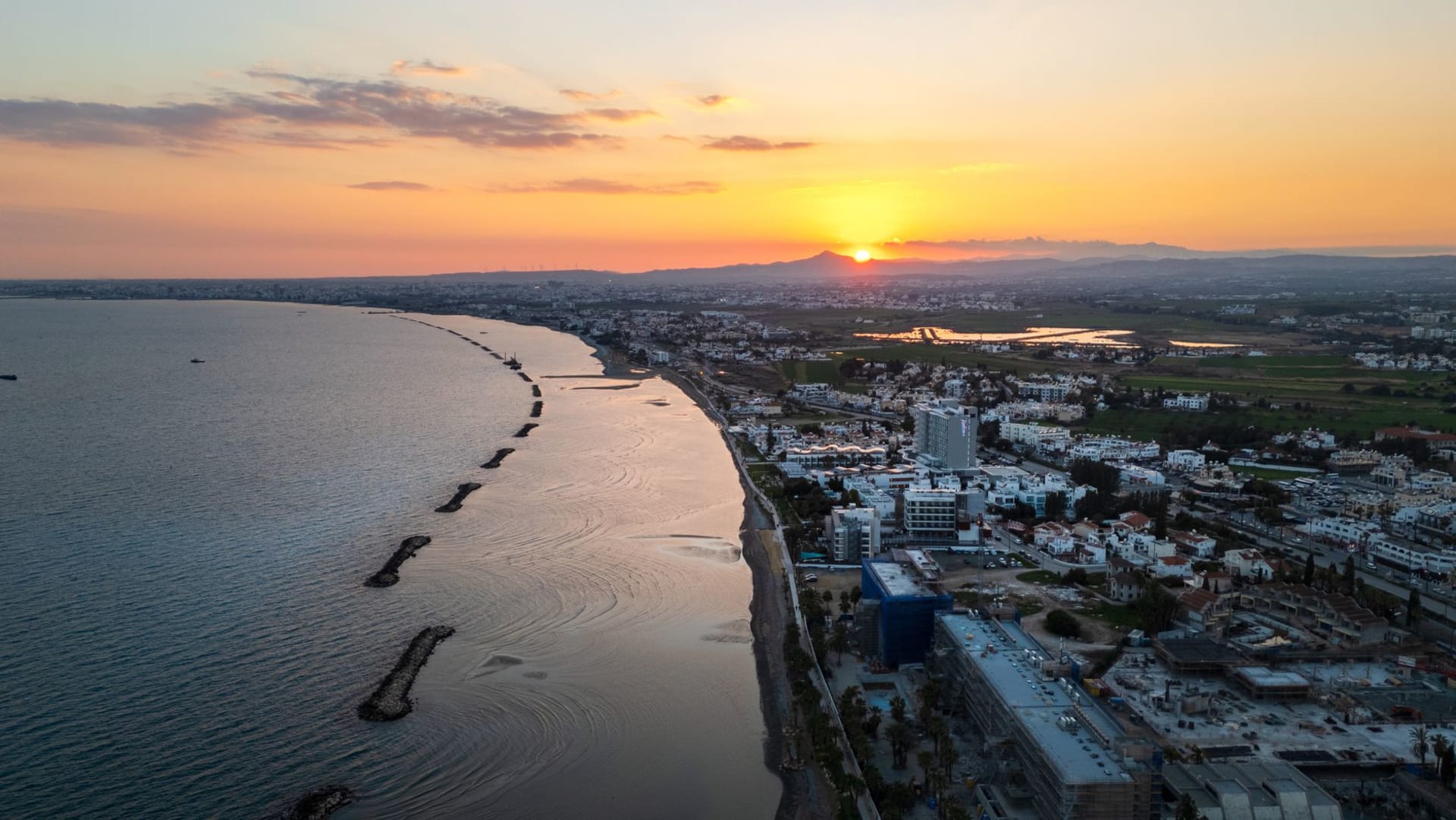
Limassol
"Limassol knows exactly what it is now, which is something most Mediterranean port cities never manage to figure out."
Limassol arrived in my itinerary as a transit point — a place to stay for one night between Larnaca and Paphos, somewhere to sleep without traffic. Then a friend who had spent a month there texted me the name of a restaurant, and one night became three. This happens with Limassol. The city has a way of revealing itself incrementally, each day offering something the previous one had not.
The old town behind the medieval castle is the starting point. The castle — crusader-era, later converted by the Ottomans, built over an earlier Byzantine structure — is compact and well-signed, and the Archaeological Museum inside manages to make Bronze Age pottery feel urgent rather than dutiful through the quality of its curation. But the castle is almost secondary to the neighborhood around it. The old market area, once a warren of chandlers and spice merchants, is now a low-key constellation of independent shops, wine bars, and restaurants in whitewashed buildings that have been treated with enough restraint to feel restored rather than gentrified.

The restaurant my friend recommended was a small place in a courtyard off the main strip, serving modern Cypriot food — dishes that take traditional ingredients and apply something like precision. The lamb kleftiko came slow-cooked in parchment, falling apart, served with a yogurt whipped with preserved lemon that cut through the richness perfectly. There was a small wine list of Cypriot bottles, organized not by variety but by region, and the server could actually explain the difference between a Commandaria dessert wine and a Maratheftiko red with the kind of ease that suggests genuine knowledge rather than a training module. I ordered the Commandaria with dessert — a dark, sweet wine that has been made continuously on Cyprus for at least eight hundred years, possibly longer — and it tasted like dried figs and caramel and something faintly medicinal that I found myself trying to isolate for several minutes.
The waterfront promenade, completed in a recent redevelopment, stretches along the seafront for several kilometers, and it is where the city walks in the evenings: families with pushchairs, teenagers on bikes, older couples who have clearly been doing this walk for decades. The marina at one end has the yachts and the associated restaurant prices, but if you walk past it toward the old harbor, the atmosphere changes completely and the fishing boats come back into view.

The wine festival in September is the Limassol event — a fortnight in the municipal gardens where local wineries pour for a flat entry fee that borders on criminal given what you can drink. I missed it by three weeks on my visit and felt genuinely aggrieved. Local wineries — LOEL, Keo, Sodap, Vasilikon — cluster in and around the city, and several offer informal tastings that go well beyond the commercial labels into single-vineyard bottlings that rarely leave the island. The indigenous varieties — Xynisteri for whites, Maratheftiko for reds — are worth pursuing specifically. They taste like Cyprus tastes: sharp, sun-dried, with a mineral edge that no imported variety quite replicates.
When to go: September and October are Limassol’s best months — the wine festival, warm sea, and the city at its most local and least crowded. Spring (April and May) is also excellent. The city has a substantial Russian and Eastern European expat population that keeps it busy year-round, meaning restaurants and bars maintain quality across the seasons.