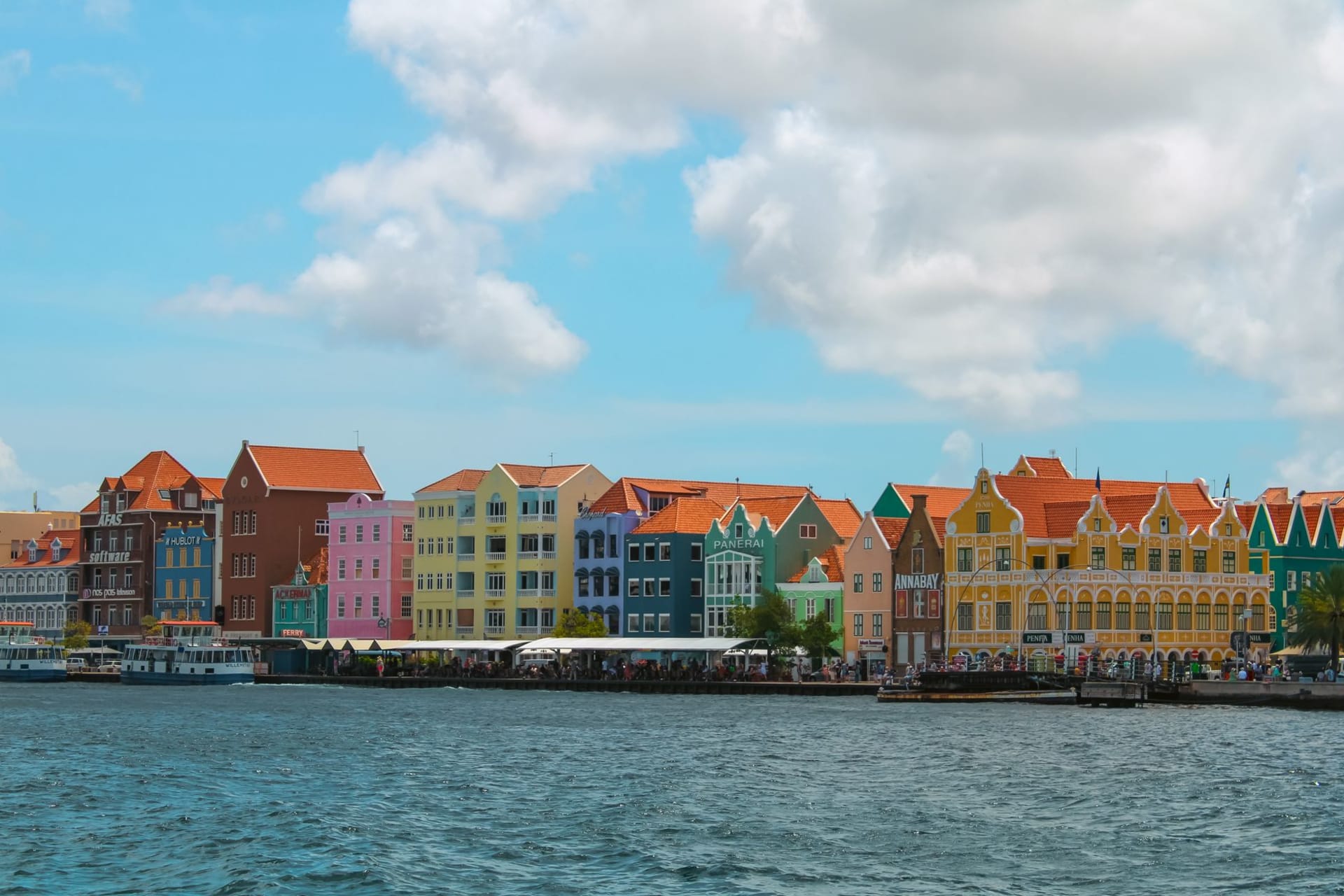
I walked off the Queen Emma pontoon bridge into Punda on a Tuesday morning, when the cruise ships hadn’t arrived yet and the Handelskade was still in its own private light. The low sun hit those merchant houses — mustard, coral, dusty turquoise, pale green — at an angle that made them look like they were lit from within. A man was hosing down the pavement in front of a pharmacy. A woman sold fresh fruit from a crate near the corner. The harbor behind me caught the reflections and shivered them apart. I stood there for a long time before I remembered I was supposed to be walking somewhere.
Punda is the eastern half of Willemstad, the side the Dutch built first, and it carries that history without performing it. The Handelskade — that row of seventeenth and eighteenth century buildings along the waterfront — is genuinely one of the most beautiful civic streetscapes I’ve seen anywhere in the Caribbean. But it is not preserved. It is used. Ground floors hold pharmacies, electronics shops, currency exchanges, places selling cold Amstel to locals on lunch break. The architecture is spectacular and the commerce is completely ordinary, and somehow that combination makes it more alive than any carefully restored heritage district.

A few minutes inland from the Handelskade sits the Mikvé Israel-Emanuel Synagogue, and I found myself unprepared for how it affected me. Dating to 1732, it is the oldest continuously functioning synagogue in the Americas. You enter through a courtyard and then into a room with white walls and dark wood galleries and a floor of white sand — the sand intentional, a reference to the desert, or perhaps to the secret prayers whispered through sand floors during the Inquisition years in Iberia. The light comes in sideways through small windows. The silence is particular. Whatever you believe about the world, this is a room that asks you to slow down.
The Floating Market, moored along the Waaigat inlet, is where Venezuelan schooners have been selling produce for well over a century. The boats are painted and battered and stacked with plantains, papayas, dried fish, and sometimes the specific mangoes that are smaller and more fragrant than anything in the supermarket. The market is genuinely functional — grandmothers negotiating in a mix of Papiamentu and Spanish, the smell of salt water and ripe fruit — and wandering through it in the morning is one of the better ways to understand what Punda actually is: not a museum, not a tourist attraction, but a working Caribbean city where the buildings happen to be eighteenth century.

At the point where Sint Annabaai meets the sea stands Fort Amsterdam, now the seat of the island government but open to walk through. The cannon emplacements still face the water. In the late afternoon the fortress walls go a deep orange, and you can watch the container ships maneuver into the harbor below. There is a small church inside with tiles from the original 1769 structure still embedded in the walls. I ate a pika — a spiced salsa-like condiment served alongside fried fish — at a small spot near the fort entrance, standing at the counter, and thought that Punda had done something very few colonial-era towns manage to do: hold its history without being consumed by it.
When to go: Punda is best experienced on weekday mornings before the cruise ships dock, typically mid-morning. The Floating Market peaks early — arrive before 9am to find the boats fully loaded. January through April brings the driest weather and the most visitors. November and May offer nearly identical conditions with significantly thinner crowds and a sense that the city belongs to itself again.