Krka National Park
"Everyone goes to Plitvice; we went to Krka instead, and had the better waterfall mostly to ourselves before nine."
Krka National Park follows the Krka River inland from the Dalmatian coast near Šibenik, and it is the waterfall park that the crowds skip in favour of Plitvice further north. That suits me fine. The river here does something geologically strange and rather beautiful: it carries dissolved limestone, and where the water slows and plants grow in it, the limestone precipitates out and builds up into porous barriers called travertine, and those barriers grow into waterfalls. The falls are not eroded into the rock — they are deposited, built by the river over thousands of years, and still growing. The landscape is, in the most literal sense, alive.
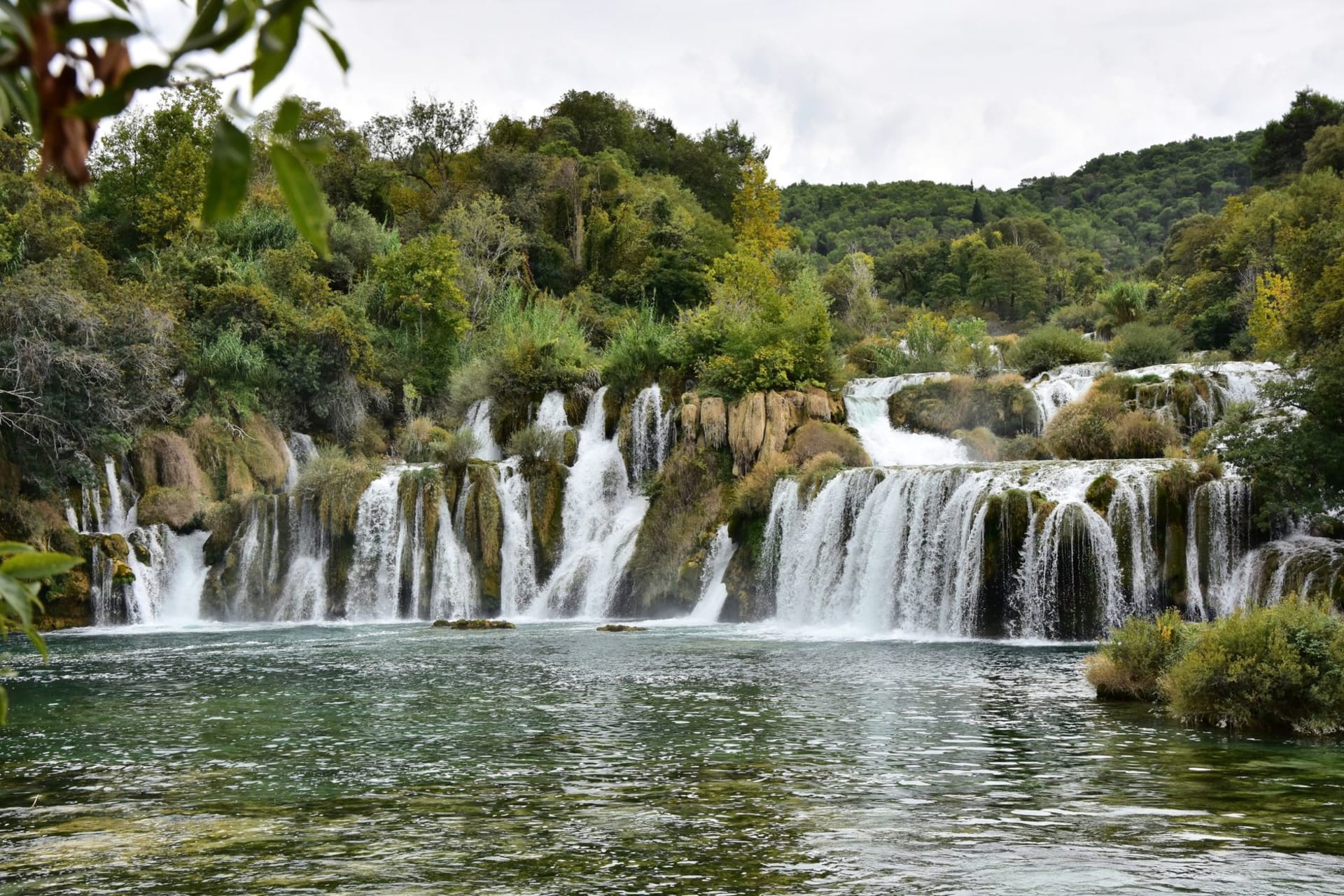
Skradinski Buk
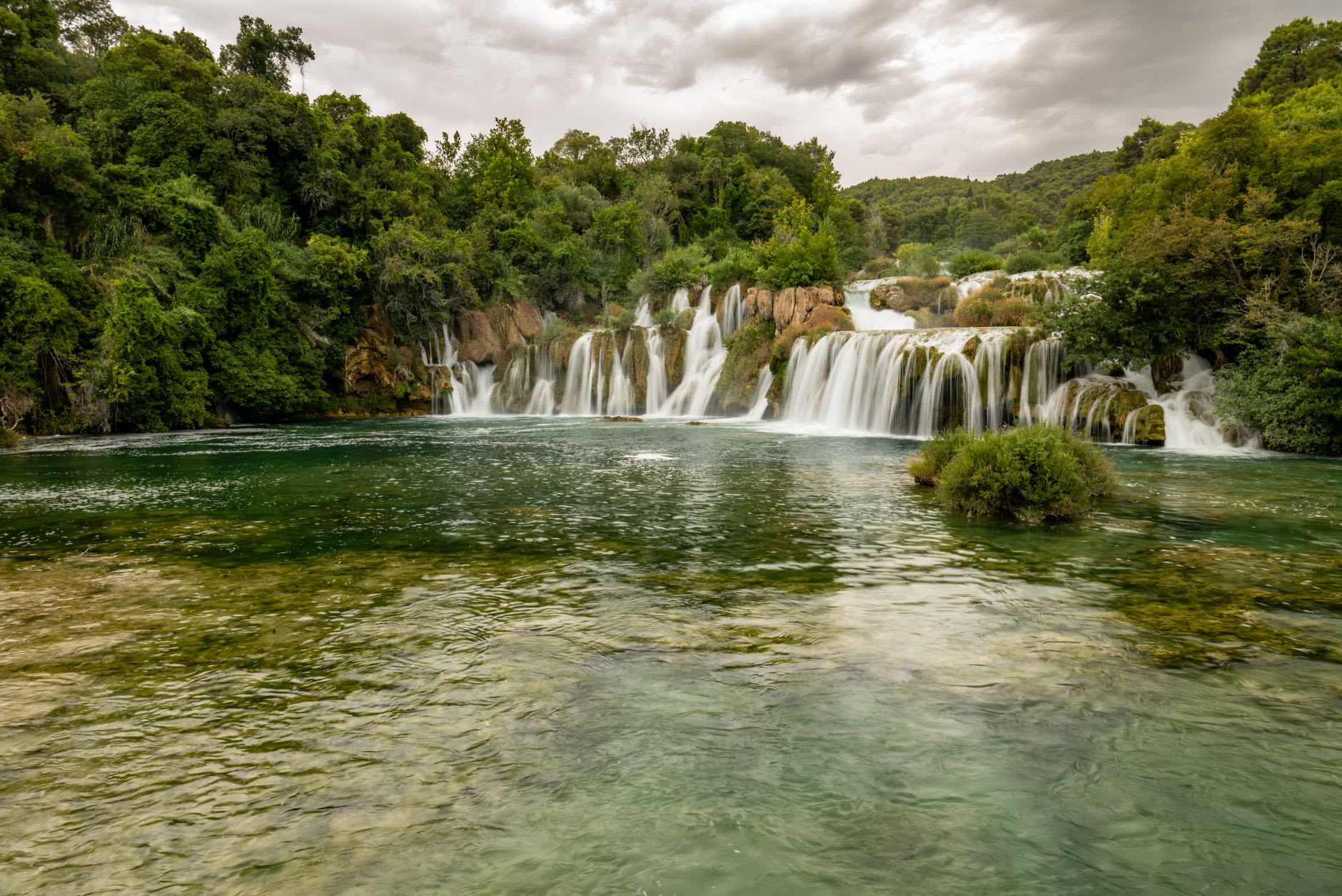
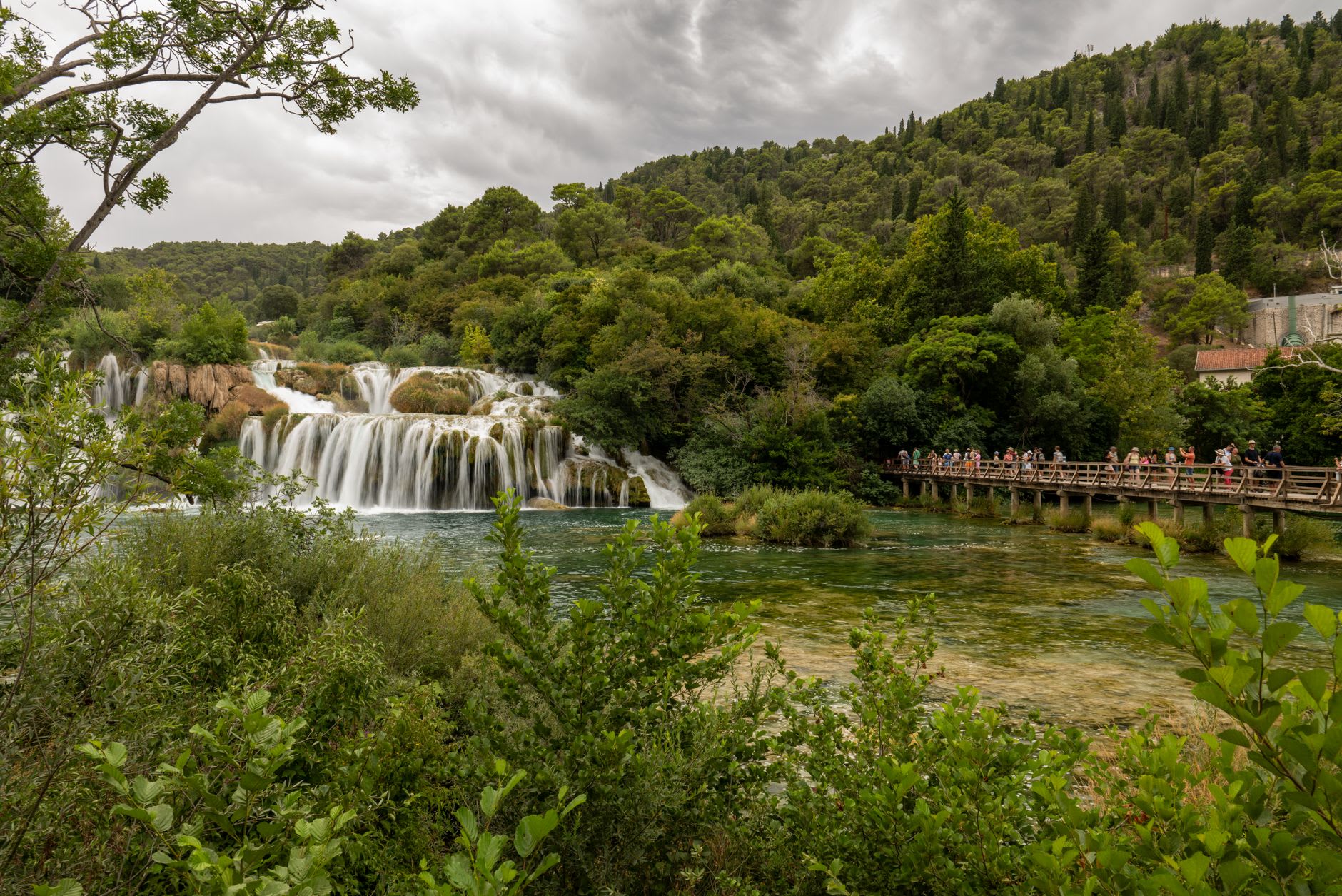
The headline waterfall is Skradinski Buk, at the southern end of the park, and it is not a single drop but a long staircase of cascades — seventeen of them, spread over a few hundred metres, the water sheeting white over green mossy terraces into pool after pool. A wooden boardwalk loops through the whole thing, taking you across the river, behind curtains of falling water, past old stone watermills that used the current to grind grain for centuries. We arrived on the first boat from Skradin, a pretty little town downstream, gliding up the green river gorge in the early light, and walked the loop before the day-trippers from Split arrived. For about an hour it was us, the roar of the water, and a great many dragonflies. By eleven it was a different place entirely.
Visovac and the upper river
Further up the river sits Visovac, a tiny island wholly occupied by a Franciscan monastery, white walls and cypresses on a flat green disc of land in the middle of a widening of the Krka. You can reach it by boat from the park, and the monks have been there since the 15th century, keeping a library and a quiet that the rest of the park, frankly, no longer has. Above Visovac is Roški Slap, another set of falls, gentler and far less visited, with a path up beside it and a cave system in the hills above. I prefer the upper river — fewer people, the same astonishing blue-green water, and a sense that you have walked off the end of the guidebook page.
A note on swimming, and on getting there
Swimming at Skradinski Buk was once the park’s signature image — those photos of people bathing at the foot of the falls — but it has been banned since 2021 to protect the travertine, and quite right too: the barriers are fragile and a few million feet were wearing them down. Don’t go expecting a swim. Do go by boat from Skradin rather than driving to the upper car parks; the river approach is half the pleasure, and Skradin itself is a lovely place to eat afterward, with oysters from the estuary and the famous Skradin risotto that simmers for hours.
When to go: May, June, or September, early in the morning. Spring brings the falls at full volume from snowmelt; high summer brings heat and queues. Always take the first boat.