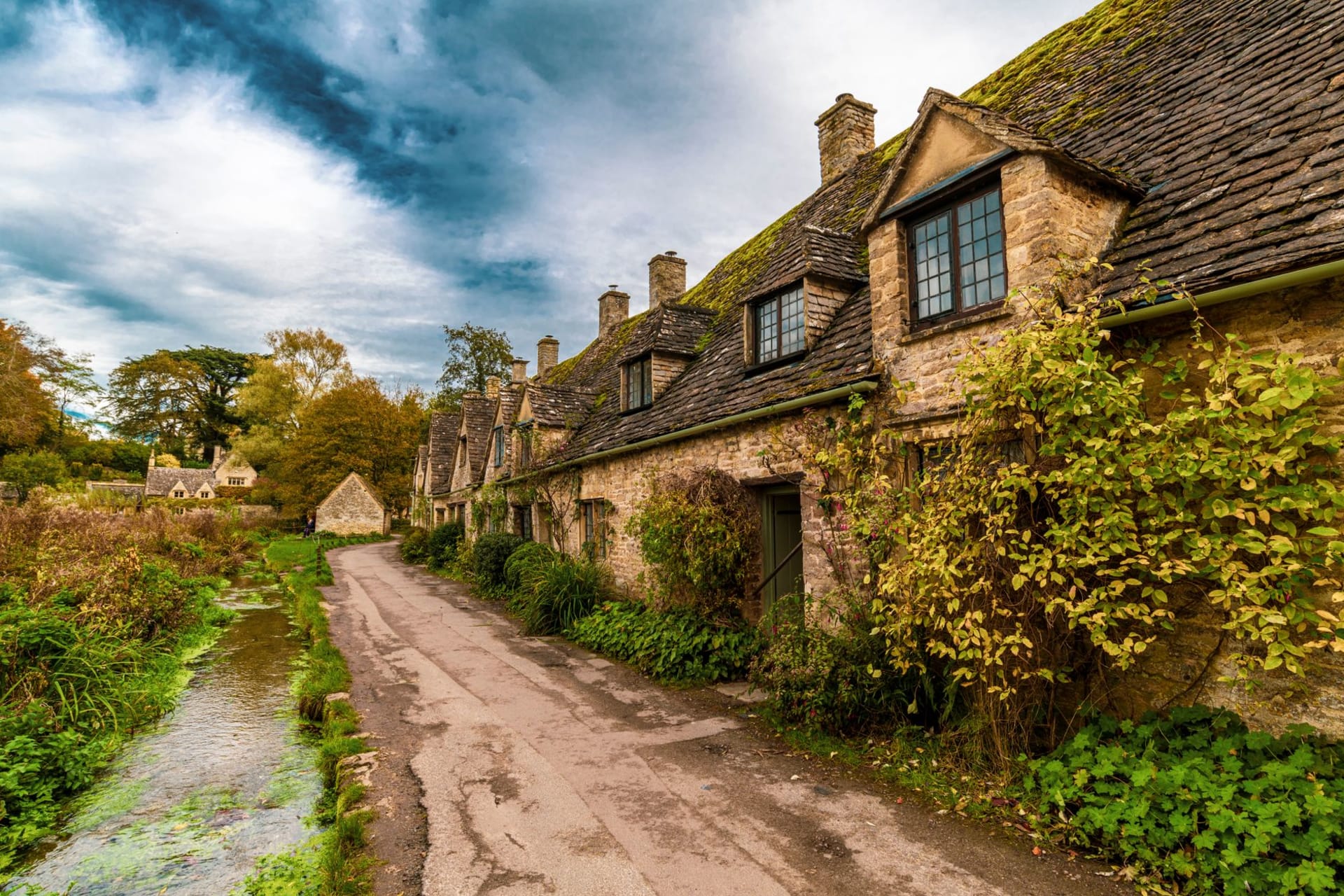
Chipping Campden
"Seven hundred years of wool money, and somehow they spent it all on the same beautiful stone."
I came into Chipping Campden from the south end, on foot from the Cotswold Way, and the high street revealed itself around a gentle curve the way a good sentence resolves — everything falling into place at once. The houses are honey-coloured limestone, every one of them, built by wool merchants in the fourteenth and fifteenth centuries when the Cotswolds was the Saudi Arabia of English sheep country. They have the wide, low profiles of serious money spent without ostentation, and in the late afternoon, when the light comes sideways across the stone, the entire street seems to be generating its own warmth.
The Market Hall sits in the middle of the high street like a punctuation mark. It was built in 1627 and its open-arched ground floor was where the farmers and traders would shelter their produce from rain. Now it shelters tourists from the same. But walk past it, into the churchyard of St James’s, and the crowds thin remarkably fast. The wool church — so called because it was built on wool fortunes — is all perpendicular Gothic, the nave enormous and light-filled, the windows too large for the walls to hold. I sat in a pew for twenty minutes and watched dust motes move through the light coming off the limestone. Nobody else was inside.

The food situation in Chipping Campden is quietly excellent if you know where to look. The Eight Bells pub on Church Street does a proper ploughman’s — thick slabs of Double Gloucester, pickled walnuts, bread that has real crust — and a pint of Hooky bitter that comes from a brewery twenty minutes away in Hook Norton. The pub itself is medieval, the ceilings low enough that tall people develop a crouch, the fireplace wide enough to stand inside. It smells of old wood and spilled ale and something faintly herbal I never identified.
What makes Chipping Campden distinct from the other honey-stone villages is the completeness of its history still standing and still in use. The almshouses on Church Street, built in 1612, are still occupied. The old silk mill just outside the village centre became, in the early twentieth century, the workshop of C.R. Ashbee’s Guild of Handicraft — one of the founding acts of the Arts and Crafts movement — and the building still houses craftspeople. There is a jeweller working there who makes pieces in silver using techniques Ashbee would recognise. I watched her for a few minutes through the window and she did not look up once.

The town also sits at the northern end of the Cotswold Way, which makes it a place where serious walkers arrive with muddy boots and purposeful expressions, and where others sit in tea rooms and watch them pass with polite envy. Dover’s Hill, ten minutes’ walk from the high street, is a natural amphitheatre with a view over the Vale of Evesham that on a clear evening stretches thirty miles. The Cotswold Olympics were held here from 1612, which mostly involved shin-kicking competitions and horse racing. The shin-kicking still happens, every year, the first Friday after the spring bank holiday. I missed it by four days and have regretted it since.
When to go: May and June, when the gardens behind the almshouses are in full bloom and the light on the high street in the evening is something close to unreal. The Scuttlebrook Wake festival in late May fills the town with bunting and village fete energy. October is excellent for walkers — the beech woods on the Way go copper and the town is quieter.