
Aiguilles de Bavella
"I reached the col at dawn and the needles came out of the mist one by one, each one a surprise."
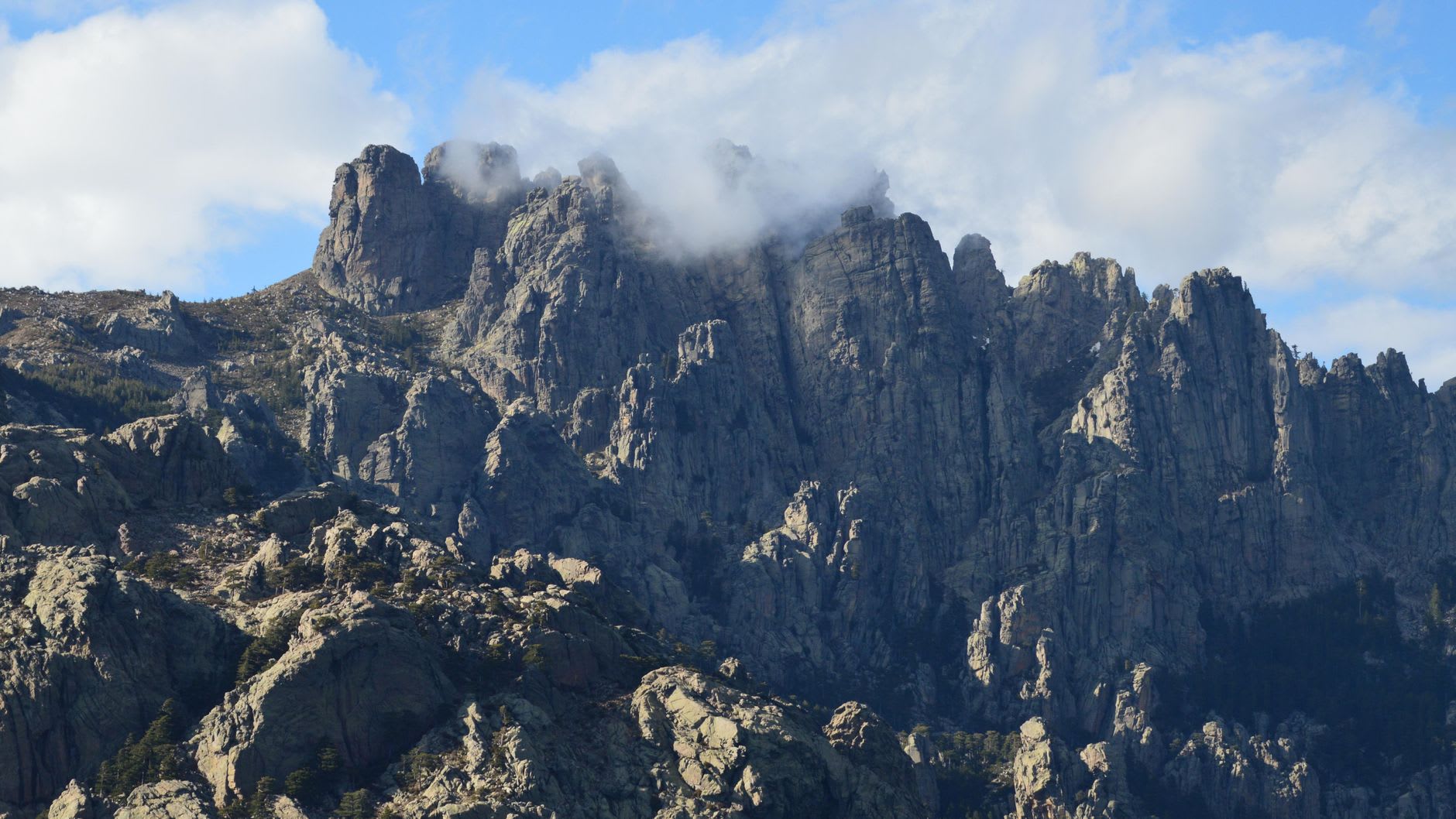
I drove up to the Bavella pass from Zonza in the early morning, the laricio pine forest on both sides of the road dark and cool at that altitude. The D268 climbs in switchbacks, and there are several false summits where I thought the col must be close, and then the road curved again and climbed again. Then I came around a final bend and the Aiguilles de Bavella were there — seven granite needle towers rising from the treeline, orange-red in the first light, their outlines jagged against a sky still pale at that hour. A statue of the Vierge watches over the pass with an expression of complete serenity about the geology around her. A few hikers were already adjusting their packs in the car park below. I sat on the stone wall for fifteen minutes before I did anything else.
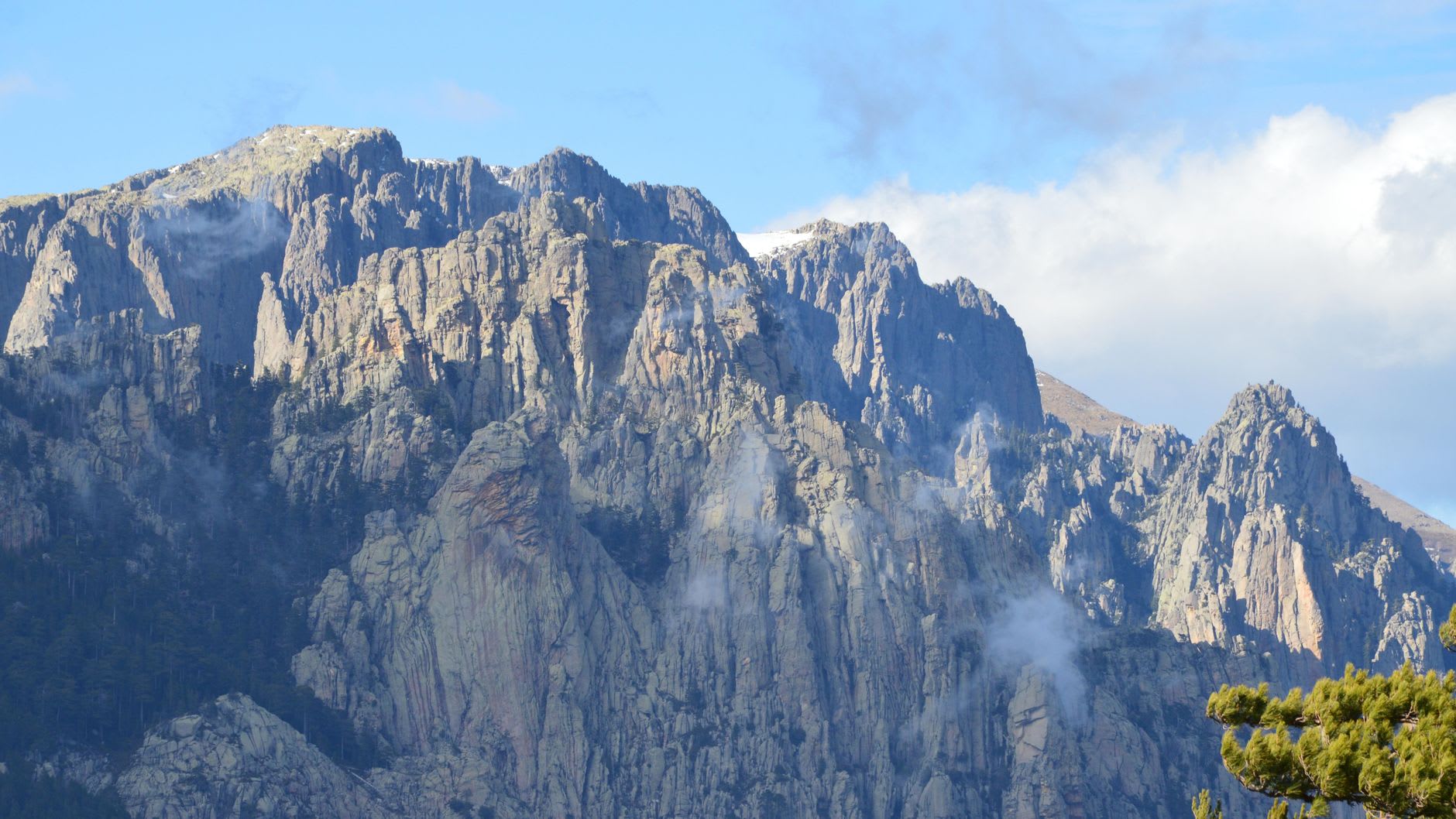
The needles are granite exposed by millions of years of erosion that stripped away everything softer. They stand between 1,800 and 1,959 meters, visible on clear days from both coasts, and they attract climbers who know exactly what they’re doing on those vertical faces — the route grades here are serious. For everyone else, the trails that loop through and around the formations are accessible without technical gear, though some sections are vertiginous enough to make you think carefully about your footwear before you start. The GR20 crosses the col here, and in July you’ll see through-hikers arriving at the end of one of the trail’s harder southern sections, looking satisfied and destroyed in roughly equal measure.
Below the pass, the south-facing slopes hold the pozzines — natural swimming holes carved by the stream into smooth granite bowls. The water comes from snowmelt even in summer and is cold enough to make you gasp on contact, but after four hours of walking on exposed rock in July heat they feel less optional than necessary. I followed the path down into the Purcaraccia canyon, where the stream drops through a series of pools, each one deeper and colder than the last, and spent an hour moving between sun-warmed granite and water that had been snow two weeks earlier.
The village of Zonza, a few kilometers below the col, has the sensible arrangement of a mountain-access town: good food, beds, and nobody trying to sell you anything you don’t need. I ate at the restaurant there the evening after a long day on the trails — brocciu pasta and a wild boar ragù that tasted unmistakably of the landscape I’d just walked through. The boar was probably one of the animals I’d watched foraging in the forest on the way down. I chose not to dwell on this.
When to go: June through September. The col is snowbound through winter and spring, and some trail sections remain icy until late May. Early June and September are the best windows — the light is oblique and remarkable, the trails less crowded, and the swimming holes are best when the air is warm enough to make the cold water feel like a reward.