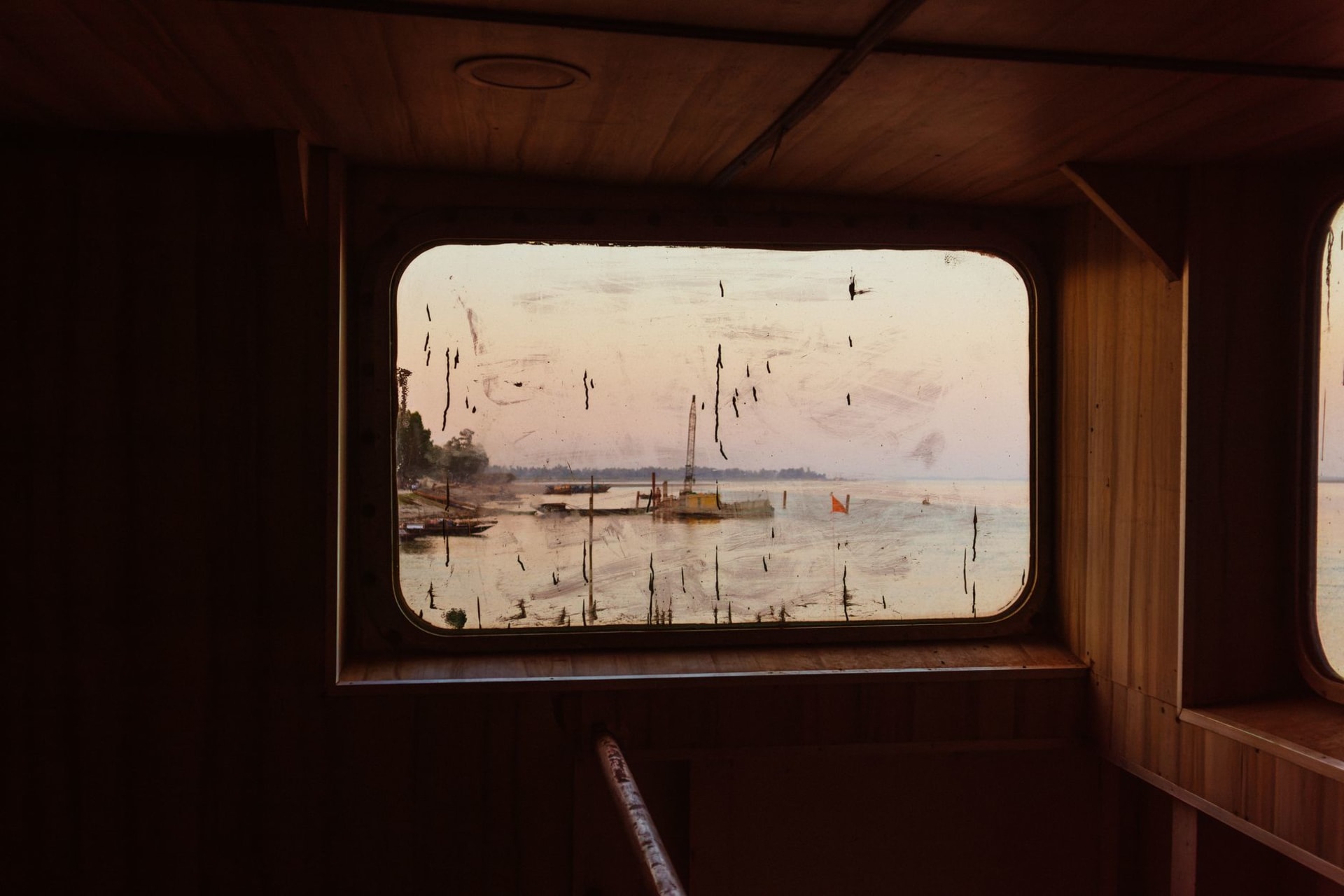
The Congo River
"No border crossing in the world looks like this — two cities staring at each other across the fastest river in Africa."
The second-longest river in Africa and the world's deepest — crossing it by pirogue between two capitals is one of the great short journeys.

The crossing takes twenty minutes by motorized pirogue. The distance between the two beach landings is not much more than a kilometre. It is, without exaggeration, one of the most peculiar border crossings on earth: two capital cities facing each other across a body of water that narrows here into a rushing brown channel before the river opens out again into the vast still expanse of Pool Malebo. I stood on the Brazzaville beach among the crowd waiting for the next pirogue — a boat moving for a woman with a baby and a sack of something large wrapped in plastic — and watched the Kinshasa skyline on the other side and thought about what it meant that these two cities, in two different countries, speak the same language and can see each other’s buildings every single morning.
I crossed twice. The second time I crossed just to cross — taking the pirogue to the Kinshasa side, walking the beach for an hour, and then coming back. The river in the crossing channel is moving fast, the pirogue angled upstream to account for the current, and you can see the depth of the water in its color, a dark, almost opaque brown that hides what might be the deepest river channel on the planet. The Congo River drops more water into the Atlantic than any river except the Amazon, and at its deepest it exceeds two hundred metres. Standing in a pirogue over something that deep gives you a perspective adjustment that no amount of altitude could replicate.

Upstream from Brazzaville, the river expands into Pool Malebo — a lake-like widening that stretches roughly thirty kilometres across. The Congolese and French explorers who first arrived here by water named it Stanley Pool, after Henry Morton Stanley, and the name was contested almost immediately by people who had been living here long before anyone named anything. On the Pool’s southern edge, Brazzaville’s beach is a working waterfront: pirogues loaded with produce coming from up-river villages, fuel drums being rolled onto barges, children diving off a half-submerged concrete jetty. On Sunday mornings the beach fills with people doing what beach people everywhere do — sitting in it, looking at it, being near it.
The river’s night sounds from the Brazzaville Corniche are different from its day sounds. The water traffic thins out. The frogs in the reeds along the bank start a chorus that moves in waves. Across the water, Kinshasa’s lights spread up into the hills, far more of them than Brazzaville’s, and somewhere between the two sets of lights the water is completely dark. I drank a beer and listened to Congolese rumba from somewhere behind me and watched a single pirogue light move slowly along the far bank, and couldn’t tell which country the light belonged to.

Longer river journeys are possible — cargo barges run north along the river and its tributaries to Ouesso and beyond, a journey of days that functions as a floating market, with commerce conducted at every stop in the primary forest. These journeys require patience, tolerance for uncertainty, and a supply of food that doesn’t need refrigeration. They are, by all accounts, the most immersive way to understand the Congo basin — not as a wildlife destination but as a place where people have been building lives along waterways for centuries.
When to go: The river crossing between Brazzaville and Kinshasa operates year-round. Longer upstream journeys are best attempted in the dry season (June–September) when river logistics are more predictable. The beach scene at Brazzaville is most alive on Sunday mornings regardless of season.
Keep exploring
More from Republic of the Congo
 congo-republic
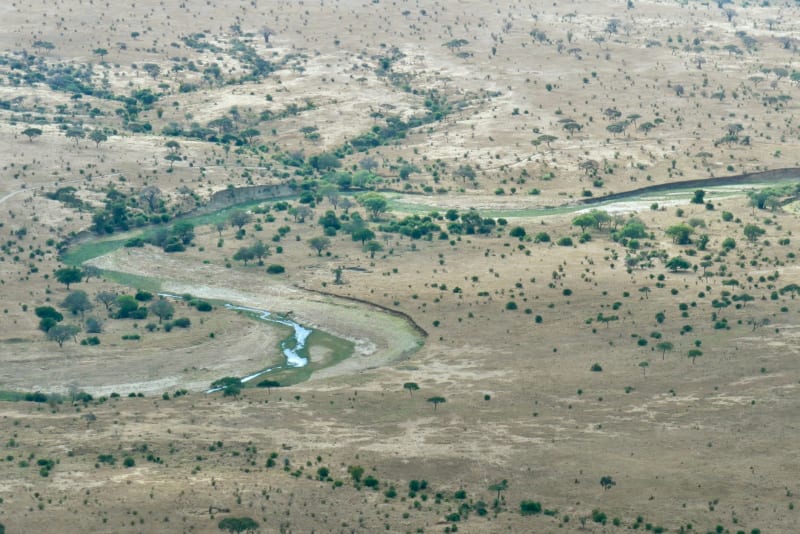
 Conkouati-Douli National Park
Where the Congo rainforest meets the Atlantic — leatherback turtles nest on deserted beaches while hippos drift through inland lagoons.
Explore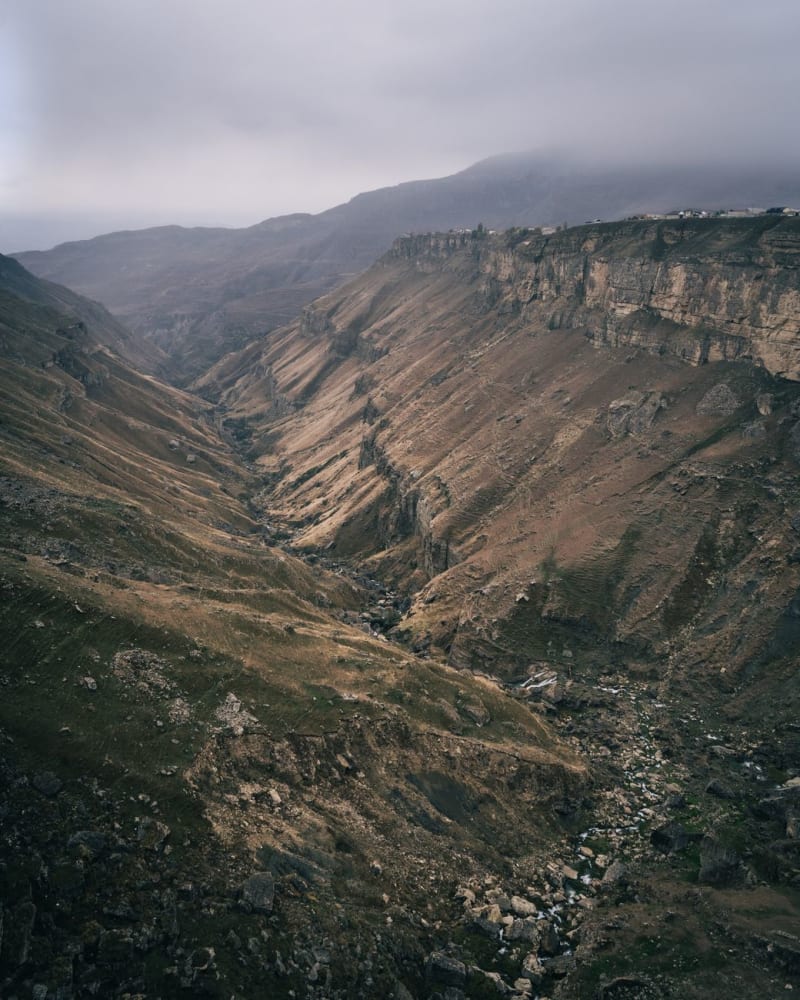 congo-republic
 Diosso Gorge
A jaw-dropping amphitheatre of red and ochre cliffs north of Pointe-Noire, where eroded sandstone walls plunge toward green forest in what locals call the Congolese Grand Canyon.
Explore congo-republic
 Lac Télé Community Reserve
A remote swamp forest at the end of a long pirogue journey — legendary for a cryptid nobody has seen and magnificent for the things that are actually there.
Explore congo-republic
 Lefini Reserve
A vast savanna-forest mosaic north of Brazzaville where buffalo graze on open grasslands and the horizon finally has space to be itself.
Explore congo-republic
 Loufoulakari Falls
A cascade of red-stained water into dark jungle pools west of Brazzaville — the city's open secret, where families come to remember the country they're living in.
Explore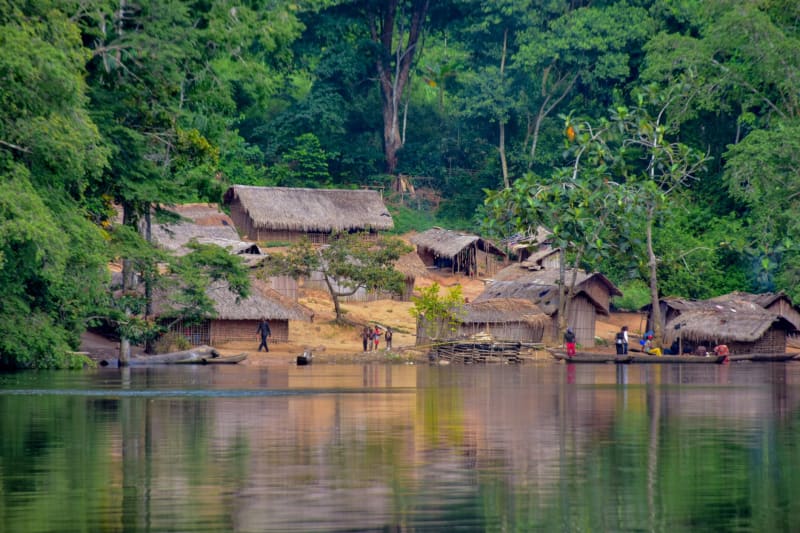 congo-republic
 Nouabalé-Ndoki National Park
One of the last truly undisturbed rainforest wildernesses on earth — no roads in, no shortcuts, no pretending it will be easy.
Explore