Jardín
"Jardín is the coffee region's best-kept secret, imperfectly kept. Come anyway."
I heard about Jardín from a woman on a bus from Medellín who described it with the particular precision of someone describing a place they are slightly worried you will ruin by going. “It is very nice,” she said carefully, which I recognised as the Colombian understatement for something exceptional. She was correct. Jardín is about three hours south of Medellín in the mountains of Antioquia — technically outside the Eje Cafetero, but connected to the same coffee culture and the same Antioquian colonisation that shaped the whole region — and it has the quality that most “colonial towns” spend considerable money trying to fake: it feels genuinely inhabited.
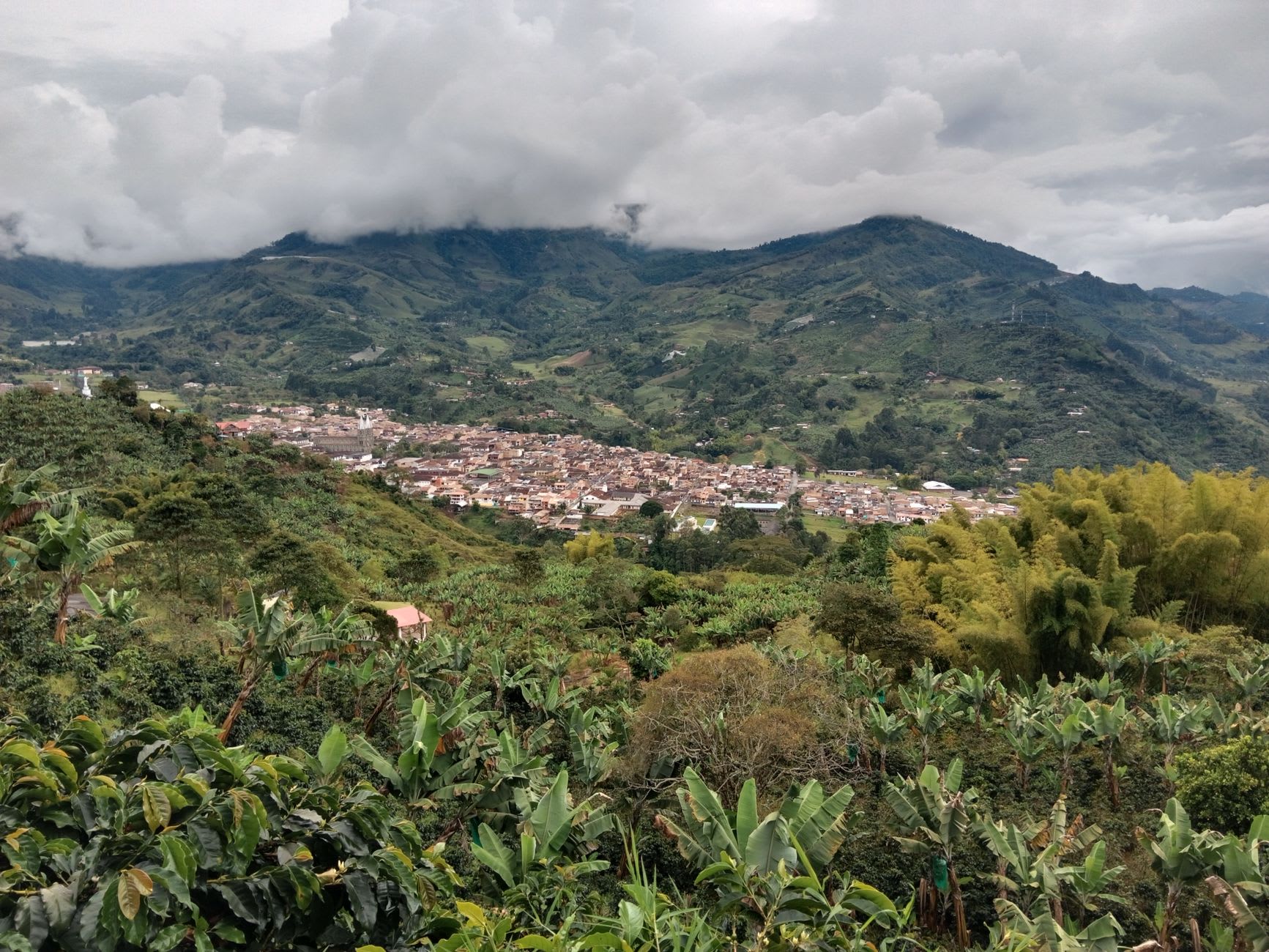
The central plaza is surrounded by brightly coloured houses with wooden balconies draped in begonias and geraniums, and in the middle stands the Basílica Menor de la Inmaculada Concepción, a neo-Gothic church of stone that took decades to build and looks like it arrived from somewhere much colder and more serious and decided to stay anyway. On a Sunday morning the plaza fills with farmers from the surrounding hills — men in carriel leather bags and ponchos, women selling obleas and fresh herbs from baskets — in a market that has the quality of a ritual performed so many times it has become effortless.
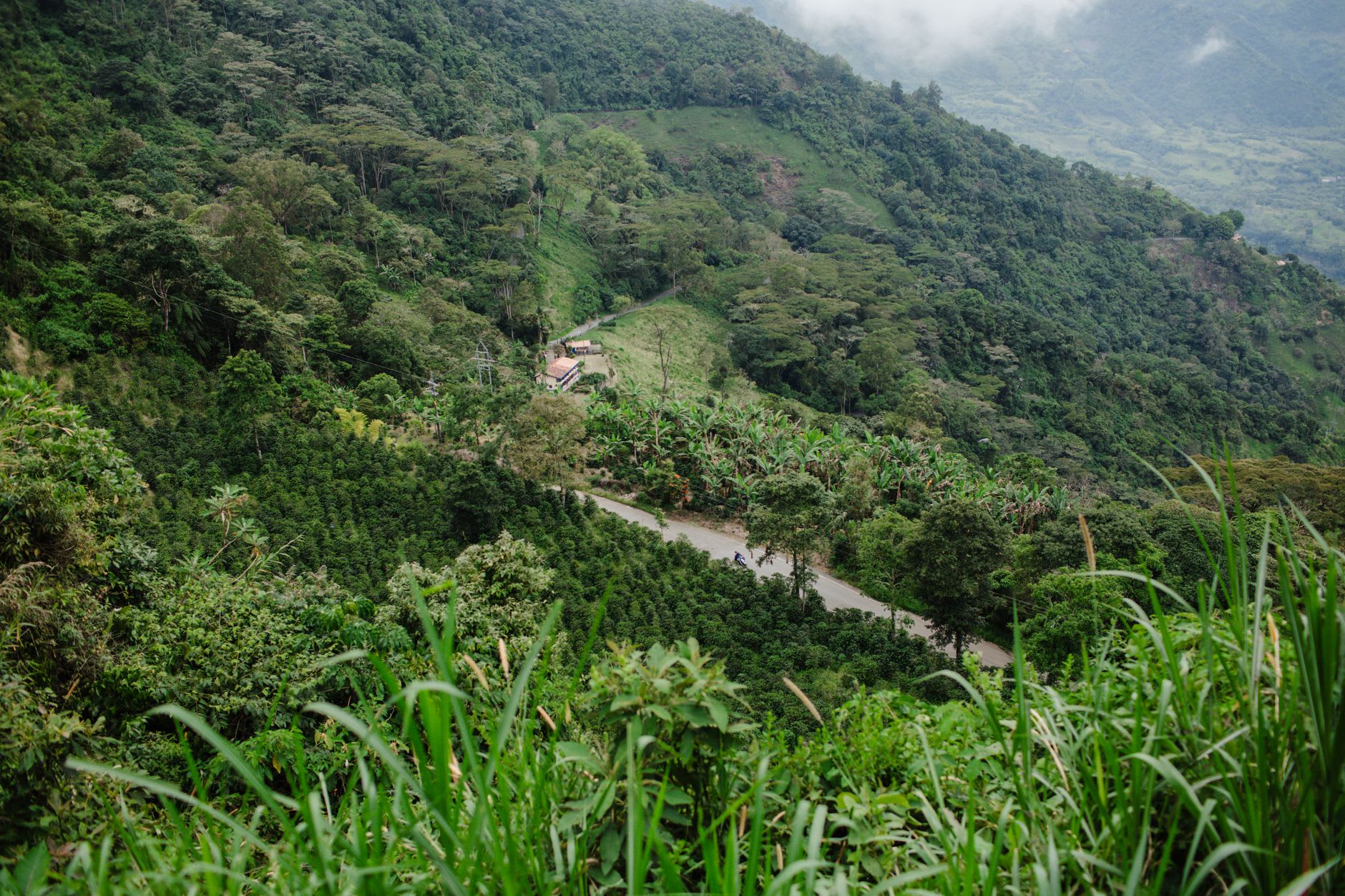
The cable car — a gondola-style lift called the teleférico — runs up from the edge of town to a hilltop mirador above the Farallones de Citará mountain range. The views from the top are comprehensive in the way that views from high points rarely are: you can see the town entire below you, small and orderly and bright, and beyond it the valley of the Río San Juan, and beyond that ridgelines that dissolve into blue distance. I went up at seven in the morning before the day-trippers from Medellín arrived and had the platform to myself for an hour except for a couple who appeared to be having a very serious but quiet argument and a pair of Andean condors riding the updrafts to the west.
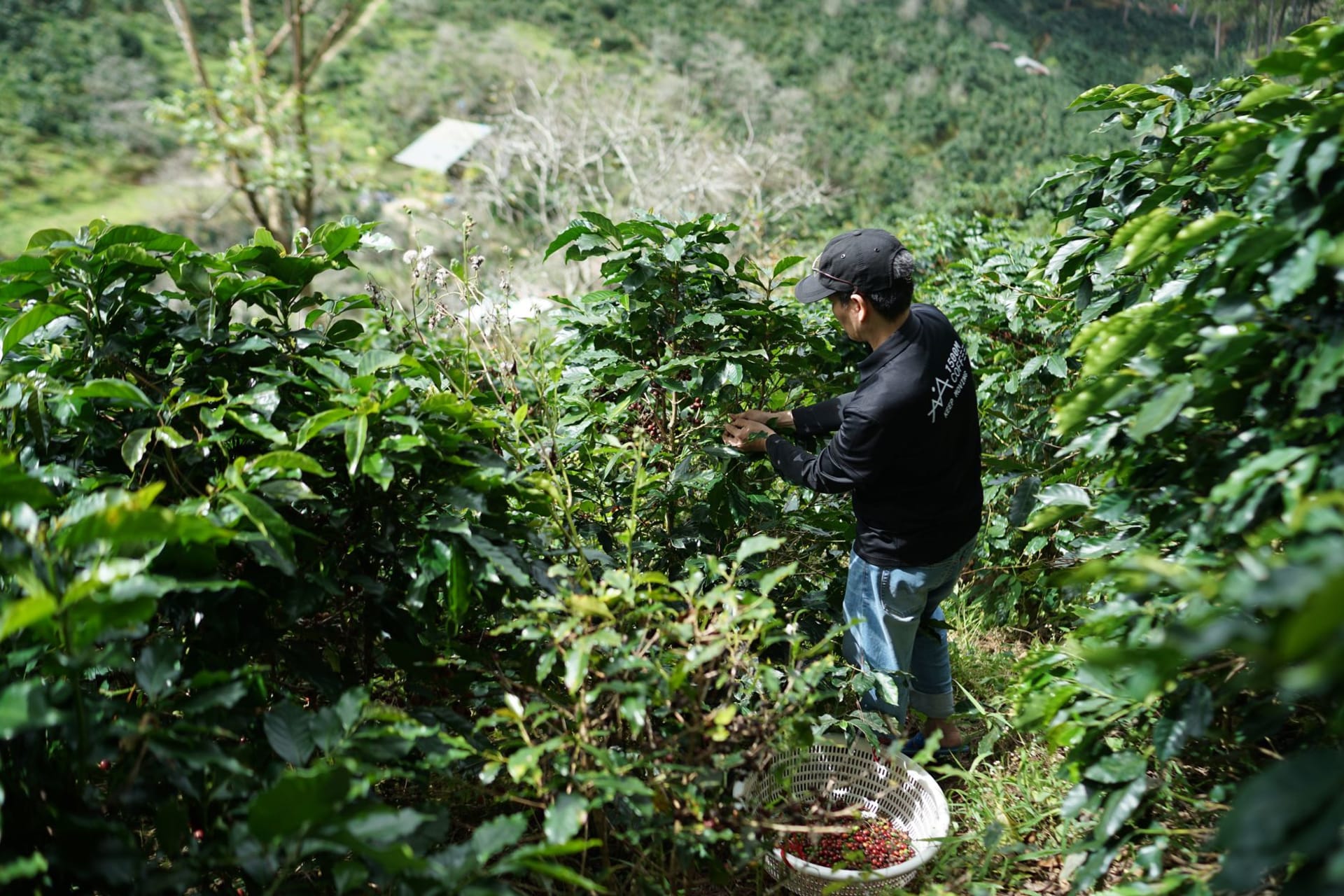
The coffee situation in Jardín is different from the main Eje Cafetero in that the processing tradition is slightly more rustic — many farms still use the older washed method in its most manual form — and the cup profile tends toward brightness and fruit. There is a small coffee cooperative in town whose cupping room you can visit by arrangement, and a café on the plaza that serves single-estate cups with a card identifying the farm, the farmer, and the processing lot. The card has a small black-and-white photograph of the family. I drank a cup of gesha that had no business being this affordable and looked at the photograph and thought about how far a coffee cherry travels before it reaches a cup.
In the evenings, the town contracts around its bars and restaurants in a way that feels familial rather than commercial. The chiva buses — colourfully painted rural buses — run excursions into the surrounding countryside on weekend evenings, with music and dancing on board. I did not take one. I sat in a chair on the plaza with a glass of limonada de coco and watched the light leave the cathedral facade by degrees, which seemed like enough.
When to go: Jardín is accessible year-round, but the road from Medellín can be treacherous in heavy rain — the route passes through several steep sections prone to landslides in the rainy months. December through February and June through August give the safest travel and the clearest views from the teleférico. Avoid the weekend closest to the Feria de las Flores in August, when Medellín day-trippers fill the plaza by midmorning.