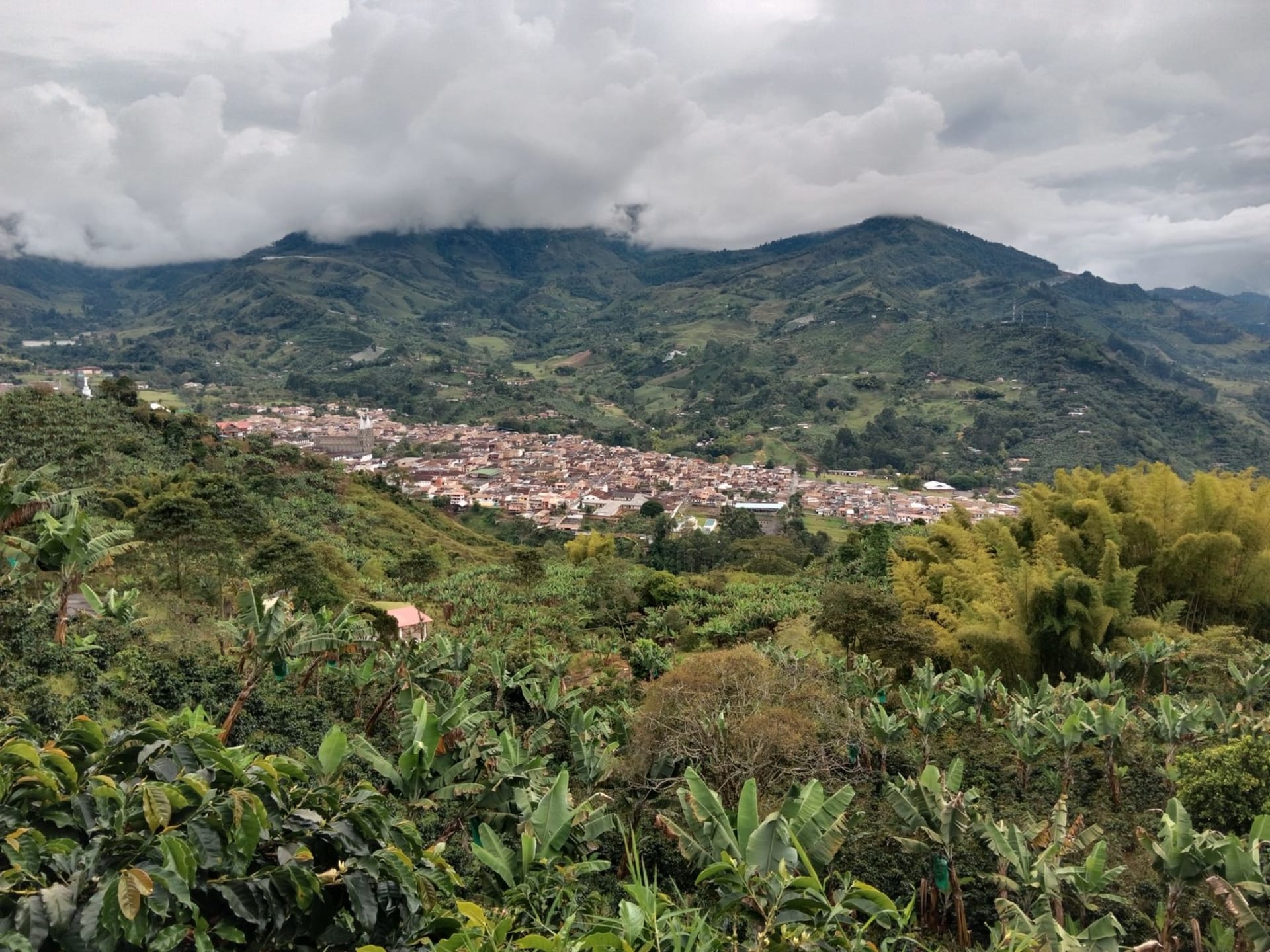
Buenavista
"I found the best coffee of my trip in a village most Colombians haven't heard of. That seemed right."
Buenavista is difficult to reach and offers no particular welcome when you arrive, by which I mean it is exactly what a small Colombian hill village should be: a church, a square, a handful of tiendas, houses clinging to a ridge so steep that the streets are more staircase than road. What it also is — and this is the reason to make the effort — is one of the highest points in the Quindío department with unobstructed views in three directions. On a clear morning you can see Manizales in one direction, the Cocora valley in another, and on particularly clear days a shimmer that might be the Pacific lowlands far to the west.
I got up there on a collective bus from Circasia — a shared taxi, more precisely, a Renault that had been going since the early 2000s and sounded like a conversation among its own parts — that dropped me at the village square at eight in the morning with a family returning from market and a man with a sack of coffee cherries that he treated with the care you would normally reserve for a sleeping infant. The drive took forty minutes. The road was paved for about half of it. The views from the road on the way up were, on their own, worth the journey.
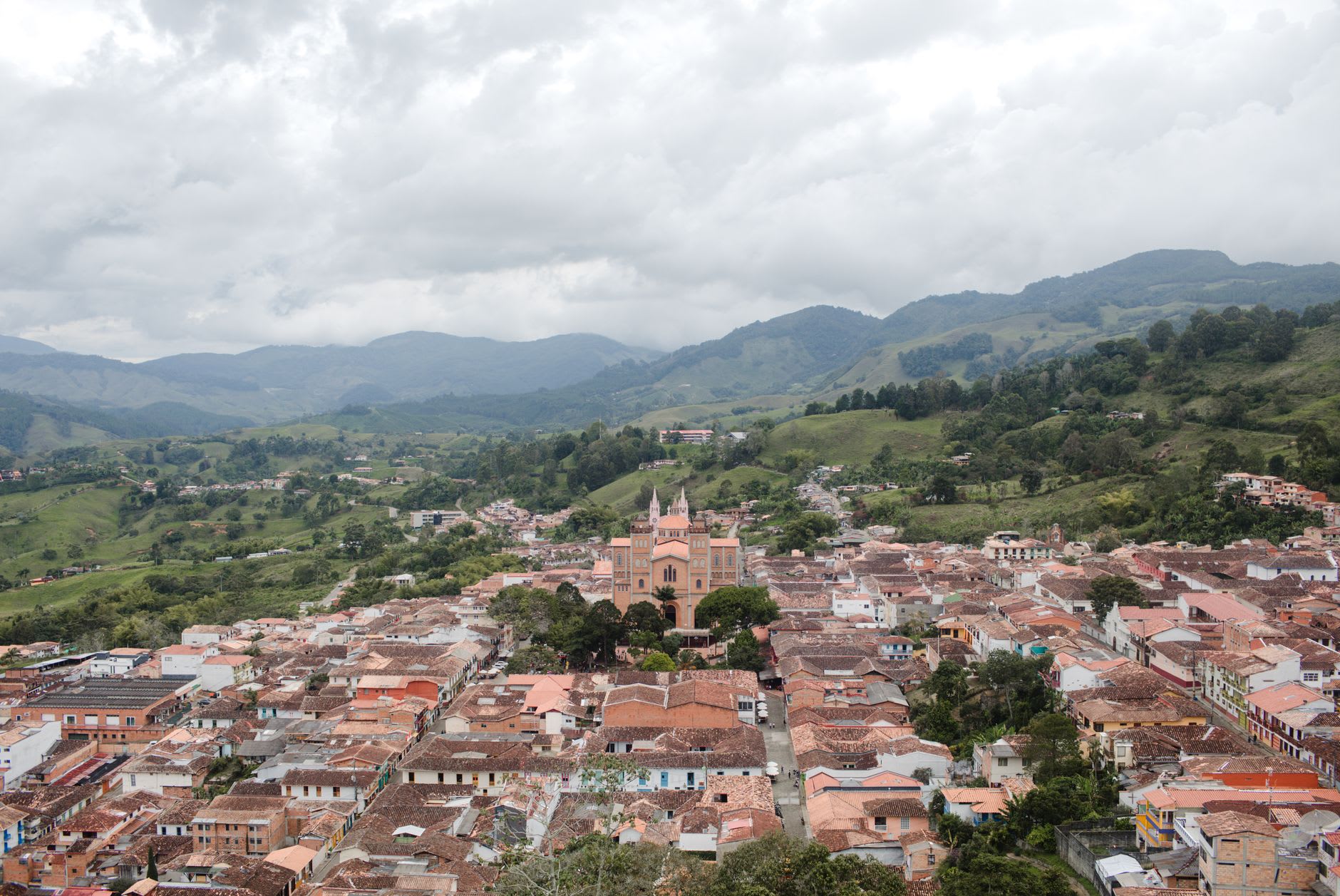
The village church is the highest point, and from the small atrium out front you can lean on the railing and look out over what I can only describe as the whole idea of the coffee region made visible at once. This is not a metaphor. The hillsides are literally striped with coffee rows from the valley floor to the cloud line, and the geometry of it — the way the cultivation follows the contours of the land, curving with the ridge, pooling in the valleys, climbing until the altitude makes growing impossible — is the clearest illustration I found of what it means to build a culture around an agricultural product.
There is one café in Buenavista that functions as café. It occupies the front room of a house on the square and serves what the owner describes simply as café de la región in a small cup that costs three thousand pesos. It is made with a cloth filter called a colador in the traditional Colombian manner — not the pour-over of Salento’s specialty shops, but the older method that produces a cup which is at once stronger and gentler, a quality the French might recognise as the difference between extraction and infusion. I had two cups and bought a small bag of beans from the batch she was using, which she sold me from the supply she kept for herself.
The walk along the ridge east of the village takes about two hours at a moderate pace and passes through coffee farms that are still operating in what I would describe as the traditional mode — small plots, mixed shade varieties, hand processing, no machinery audible anywhere. A farmer named Alveiro walked me through his plot unbidden when he saw me stopping to look at the cherry-laden bushes, explaining the difference between the caturra and the castillo varieties with the patient authority of a man who has been doing this since his father taught him and will teach his son the same way.
When to go: Buenavista is best in the dry season — the road becomes genuinely difficult in heavy rain and the collective taxi drivers exercise their own judgement about whether conditions merit the trip. January and July give the clearest days for ridge views. The harvest months (October-November, April-May) offer the chance to see the village at maximum activity, with extra pickers and the constant smell of fermenting coffee drifting down from the processing areas.