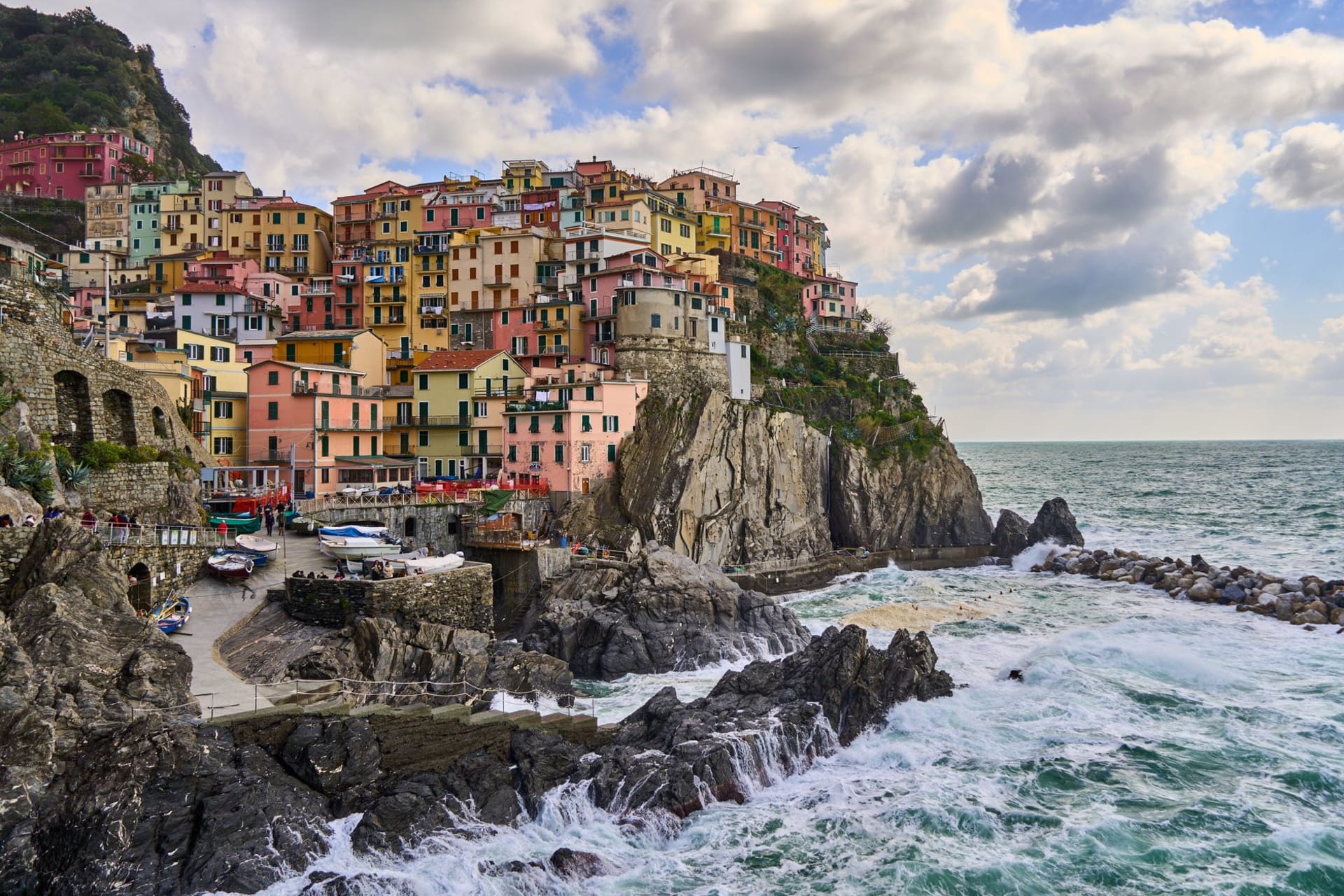
Manarola
"I've watched sunsets on three continents and Manarola's got them mostly beat."
There is a belvedere above Manarola — a small concrete platform with a railing, reached by a five-minute walk from the harbor — from which the village presents itself in its entirety: all the stacked houses in their faded pinks and oranges and yellows, the dark water below, the cliff dropping in layers of exposed stone. I got there an hour before sunset, thinking I’d be alone. I was not. Half of Liguria, it seemed, had the same idea. We stood shoulder to shoulder, phones raised, and collectively waited. When the light came — that last hour when the sun drops to the cliff line and the facades ignite — every one of us lowered our phones and just watched. Even the most dedicated photographers gave up pretending to document and stood there. Some experiences still outstrip the equipment.
Manarola is technically a wine village more than a fishing village. The Sciacchetrà — that amber dessert wine made from partially dried grapes — originates here, and the terraced vineyards climbing the slopes above the town are maintained by the Cinque Terre cooperative that has been fighting the geology for centuries. Walking through those terraces in early October, during the vendemmia, you pass pickers moving between the rows and smell the particular sweetness of just-cut grapes warming in the sun. The dry-stone walls are hand-maintained at angles that would defeat most modern machinery. What grows here is hard-won.
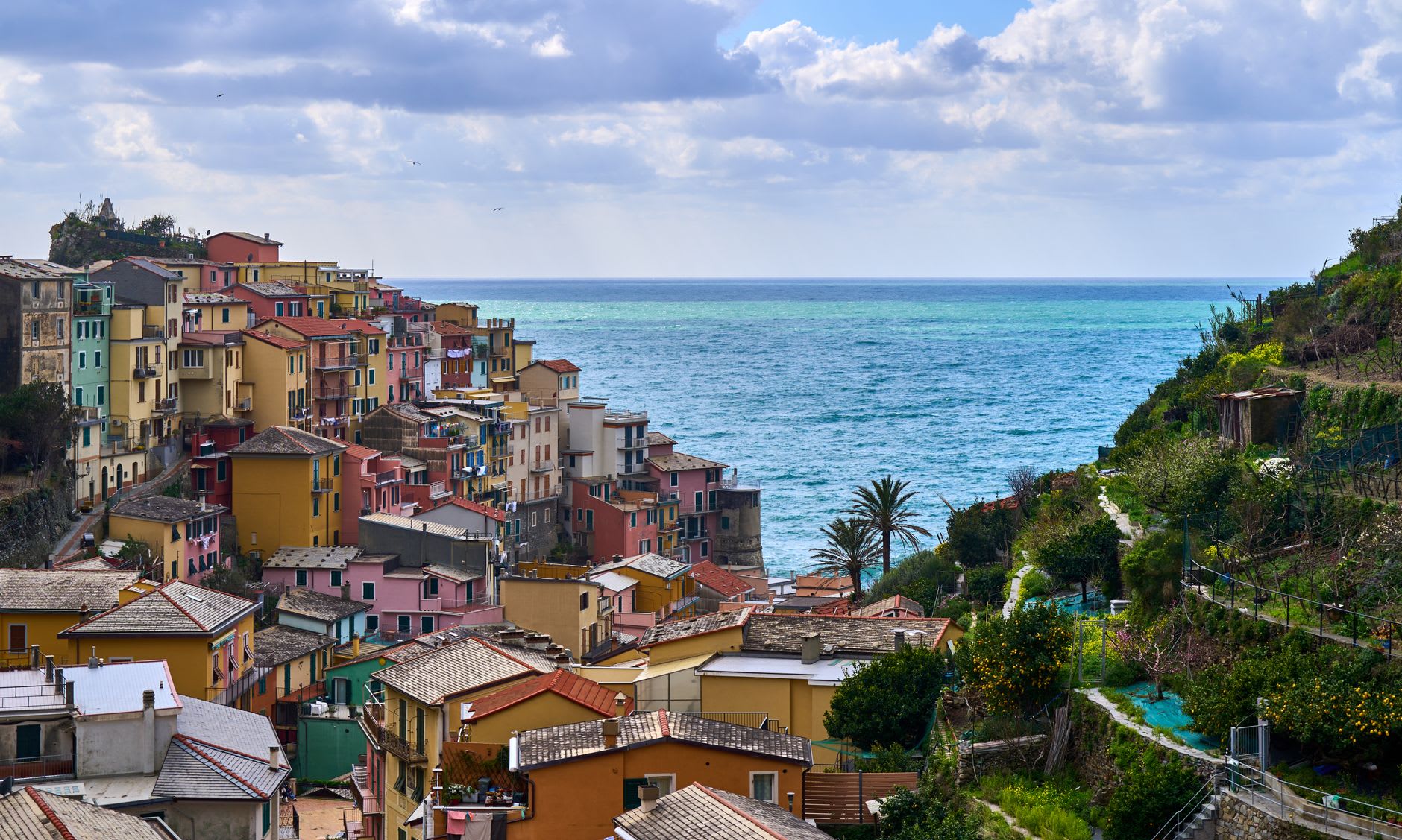
The harbor itself is smaller than it looks in photographs — more of a rocky inlet than a proper bay, with a concrete channel for the boats and a flat-topped rock where people swim when the sea is calm. The water is shockingly clear. I swam here in May when it was still cold enough to make the entry a matter of will, and the visibility underwater was extraordinary — you could see the stones on the bottom six meters down. After the swim, there was a bar at the top of the slipway selling cold white wine in paper cups, and the sun had warmed the rock enough to dry me off in about twenty minutes. I considered this a reasonable definition of the good life.
The village’s church, San Lorenzo, sits at the top of the main lane and is worth more than a passing glance. The facade is simple Ligurian Romanesque, but the interior holds an unexpected 14th-century polyptych — an altarpiece of painted panels in golds and blues that has no business being this good in a village this size. I was the only person inside on a Tuesday morning in May. The contrast with the hundred-person crowd at the belvedere was instructive.

In the evenings, Manarola settles into a rhythm that feels older than the tourism. Families emerge from the buildings whose facades you’ve been photographing all day; the fishmonger on the main street packs up his crate of ice; someone’s grandmother appears at a window and shakes out a cloth. The village has two restaurants where you can eat well and cheaply if you arrive early and don’t mind the plastic chairs. One of them does a pasta with Ligurian pesto — basil grown on the steep hillsides, pine nuts, local oil — that I ate twice in three days and am not remotely sorry about.
When to go: October is the best single month — harvest season, warm sea, lower crowds, and the light on those famous facades achieves a quality that I can only describe as generous. May is the second choice: wildflowers, fewer people than summer, and the hiking trails at their most passable. Avoid August, when Manarola becomes a test of tolerance for close human proximity.