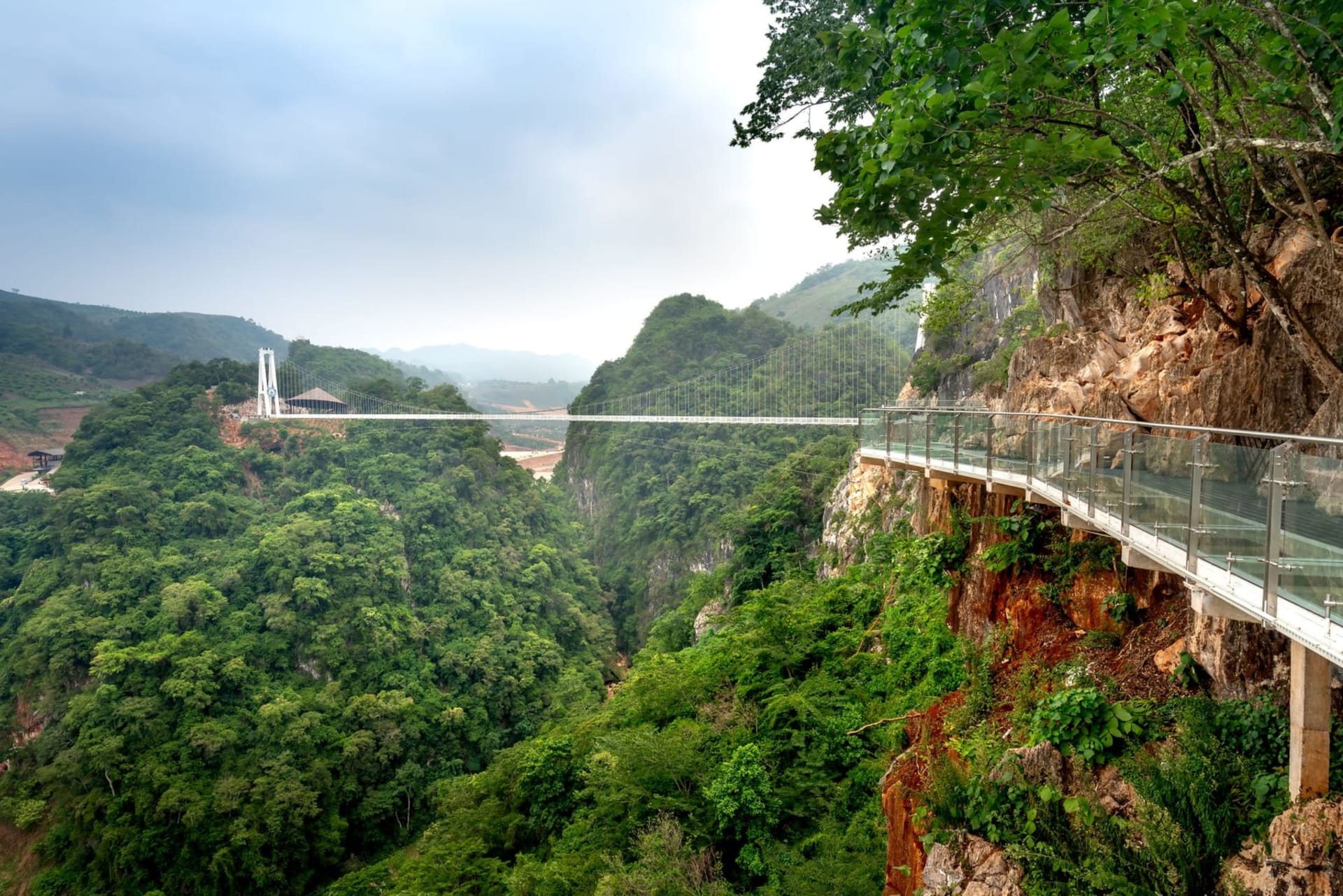
Zhangjiajie Glass Bridge
"Standing on the Zhangjiajie glass bridge, the clouds below you make every fear about heights suddenly reasonable."
The world's longest and highest glass-bottomed suspension bridge above the Avatar-inspiring sandstone pillars.
There is a moment, roughly thirty metres from the far abutment, when the clouds close in beneath the glass and you can no longer see the canyon floor. You can only see — through the transparent panels beneath your shoes — a grey-white nothing, impossibly deep, and the faint tops of sandstone pillars rising out of that nothing like monuments to a world that has forgotten humans exist. That is the moment. That is when I stopped walking and stood very still and understood, in a way that photographs had not prepared me for, exactly what I had agreed to do.
The Walk from Tujia Village Gate
We reached the bridge from the Suoxi Valley entrance of Zhangjiajie National Forest Park, taking a shuttle bus along the narrow road that winds through the gorge from Wulingyuan Scenic Area. The morning had started humid and hazy — the usual weather here, the kind that makes the pillars look like they’re dissolving into the sky rather than rising from the earth. Lia had been calm about the whole thing in the irritating way she always is about physical challenges, buying her ticket and putting on the mandatory shoe covers (all visitors receive cloth overshoes to protect the glass) with the same equanimity she brings to airport queues.
The bridge is 430 metres long and hangs 300 metres above the floor of the Zhangjiajie Grand Canyon — not the national forest park proper, but the adjacent canyon scenic area where the bridge was built. The approach crosses a short walkway along a cliff edge before the bridge deck begins. I remember the smell: pine resin, damp rock, and something else — a mineral sharpness that comes off the quartzite when it’s wet, a smell that feels ancient, like the inside of a cave.
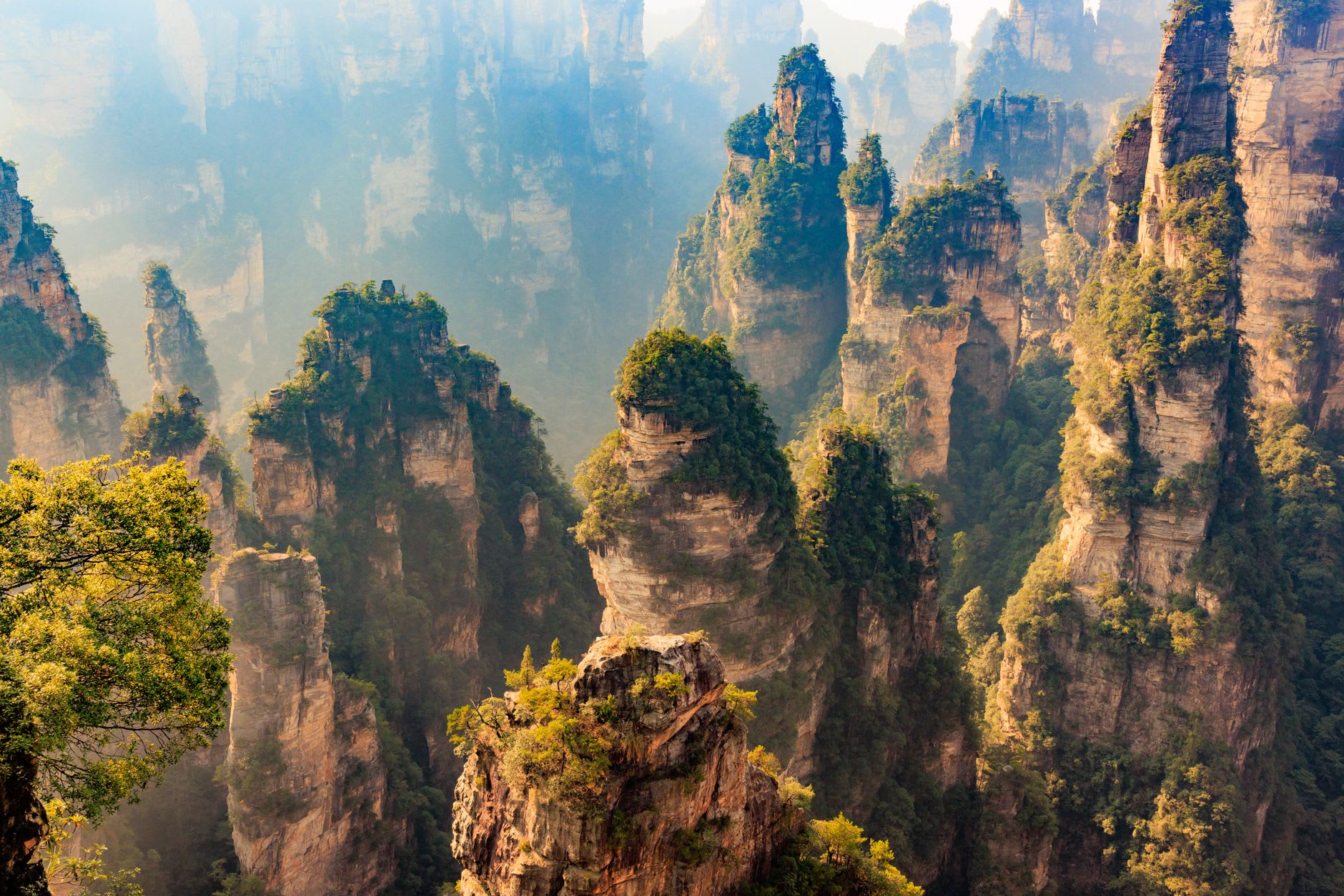
Standing on Nothing
The glass panels are six centimetres thick and made from three laminated layers — I had read this before coming, the way you read safety statistics before boarding a plane: rationally reassuring and emotionally useless. The bridge can hold the weight of 800 people simultaneously. It has never failed. None of this matters when you take your first step onto a transparent surface with three hundred metres of air beneath it.
I moved slowly at first. Lia moved briskly, stopped near the midpoint to lean over the cable railing and take photographs of the pillars below. The pillars here are the same formations that inspired the floating mountains in James Cameron’s Avatar — quartzite sandstone columns that erosion has carved into shapes that have no equivalent elsewhere on earth, draped in subtropical forest, some of them capped with trees that have grown in complete isolation, their roots gripping stone that nothing else can hold. From the bridge, looking down at them, the perspective inverts: you are above the treetops, above the mist, looking down at things that should be looked up at. It does something strange to the sense of scale.
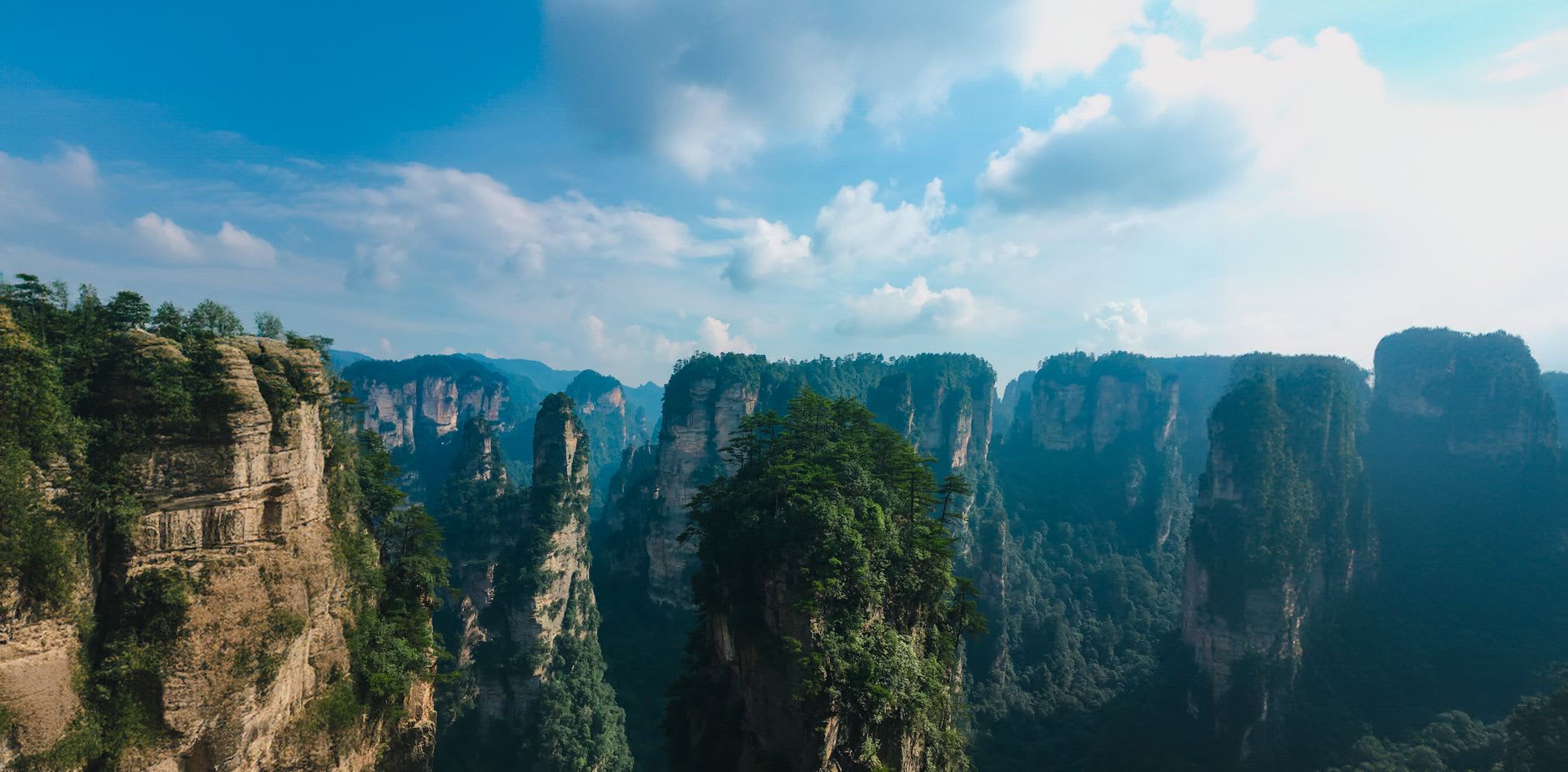
The unexpected thing — the thing that surprised me and that no travel article I had read mentioned — was the sound. The bridge is suspended on steel cables and the whole structure moves, very slightly, with the wind. There is a low harmonic vibration, almost inaudible, felt more in the chest than heard with the ears. It was the sound of 430 metres of steel and glass being alive in the air. Not alarming. Not dangerous. But undeniably present, a reminder that this is not a building but a thing strung between two cliffs, and the cliffs are not interested in your comfort.
The Canyon Below and After
The western end of the bridge exits onto a cliff path that leads down into the canyon proper via a combination of stairs and glass-walled walkways cut into the rock face. We spent another two hours in the canyon after crossing, following the trail past waterfalls fed by springs in the cliff walls, through bamboo groves where the light goes green and flat, past vendors selling roasted corn on clay braziers that smelled of sweetness and char. We ate the corn standing up, still in our borrowed shoe covers, which Lia found funny enough to photograph.

The canyon floor felt like being at the bottom of something that was still being made. The rock walls dripped. The air was ten degrees cooler than on the bridge. The pillars, seen from below, looked entirely different — vast, close, their surfaces covered in streaks of iron oxide that had stained the grey quartzite orange and red. The Avatar comparison makes marketing sense, but the reality is stranger and more interesting than any film: this is geology that happened without any intention of being beautiful, and arrived at beauty anyway.
When to go: April to June for the clearest air and full greenery on the pillars, before peak summer crowds arrive. October is excellent — the mist is thinner than in spring and the humidity drops. Avoid the Golden Week holiday in early October, when the bridge reaches capacity and timed entry slots sell out days in advance. Book tickets through the official Zhangjiajie Grand Canyon website at least a day ahead; they require passport registration at the gate.