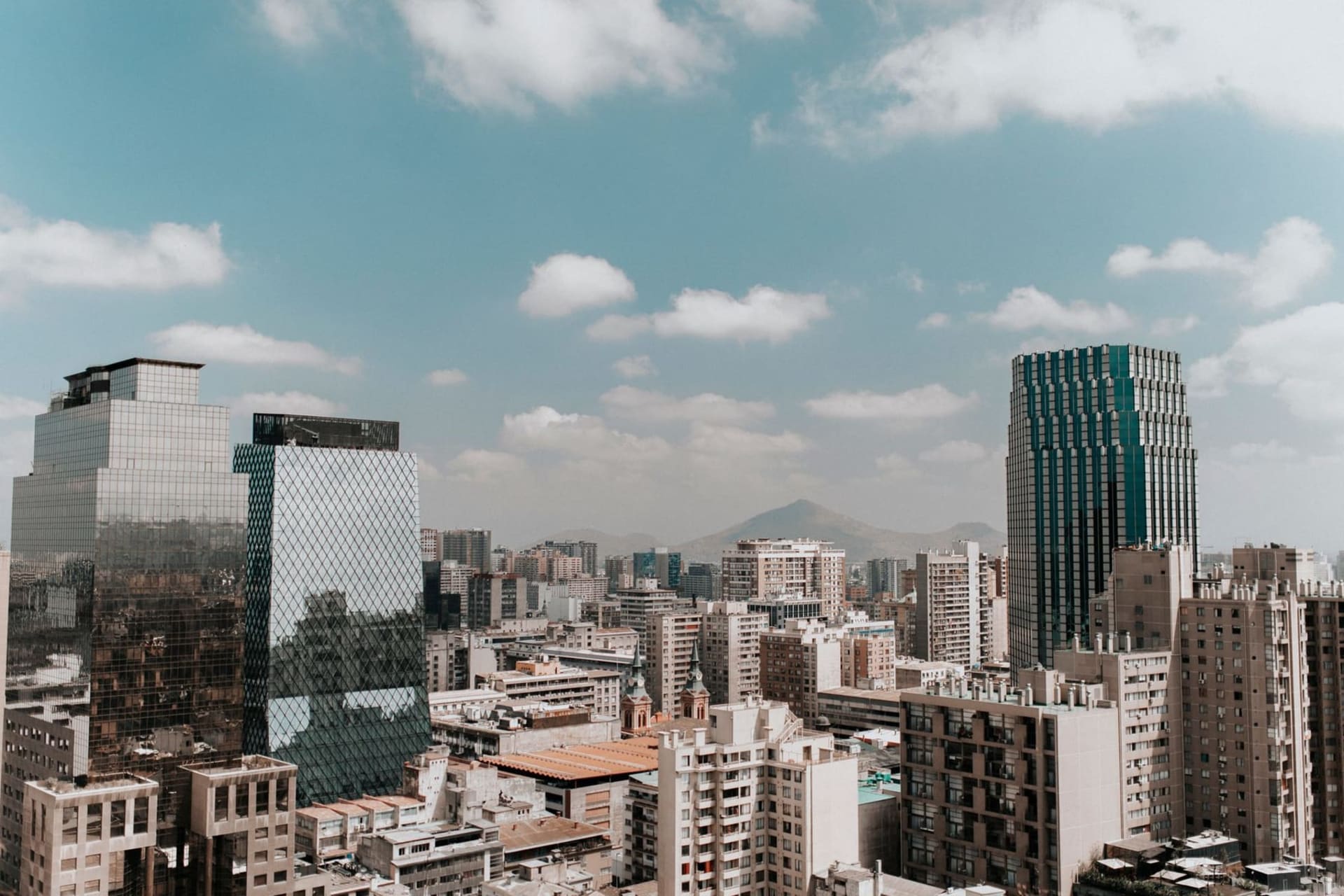
Santiago de Chile
"Santiago looks at the Andes every morning and decides to be as serious about life as the mountains."
A sophisticated Andean capital where street art, excellent wine bars, and the white-capped Andes frame the skyline.
I did not expect to feel small in a city. Santiago managed it within the first hour.
We arrived on a clear June morning — austral winter, the sky that particular shade of high-altitude blue that has no good name in French — and the Andes were just there, the entire eastern horizon swapped out for a wall of rock and snow. Standing at the corner of Avenida Providencia and watching the mountains hold still while the city moved around them is the closest I have come to understanding the word impassive.
Barrio Italia and the Art of the Slow Morning
Lia found Barrio Italia first, the way she always finds the right neighborhood before I have finished reading the map. The streets around Avenida Italia are lined with converted houses turned into design studios, vinyl shops, and cafés that take their cortado seriously. We had breakfast twice at a place on Condell — pan de molde toasted dark, palta smashed with nothing but salt and lemon, a cortado that arrived in a proper glass. The barrio smells of coffee and freshly watered plants in the morning. By midday it smells of empanadas de pino from the bakery two blocks toward Ñuñoa, the fat and cumin coming through the door every time someone opened it.
The unexpected thing: half the buildings are covered in murals that go floor to roofline, and nobody stops to look at them. Not because they are not extraordinary, but because in Santiago they are simply the wall.
Cerro San Cristóbal and What the City Hides
The funicular up Cerro San Cristóbal is older than it looks and slower than you think it should be, which turns out to be exactly right. From the top, the city resolves itself. You understand, finally, why everything here feels slightly pressed — Santiago sits in a basin, the Andes to the east, the lower Cordillera de la Costa to the west, and the smog of five million people caught between them on windless days. On a clear day after rain it is one of the more astonishing urban views I have seen anywhere.
We descended and walked directly into Bellavista, where we spent the evening at a wine bar on Constitución drinking Carménère from Colchagua that tasted like dried plum and pencil shavings, which is a better combination than it sounds.
Getting the Timing Right
When to go: September through November brings spring warmth and clear skies with the Andes still snow-capped — the best light for the mountains. March and April are equally fine: the summer heat has broken, the harvest is on in the nearby valleys, and the city settles back into itself after the tourist season.