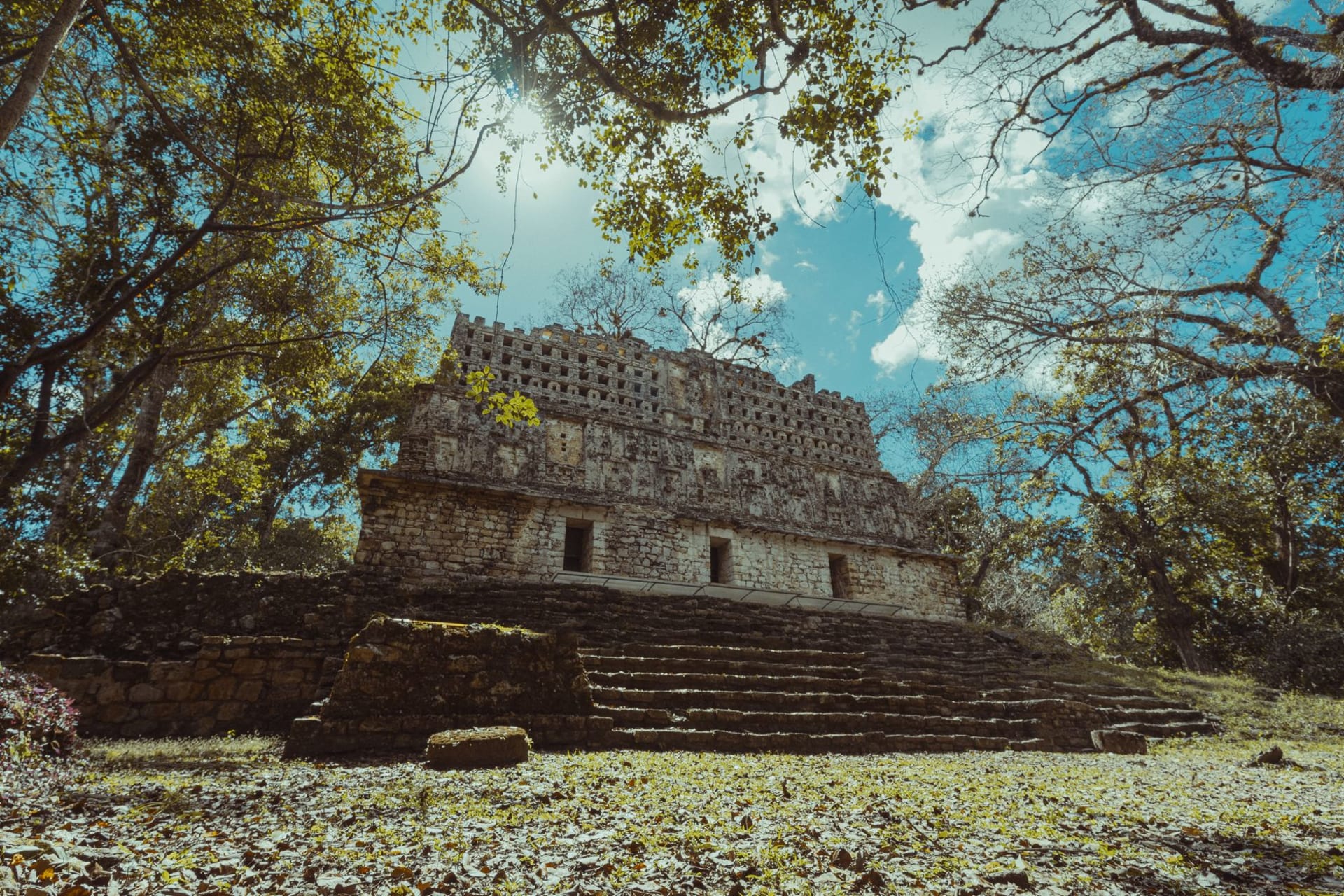
Yaxchilán
"There is no road. You take the river, and the river takes its time, and that is exactly as it should be."
You cannot drive to Yaxchilán. The only way in is a long, narrow motor launch down the Usumacinta, the river that draws the border between Mexico and Guatemala, and the boat ride is half the point. We set out from Frontera Corozal in the grey of early morning, the river the colour of strong tea, Guatemalan forest on one bank and Mexican forest on the other and no apparent difference between them. Kingfishers, a crocodile sliding off a sandbar, the boatman cutting the engine to let us drift past a troop of monkeys. By the time the temples appeared through the trees I had already stopped checking my phone, which had no signal anyway.
Into the Labyrinth
You enter the site through a building everyone calls El Laberinto, the Labyrinth, a genuinely dark and disorienting maze of low stone passages that the Maya seem to have designed precisely to unsettle you before you emerge into the main plaza. Bats overhead, the smell of wet stone, and then sudden bright green and the river beyond. It is theatre, fifteen hundred years old, and it still works. I came out blinking and slightly unnerved, which I suspect was always the intention.

Yaxchilán was a major power in the Classic period, and what survives is extraordinary — carved stone lintels above the doorways, some still in place, showing rulers and the bloodletting rituals their queens performed, the glyphs as crisp as if they were cut last year. Structure 33, up a steep stair, has a roof comb that breaks above the canopy and a headless statue of the ruler Bird Jaguar that the surrounding villages still hold to be powerful; local belief says when the head is reunited with the body, the world ends. I decided not to test it.
The Howlers
What I will remember longest is the sound. Yaxchilán has a large population of howler monkeys, and their call is unlike anything — a deep, rolling roar that seems far too large for the animal making it, rising and falling through the canopy. We were sitting on the steps of the Grand Acropolis when a troop started up directly overhead, and Lia grabbed my arm, genuinely startled, before we both started laughing. It sounds like the jungle itself clearing its throat.

Doing the Trip
Most people combine Yaxchilán with the painted murals of Bonampak in a long day from Palenque, three hours each way by road plus the river. It is a punishing schedule but worth it. Go with a guide who can read the lintels; without one, you are looking at very fine carvings without knowing what they say, which is a waste. Bring water, repellent, and shoes you don’t mind soaking on the muddy bank.
When to go: November through April, the drier season, when the river is navigable and the trails through the site aren’t ankle-deep mud. The heat and humidity are serious year-round; start early and pace yourself.