San Juan Chamula
"The rules in Chamula are not San Cristóbal's rules, or Mexico's rules — and the church makes that unmistakably clear."
Nobody photographs inside the church at San Juan Chamula. The sign outside makes this clear. The community authorities make this clear. If you forget, someone will remind you immediately, and the reminder will be in a tone that does not invite discussion. This is not a restriction imposed by a tourism board; it is a rule established by the Tzotzil community that has governed this municipality autonomously since 1974, when federal authorities were effectively expelled following a series of conflicts over land and political representation. Chamula runs itself. The church is the center of that self-governance, and photography inside it is not permitted because what happens inside is not a performance.
The church of San Juan Bautista is visually arresting from the outside — whitewashed, baroque, covered in green paint around the doorway, overlooking a large square where market stalls and wooden crosses (painted in colors that correspond to different cardinal directions and cosmological functions) stand in no particular order. Inside, the transformation is complete. There are no pews. The stone floor is covered in a layer of fresh pine needles whose smell — cool, resinous, almost forestal — fills the interior and explains, at the physiological level, why it is used. Hundreds of candles burn in rows on the floor, their colors indicating the nature of the prayer. Copal incense rises in columns. Families kneel before their candle arrangements speaking in Tzotzil, sometimes to images of saints that have been dressed and positioned according to protocols I did not and could not fully understand.

The saints in Chamula have both Catholic names and Tzotzil ones, and they carry Tzotzil attributes that have nothing to do with their Catholic origins. San Juan Bautista, the patron, is also the sun. The moon is associated with the Virgin. These correspondences developed over five centuries of syncretism and they are not confused or improvised — they are sophisticated and consistent and entirely coherent within the cosmological system that produced them. The Catholic church never fully colonized this space. The indigenous ceremonial calendar continues to structure Chamula’s year; the most important fiestas are celebrated with processions, fireworks, and the consumption of a fermented sugarcane drink called posh that is sold from the market stalls on feast days.
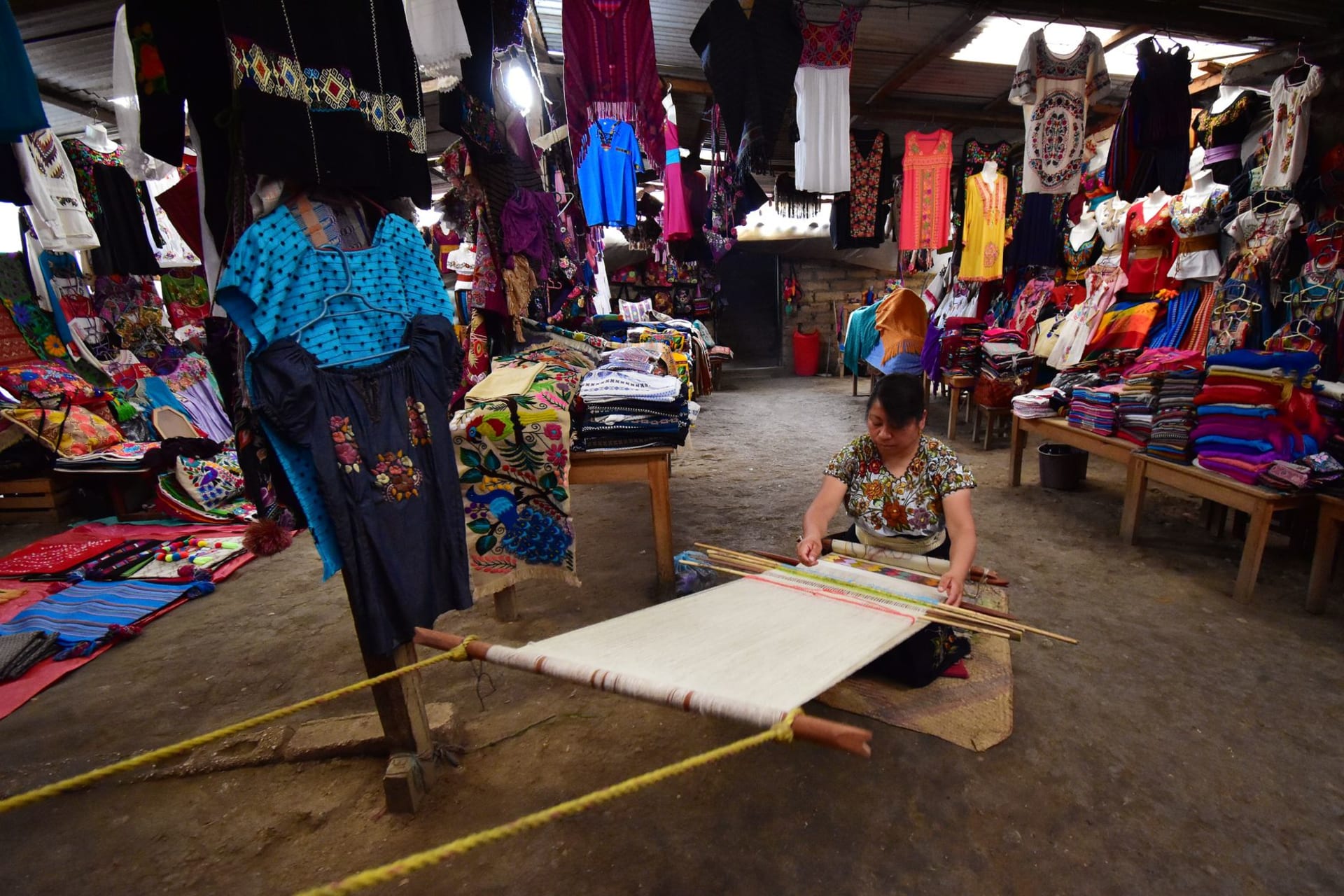
The market around the church square sells food that I have not found as good anywhere else in the San Cristóbal area. Corn fungus — huitlacoche — is available in season, folded into quesadillas with black beans and asadero cheese, and tastes the way good mushrooms taste when they have been grown underground and reached their full, slightly funky development. The atole negro, a thick corn-and-cacao drink served in clay cups, is smoky and barely sweet and takes some getting used to and is then suddenly correct.

Chamula is ten kilometers from San Cristóbal and accessible by combi in twenty minutes. The entry fee goes to the community. Guides from San Cristóbal offer tours that provide useful context — the cosmological details, the political history — but the church itself will communicate at least some of what it needs to regardless. Go on a non-market weekday if you prefer a quieter experience; go on Sunday or a feast day if you want to see Chamula at its most fully itself.
When to go: Year-round, though the main fiestas — Carnaval in February and the feast of San Juan in June — bring the most elaborate ceremonies. The church operates every day and the market functions on Sundays. Wear modest clothing, speak quietly inside the church, and follow any instruction from community authorities without discussion.