
Agua Azul
"The color of that water is simply not reasonable — and then you get in and it is even less so."
The road down from San Cristóbal to Agua Azul drops nearly two thousand meters over ninety minutes, and the landscape changes so completely and so fast that it feels like a time-lapse of climate zones. Pine forests give way to cloud forest, which gives way to something denser and wetter and darker green, and by the time the road levels out near the Rio Tulijá the air coming through the window is thick and warm and carries the smell of humid earth and flowering things I could not name. I could hear the waterfalls before I could see them.
Agua Azul is a series of travertine cascades where dissolved limestone minerals give the water a color that reads as artificial in photographs and genuinely improbable in person: a deep mineral turquoise, somewhere between a swimming pool and a glacier lake, set against the fluorescent green of the surrounding forest. The limestone has built up natural weirs and pools over thousands of years, so the effect is terraced — one pool spilling into the next, each catching light differently depending on the time of day. I had seen the photographs and told myself they were surely filtered. They were not filtered.
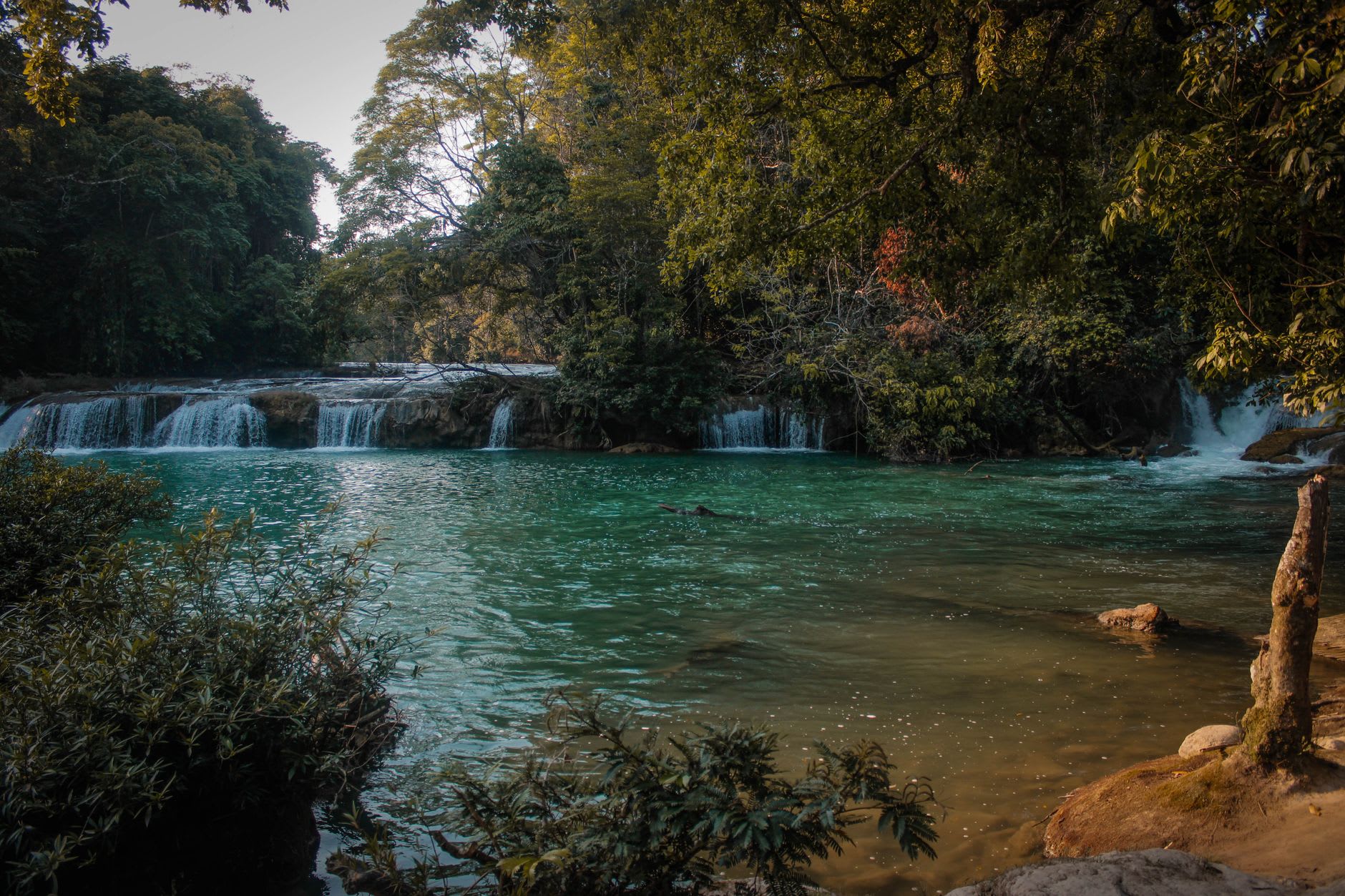
The swimming is the point, and it is extraordinary. The water is cold — cold enough that you gasp entering it even in the humid heat — and so clear that you can see the limestone bed several meters down, its colors shifting from rust to white to green depending on the algae. Local families wade in the shallower sections near the bank while the current runs hard in the center of the main cascades, where the foam breaks white over boulders worn smooth. I swam for two hours, went out to eat a tamale from one of the stalls at the entrance, and went back in. The tamales were good — masa that held some residual smoke from the wood fire, folded over black beans and a stripe of chili that built quietly rather than hitting hard.
Agua Azul is not undiscovered, and I do not want to pretend otherwise. The entrance path is lined with stalls selling plastic trinkets and inflatable rings. On weekends in high season the pools near the entrance get crowded. But walk upriver for twenty minutes past the main tourist cluster and the crowds thin and the pools become longer and quieter and the forest closes more completely overhead. I found a pool up there, perhaps forty meters long, where only four other people were swimming, the jungle pressing in from both banks and a kingfisher conducting urgent business in the shallows.
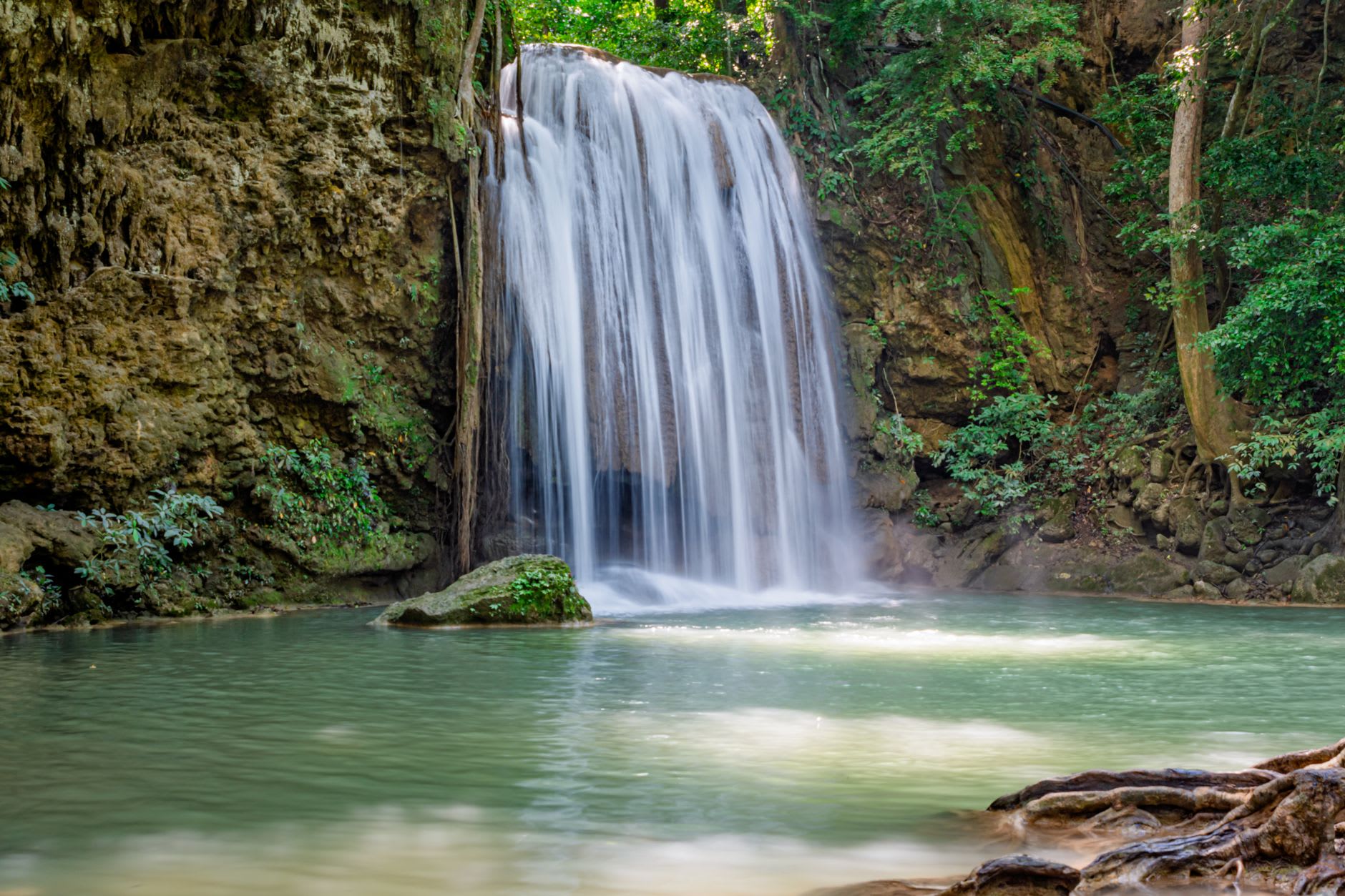
The waterfalls and surrounding community are managed by a local ejido cooperative, and it functions better than most such arrangements — the entrance fee is modest, the stalls are locally owned, and the path upriver is clear and well-maintained. The community of Agua Azul itself, visible through the trees, runs on its own terms.
When to go: November through April, when the dry season keeps the water clearest and the current manageable. After heavy rains the water turns brown with suspended sediment and swimming is often prohibited — checking conditions before making the trip from San Cristóbal or Palenque is worth doing. Arrive before eleven and the crowds are thin.