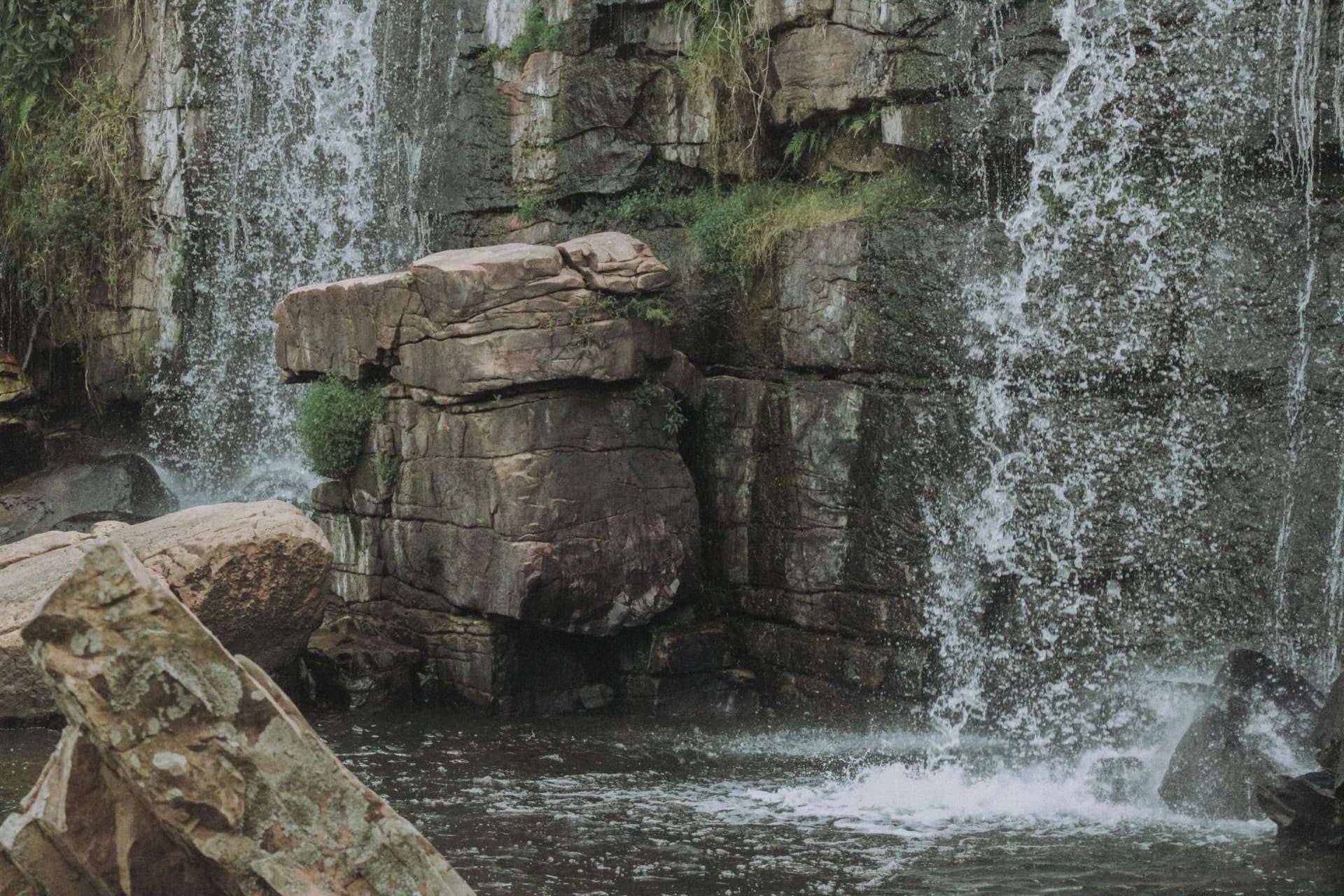
Cachoeira dos Couros
"I'm thirty-four years old and I went down that rock slide six times. I would have gone down six more."
Nobody told me to go to Cachoeira dos Couros first. My guide had mentioned it almost as an afterthought — not the most dramatic waterfall, not the deepest pool, not the longest trail. What it has, she said, with a slight smile, is the slides. That description did not prepare me for what I found: a series of smooth quartzite chutes carved by the river over millennia, perfectly angled, perfectly worn, dropping ten meters into a pool so turquoise it looks chemically enhanced. The first person I watched go down was a man in his fifties in a floral shirt who screamed with the uncomplicated joy of a child. Then his wife went. Then their teenage son. Then I went.
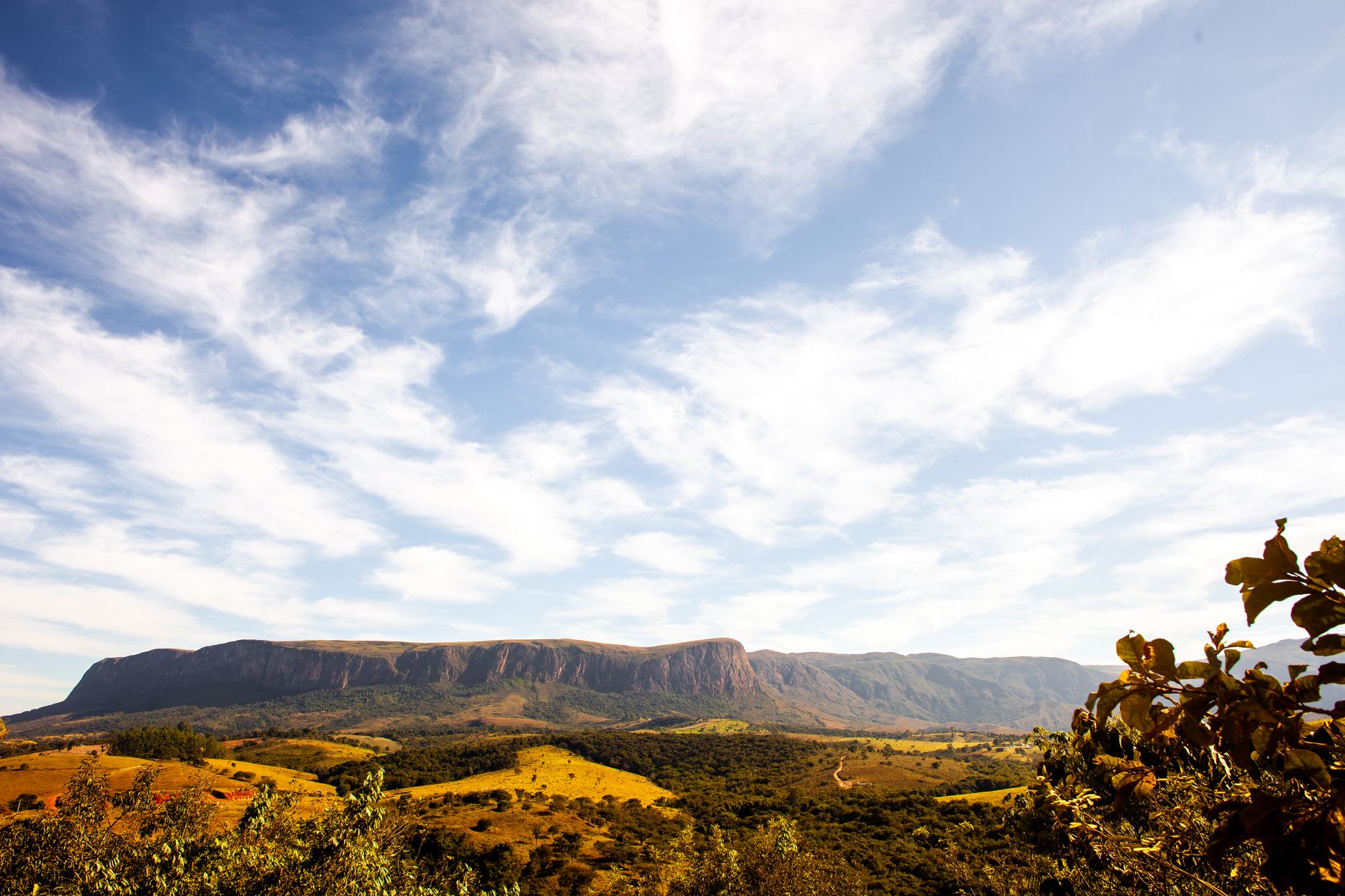
The trail to Cachoeira dos Couros from São Jorge takes about forty minutes through open cerrado — that peculiar, ancient landscape of twisted trees and copper-red soil that Brazil’s central plateau has been producing for millions of years. The vegetation looks burned even when it hasn’t been, the trees low and gnarled with disproportionately thick bark evolved against fire, the ground red enough to stain your boots for days. Walking it in the morning heat, cicadas in full voice, the sun already serious, you work up a degree of anticipation for water that the falls then completely satisfy.
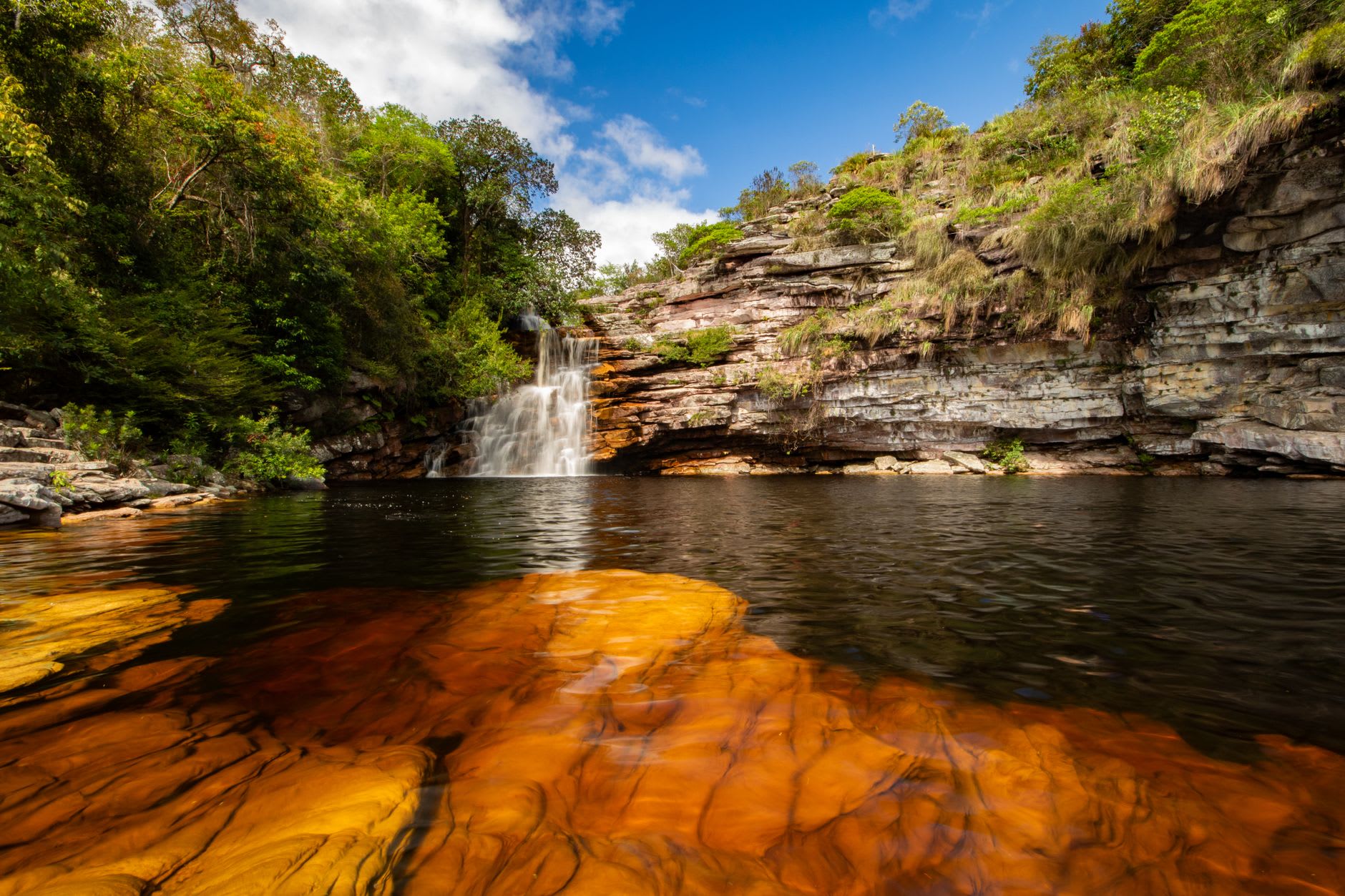
The pools below the slides are spring-fed and extraordinarily clear. In the deeper sections you can swim down two or three meters and still see the quartzite bottom, white and pale orange, fine gravel shifted into ripple patterns by the current. The color of the water is that specific turquoise that photographs poorly because no filter can quite render it — it reads bluer or greener depending on the angle and time of day, an optical effect of the white rock below and the mineral-pure water above. I spent two hours here and didn’t feel the urge to leave until hunger made the decision for me.
What strikes me about Cachoeira dos Couros — and I think this is true of several of the Chapada’s water features — is the complete absence of any infrastructure around the experience itself. There’s no viewing platform, no safety railing, no sign explaining what you’re looking at. You arrive, you read the landscape, you make your own decisions about where to swim and how fast to go down the slides. Families spread lunches on flat rocks. A guide from São Jorge sat in the shade with his phone while his group went wild in the water. The informality felt genuinely Brazilian in a way that I mean as a genuine compliment.
When to go: The slides operate only in dry season — between May and September, when the water level drops enough to make the lower slides accessible and the pool is navigable. The early dry season (May–June) offers the most dramatic contrast between cerrado brown and waterfall blue. July brings larger crowds but the park’s trails can absorb them. Come mid-morning when the light hits the pool directly and brings out the full turquoise.