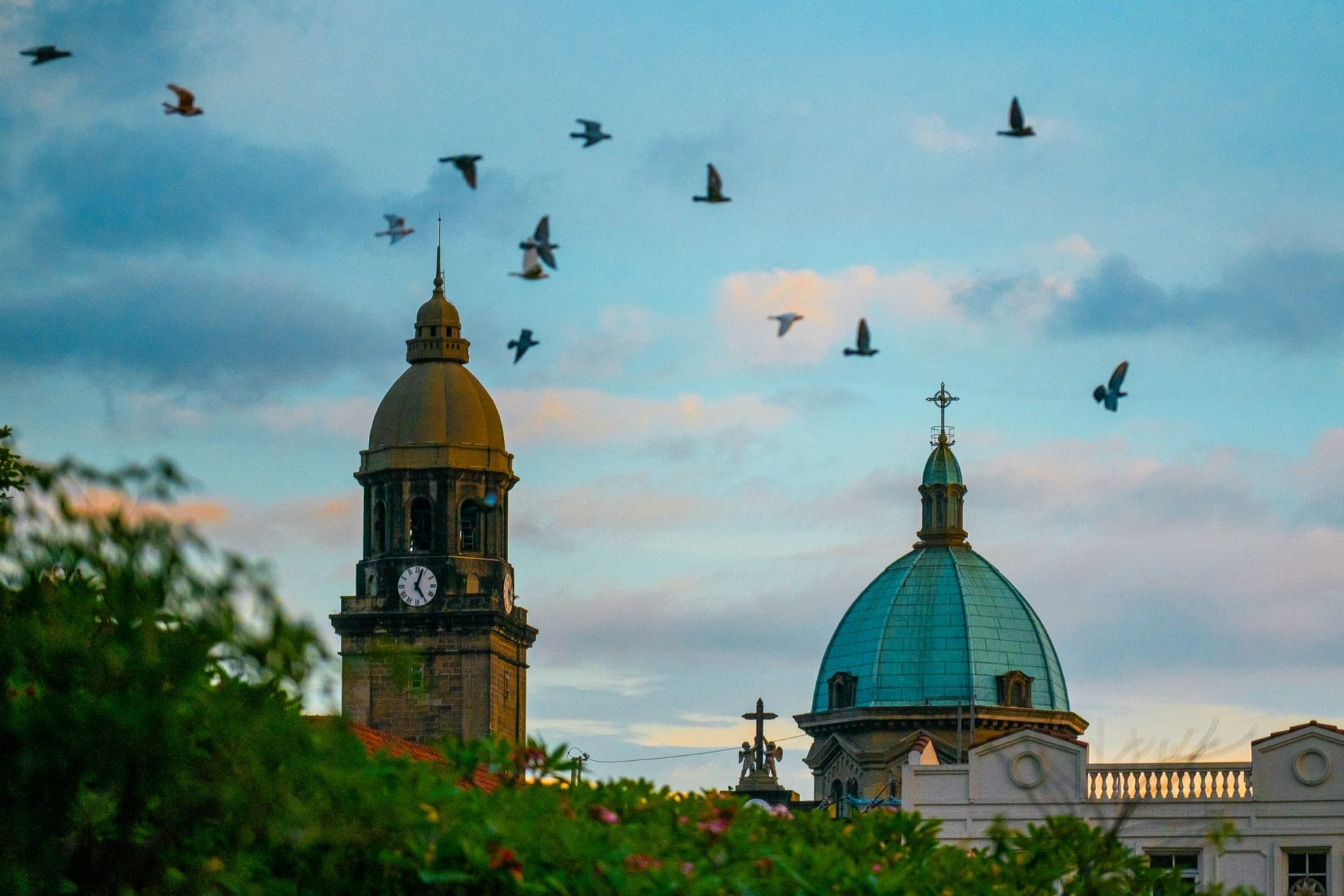
St. Peter Port
"Hugo spent fifteen years in exile here. The house he left behind contains more velvet than any human being needs."
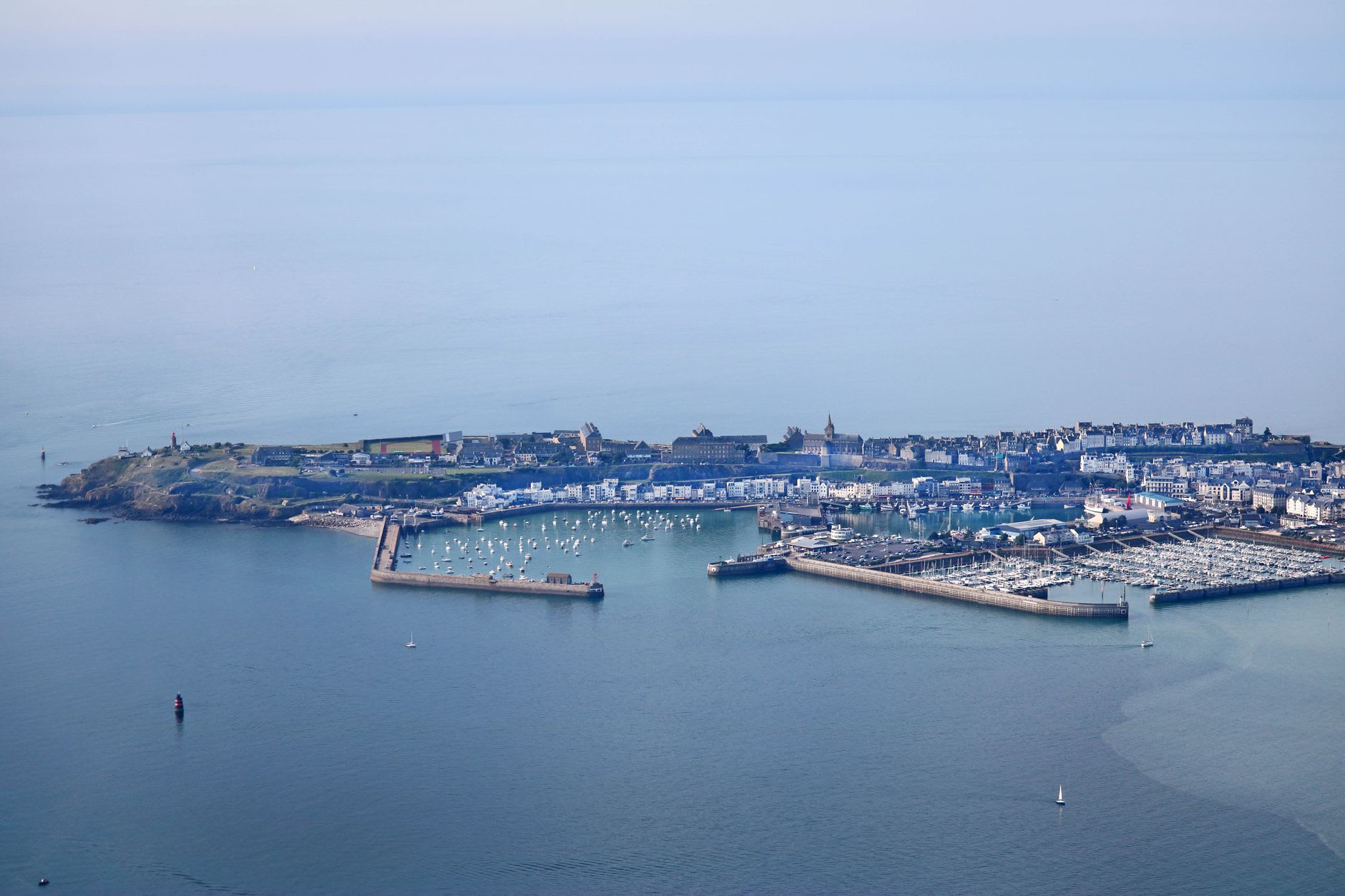
I came to St. Peter Port having read very little about it beyond the mention of Victor Hugo’s exile, which seemed reason enough. The ferry from Poole arrived in the morning, and the harbour that appeared through the sea-mist was unexpectedly elegant: Castle Cornet on its tidal islet to the right, the town climbing the hill directly ahead in a stack of Georgian townhouses and granite church towers, the Old Harbour’s crescent of quay lined with cafés that still put their chalk menus in French and English simultaneously. It has the structure of a prosperous Norman port — narrow upper streets, steep lanes connecting levels, a market square at the top — and something of the provincial self-assurance of a place that has not needed anyone’s approval for a very long time.
Hauteville House is Hugo’s former residence, now a museum, and it is extraordinary in a way that feels faintly deranged. Hugo lived there from 1856 to 1870 and spent his exile decorating every surface of the house with a combination of carved wood panels, tapestries, mirrors, blue-and-white Delft tiles, and personal monograms. The dining room alone requires several passes to absorb. The top floor contains his glass-walled study — a mezzanine room that functioned as both writing space and observatory — where he wrote Les Misérables and part of Les Travailleurs de la Mer, standing at a lectern, looking out at the harbour that had become, temporarily, his entire world.
The lanes of the old town above the harbour — Hauteville Street, Cornet Street, the covered arcades of the Arcade — repay an afternoon’s wandering. There are independent bookshops, a covered market selling local produce, wine merchants with Bordeaux and Burgundy at prices that reflect Guernsey’s tax status, and several restaurants that take their seafood seriously. I had scallops at a bistro on the waterfront whose provenance was explained to me with a specificity — that specific bay, those particular conditions, harvested this week — that I appreciated enormously, and which tasted accordingly.
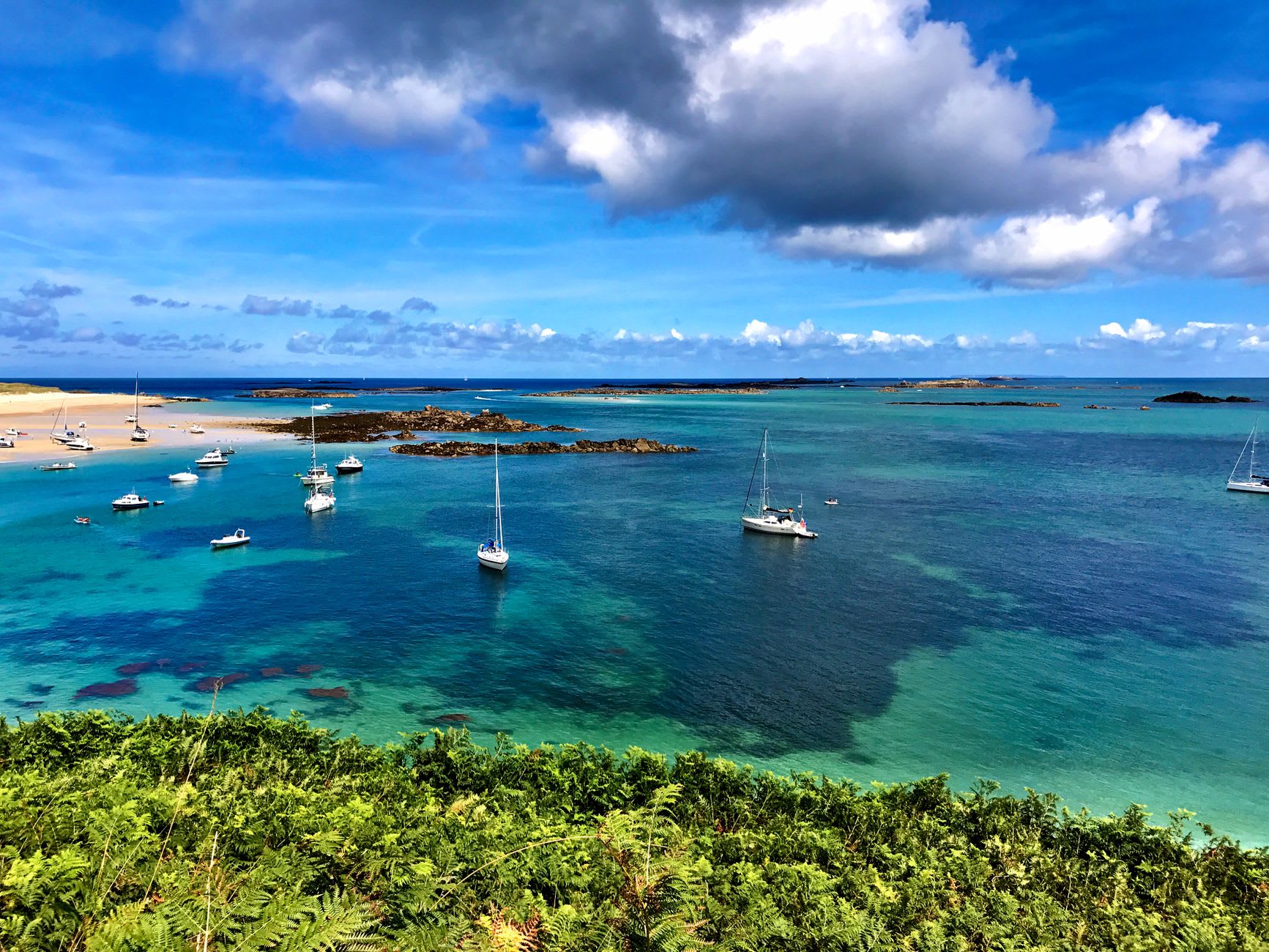
Castle Cornet, connected to the main island by a causeway, is a more honest ruin than Mont Orgueil in Jersey — less restored, more weathered, the barracks buildings inside still carrying the damp of centuries. The Maritime Museum within it is modest but thoughtful, and the panoramic view from the citadel encompasses the whole harbour, with the islands of Herm and Sark visible to the east on a clear afternoon, the French coast absent but felt.
When to go: May through September for full restaurant and museum openings. Hauteville House is closed in winter. The covered market operates year-round on Tuesday and Saturday. July brings the Battle of Flowers festival, which temporarily transforms the town’s normal quietness into something more demonstrative.