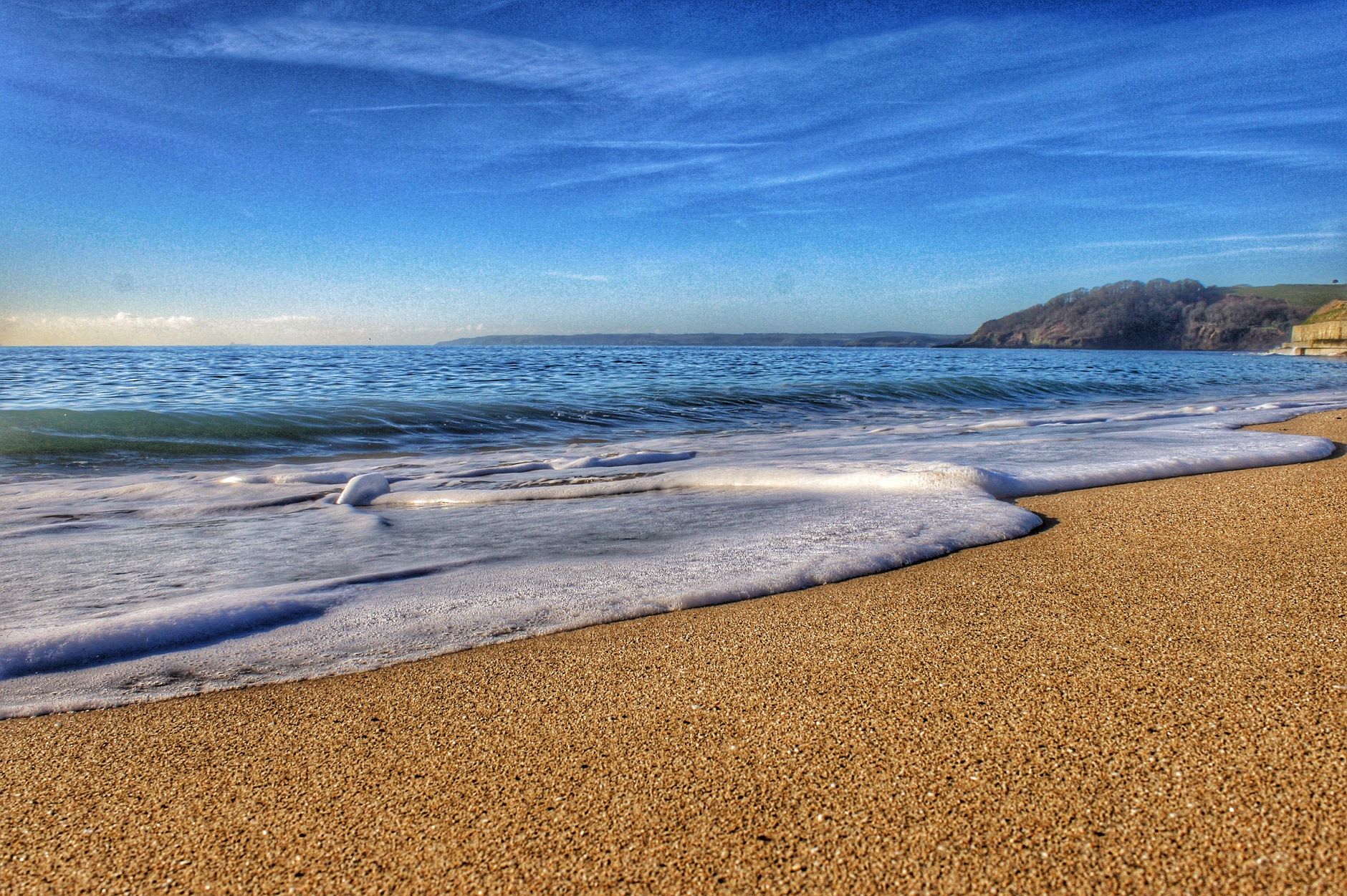
The taxi driver who took me from St. Helier to the western coast said something I keep returning to: “St. Ouen’s is where Jersey stops being polite.” He meant the weather. The bay faces directly southwest into the Atlantic with nothing between it and the Azores, and on certain afternoons in October the wind hits the sand with sufficient force to strip the skin off your cheekbones. The waves roll in long and clean from whatever storm system has been cycling off Iberia, and the surfers — who have been congregating here in wetsuits since the 1960s — read the swell with the practiced patience of people who have learned to wait.
The bay is five miles long, which is five miles longer than you expect an island this size to manage. At its northern end, the dunes give way to the nature reserve at Les Mielles — wet slack land behind the dunes, reed beds, a freshwater lake where migrating birds stop in October and March. I spent a morning there watching a solitary great white egret work the shallows with balletic slowness, entirely indifferent to the surfers visible through the dune grass to the west, and to me watching it from a wooden bench with a flask of increasingly cold coffee.
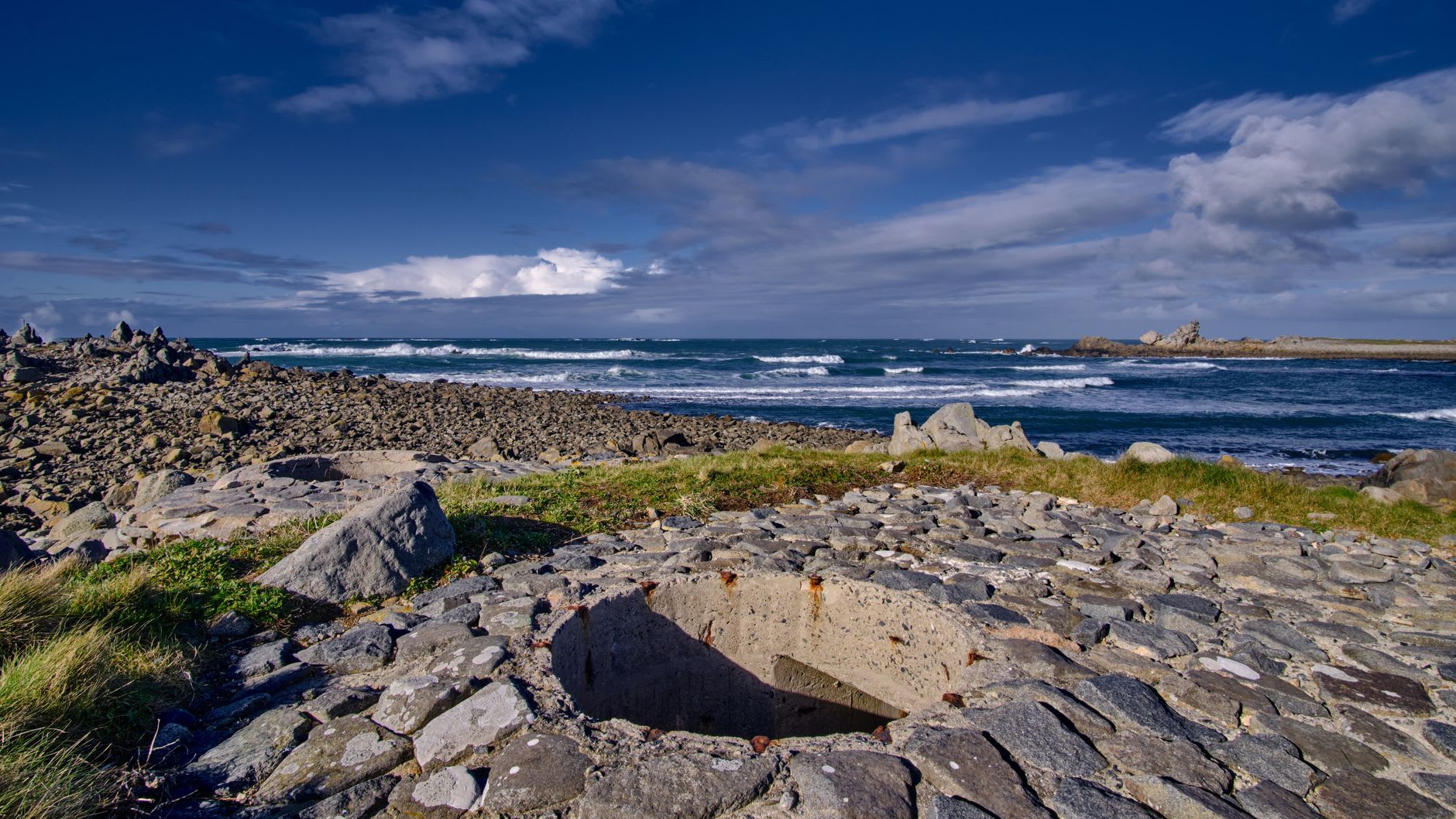
The middle section of the bay has a scattering of surf shacks, a café called The Watersplash that has been feeding wetsuit-clad teenagers since approximately forever, and a row of German gun emplacements embedded in the clifftop, which are now so accepted a feature of the landscape that nobody mentions them. This is true of the entire western coastline: the concrete of the occupation sits within the landscape not as intrusion but as geological layer, as if granite and bunker have reached some accommodation over the eight decades since.
At the southern end of the bay, La Pulente — a scattering of houses, a slipway, a car park — marks the boundary where the Atlantic beach gives way to the rocky headlands of Les Quennevais. At low tide, the reef extends outward several hundred metres, exposing rock pools with an implausible diversity: small blennies reversing hastily under ledges, sea anemones contracted to knuckles of red and purple, shore crabs the colour of the green-grey weed. I spent more time in those pools than I had allocated, as always.
When to go: Surfers favour September through March for consistent Atlantic swells. For swimming and walking, June through August brings calmer days and warmer water. The nature reserve at Les Mielles is exceptional during spring and autumn migration.