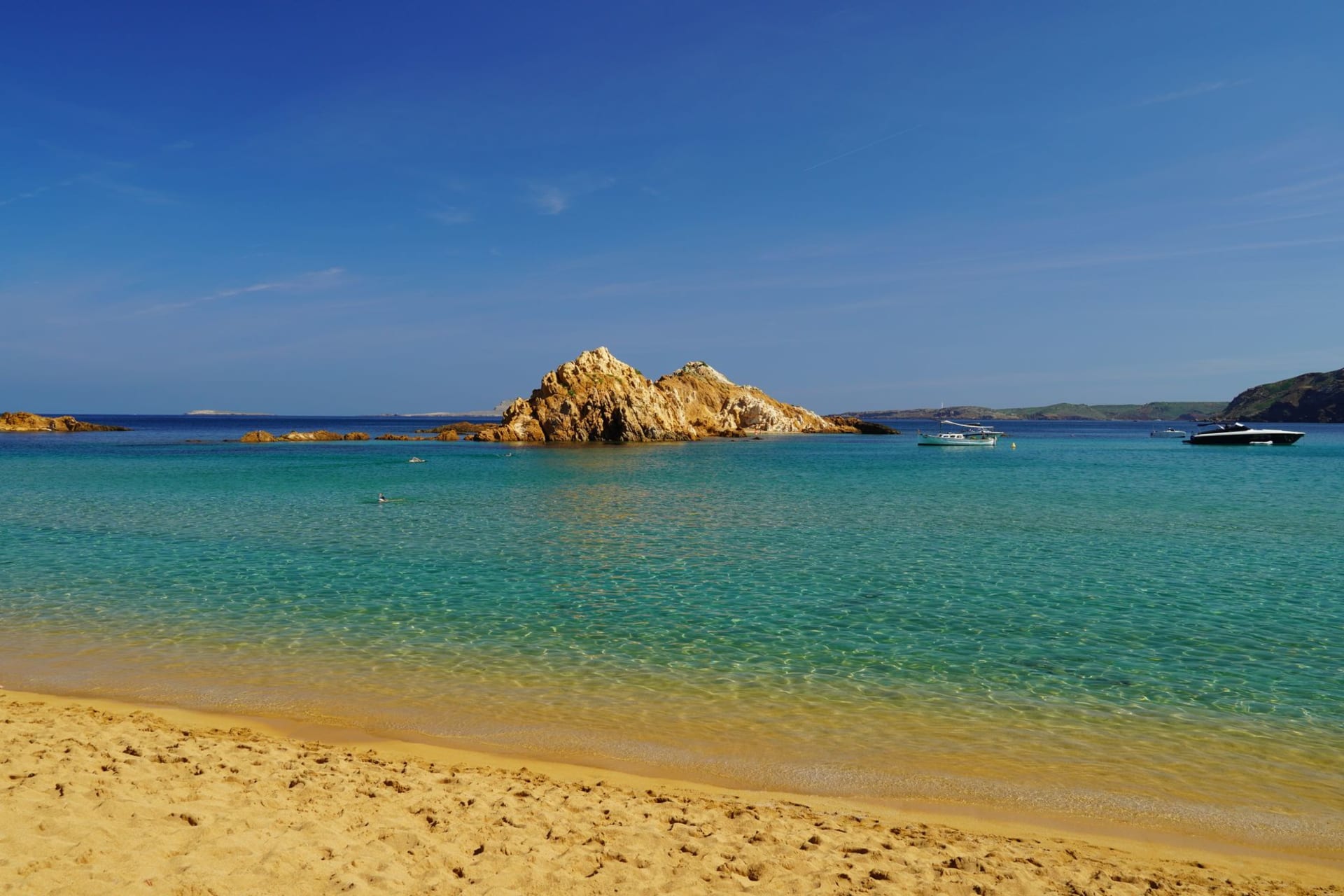
St. Brelade's Bay
"Some beaches are dramatic. St. Brelade's just holds you like it knows exactly what you need."
The first time I went to St. Brelade’s Bay I arrived expecting a typical holiday beach and found instead the particular satisfaction of a place that is simply, uncomplicatedly good at being itself. The bay is a near-perfect crescent — sheltered between two granite headlands, south-facing, the sand a warm pale gold, the water shallow and clear enough at the eastern end to show the sandy bottom through three metres of depth. The Fishermen’s Chapel stands at the western corner, a low Norman building from the twelfth century with a small paved area in front of it and rose bushes growing against the south wall, and the whole composition — chapel, beach, headland, bay — has the balanced quality of a landscape that arrived at its present state by geological accident rather than careful curation.
The chapel interior is covered in medieval frescoes that have survived in fragmentary form after centuries of whitewashing, deterioration, and partial restoration. The figures that remain — saints, angels, biblical scenes in ochre and red and the particular faded green of old fresco work — are visible in the half-light with the peculiar intimacy of images made for a small congregation who knew them by heart. I sat in there for twenty minutes in the company of the parish handyman, who was repairing a section of the stone floor and seemed entirely unbothered by the presence of a tourist examining the walls.
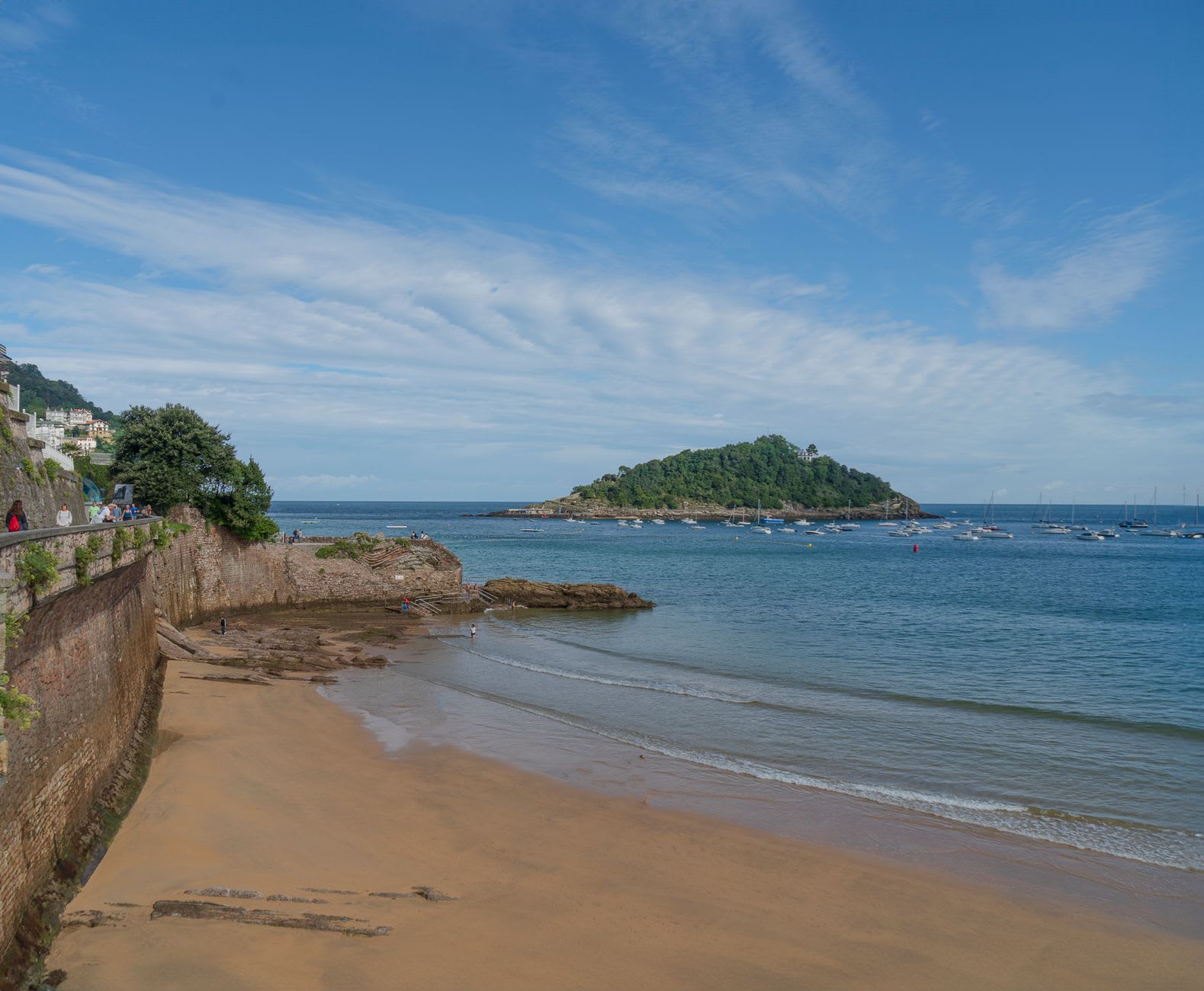
The beach itself is organised in the benign manner of a well-administered holiday destination: deckchair hire, a beach café serving crab sandwiches and ice cream of the creamy Jersey type, a row of beach huts at the eastern end that are leased annually and customised to a degree that suggests genuine domestic attachment. In July and August the beach fills up, but St. Brelade’s is wide enough and long enough that it never acquires the compressed quality of a beach beyond its capacity. By nine in the morning the light is already good and the sand still cool, and this is when I prefer it — the beach café opening its shutters, a few early swimmers testing the water, the headlands catching the first direct sun.
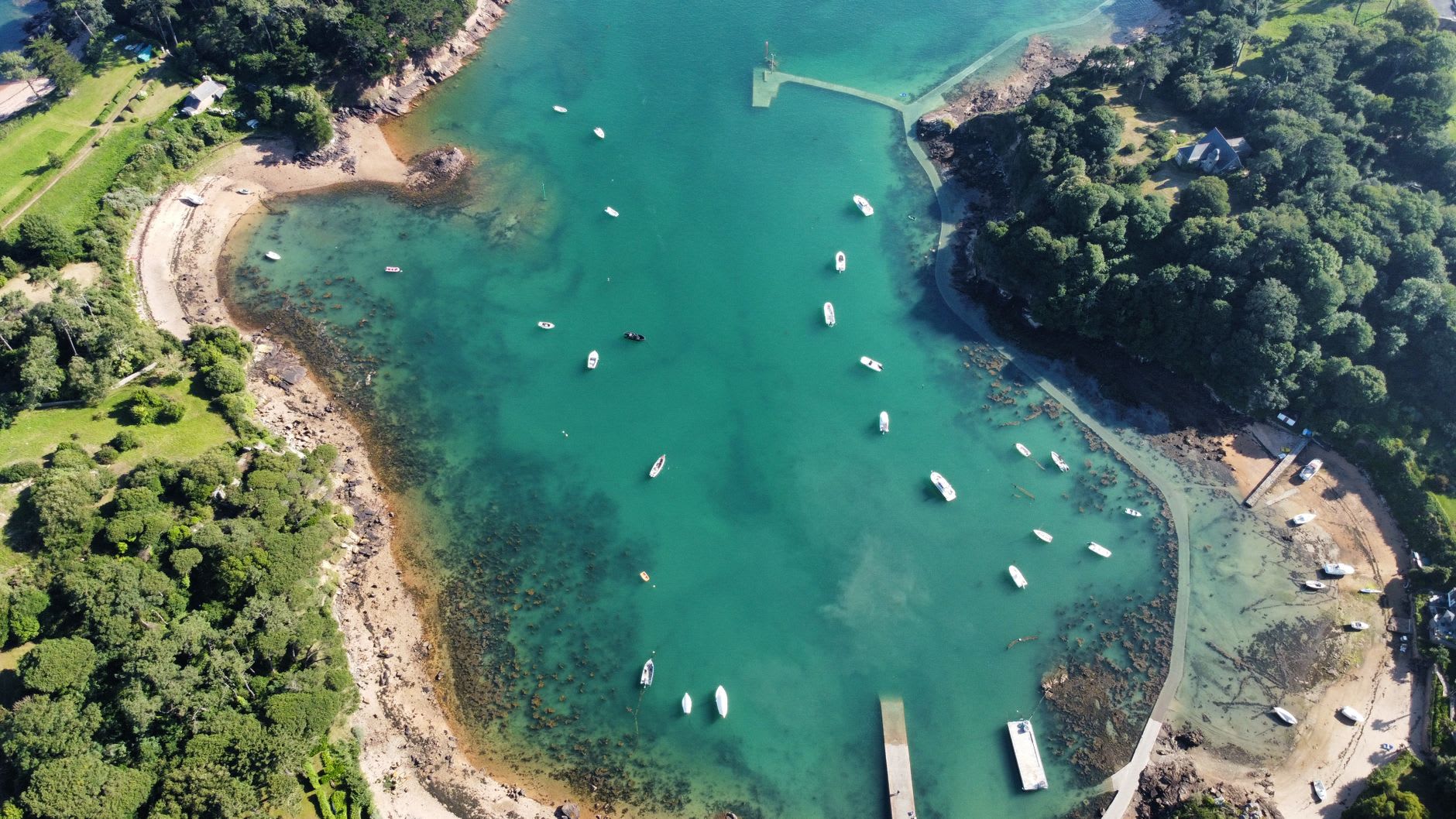
The restaurants along the bay road run from casual to genuinely good. The fish restaurant at the eastern end has been there for decades and operates on the straightforward principle that if the fish is this fresh and the kitchen is competent, there is no need to complicate things further. I ate there twice in three days, and both times ordered the same thing: whatever had come in that morning, grilled, with potatoes and a green salad and a glass of something cold and French.
When to go: May through September for swimming and beach use. June and early July offer the best combination of warm weather and manageable crowds before the school holidays. The Fishermen’s Chapel is open year-round and worth a visit even in winter, when the bay takes on a different and more introspective quality.