Lihou
"You have to check a tide table before you can even think about going. I love that about it."
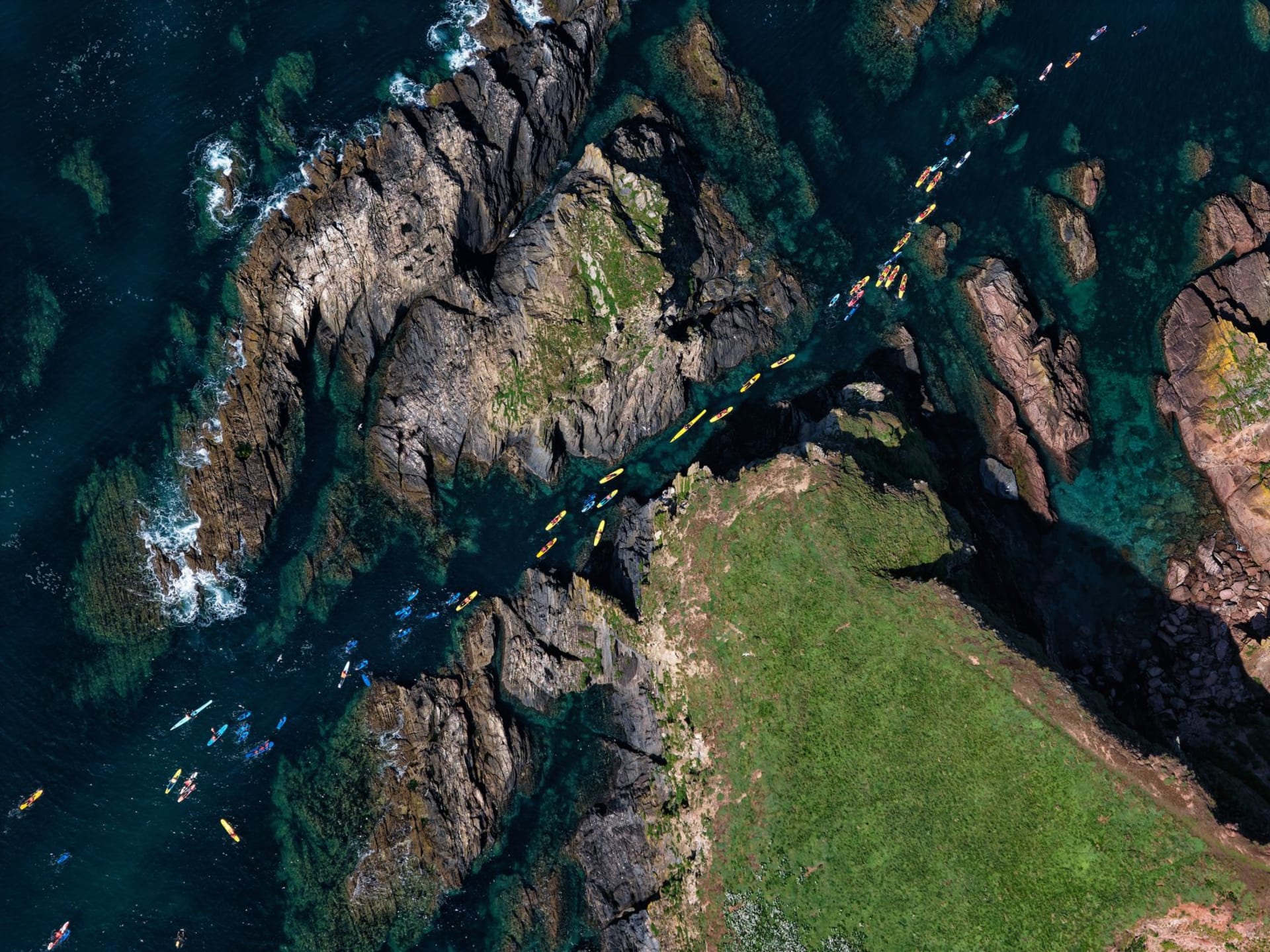
There are not many places left where the act of arriving is governed entirely by the moon. Lihou is one of them. It is a small uninhabited island off the rocky western tip of Guernsey, and it is connected to the main island by a causeway of weed-slick cobbles that the sea covers twice a day. You can only walk across at low tide, the crossing window is published in advance, and if you misjudge it you will spend several hours either stranded on Lihou or stuck on the wrong side — both of which, I gather, happen with some regularity to people who do not read tide tables.
Crossing on foot
Lia and I parked above L’Erée on Guernsey’s west coast on a blowing grey morning, checked the printed crossing times taped to a board by the path, and walked down to where the causeway emerged from the retreating water. The cobbles were laid centuries ago and are still uneven, slippery, draped in bladderwrack that pops underfoot. Rock pools on either side held shore crabs and darting fish stranded by the tide. The walk is only a few hundred meters but it feels like a genuine passage — you are crossing seabed, the wind comes straight off the Atlantic, and the awareness that the water is coming back gives every step a small edge.
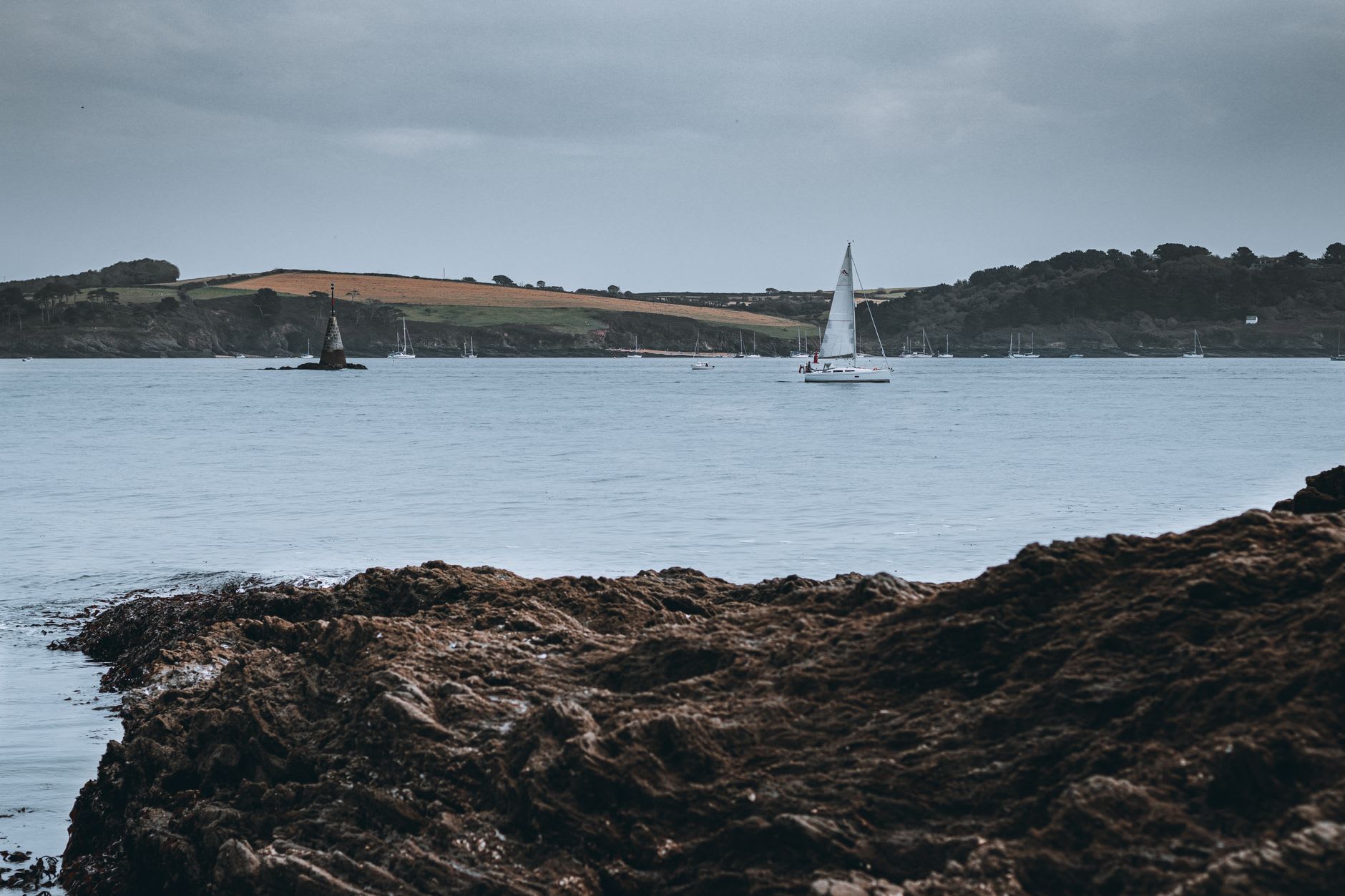
The island itself is tiny — you can walk around it in well under an hour. There is one house, used now for educational and retreat groups, and at the western end the ruins of a Benedictine priory, the Priory of St Mary, dating from the twelfth century. Monks lived out here, on this scrap of rock battered by Atlantic weather, which tells you something about either their devotion or their need to get away from the mainland. The ruins are low and roofless and the wind goes straight through them. I sat on a fallen stone and ate a cheese sandwich and felt thoroughly, happily windblown.
Birds, rock pools, and the Venus Pool
Lihou is a designated nature reserve and the birdlife is the main event for many visitors — it sits on migration routes, and the surrounding waters and reefs draw oystercatchers, egrets, and large numbers of seabirds. Lia, who is far more patient with binoculars than I am, spent a long time at the shoreline while I went looking for the Venus Pool, a deep natural rock pool on the island’s seaward side that fills at high tide and is clear and cold enough for a swim if you have the constitution. I dipped a hand in, decided my constitution was not equal to it that day, and admired it instead.

The thing I kept coming back to was how completely the tide structures the experience. You cannot dawdle indefinitely. At some point you look at your watch, look at the causeway, and start back — and there is a real pleasure in that imposed discipline, in being subject to something larger and indifferent. We crossed back with perhaps forty minutes to spare and turned to watch the water begin to reclaim the cobbles behind us.
Check the official crossing times before you go — they are published by the States of Guernsey and change daily. Wear shoes you don’t mind soaking, bring a windproof layer whatever the season, and give yourself the full open window rather than a nervous dash. Lihou is small, but it gave me one of the most quietly memorable mornings of the whole trip.