
Montagne de Reims
"The faux trees at Verzy look like the forest is in pain — and yet somehow they're the most alive things I've seen in weeks."
I found the faux de Verzy by accident, which is probably the right way to find them. I’d stopped to read a map — an actual paper map, the kind that still exists in rural France — and then walked into the forest to stretch my legs, and twenty minutes later I was standing in the middle of something that had no business being where it was. The faux are mutant beech trees, the product of a natural genetic mutation that has been propagating itself in this particular stretch of the Montagne de Reims forest since at least the ninth century. They are low, twisted things, their branches corkscrewing and drooping and forking in directions that seem to contradict the basic logic of upward growth. Some of them are three hundred years old and still no taller than a bus shelter. They look like something that happens when a forest decides to stop obeying gravity.
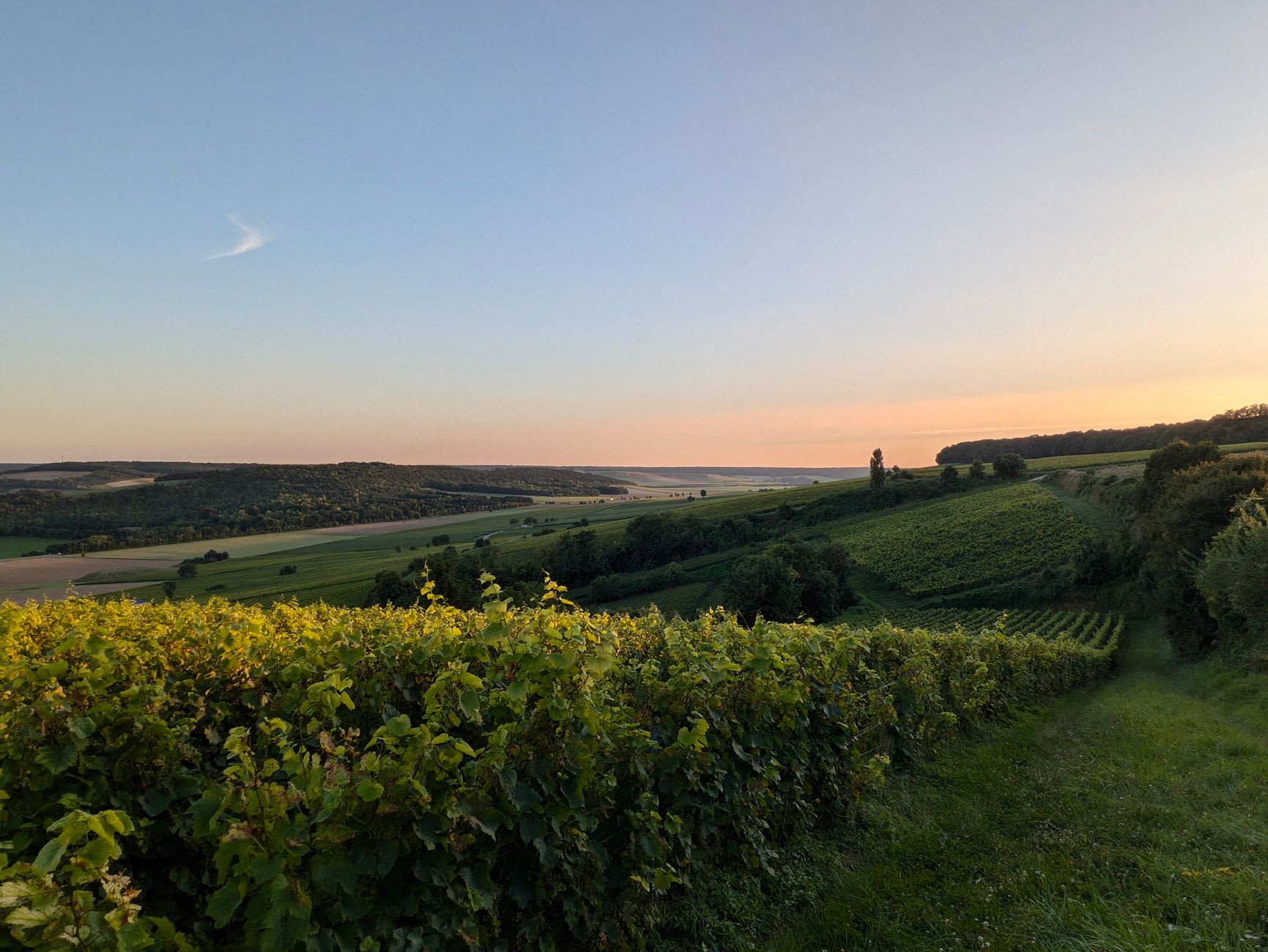
The Montagne de Reims is the forested plateau that rises between Reims to the north and Épernay to the south, forming the backbone of the regional natural park. The plateau itself is wooded — mixed forest of beech and oak and hornbeam — but the slopes that fall away from it in every direction are planted with vines. Pinot Noir country, mostly, because these north-facing slopes are cooler and the chalk drains the water down so the roots have to work. The villages tucked into the slopes — Verzenay, Verzy, Louvois, Bouzy — are almost absurdly quiet outside harvest time, a few hundred inhabitants each, a church, a mairie, three vignerons and a bakery.
I stopped at a domaine in Verzenay where the owner, a third-generation grower who’d inherited both the vines and an evident allergy to small talk, poured me four wines without commentary and waited to see what I’d say. The Pinot Noir still wines were extraordinary — full and spicy with a mineral edge that must come from the chalk — and I said so. He refilled my glass with the particular French efficiency that means “you’ve passed.” His Champagnes were equally serious: structured, autolytic, built to age. I bought three bottles and they were gone before I reached Paris.
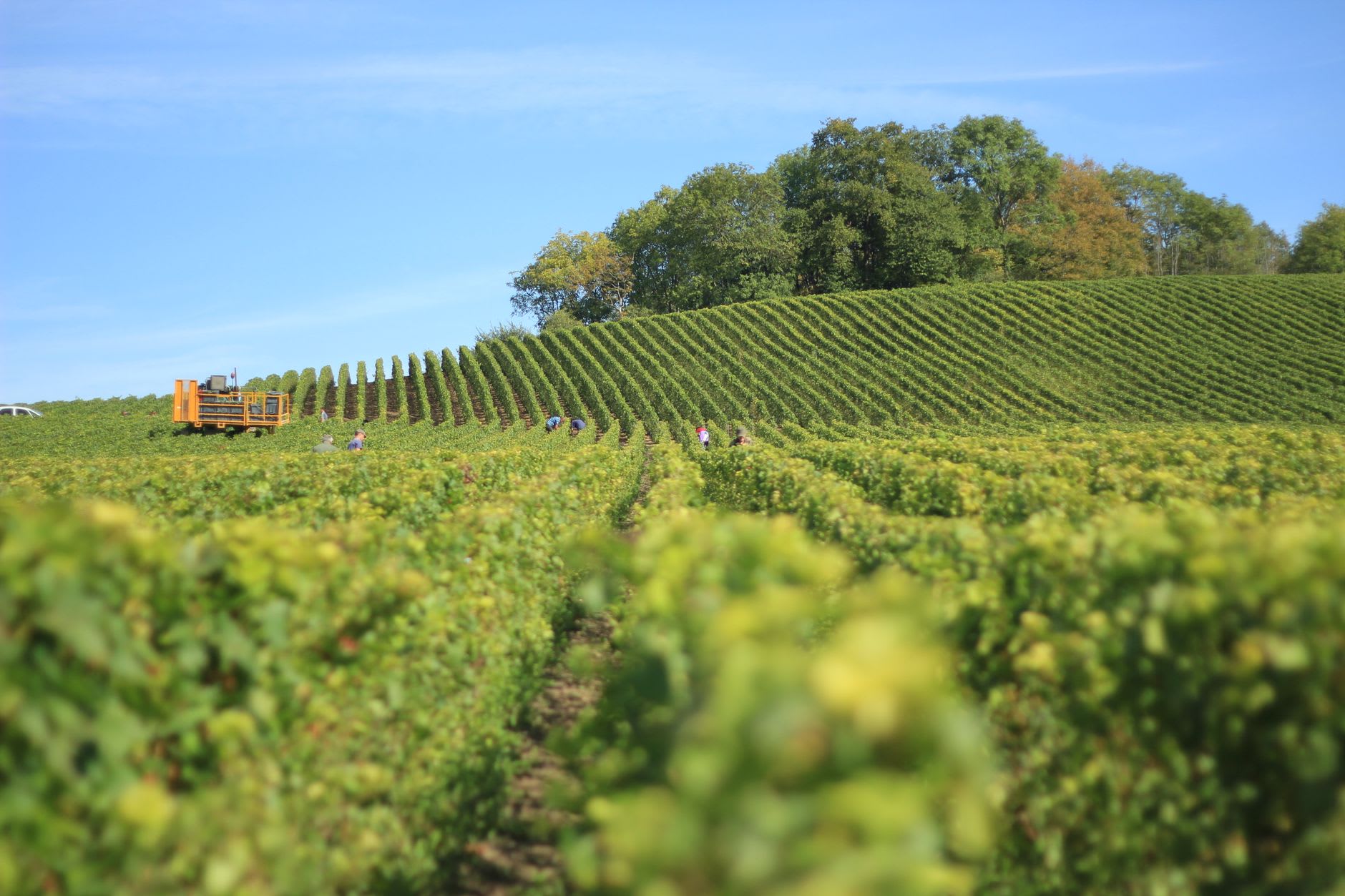
There’s a windmill above Verzenay — the Moulin de Verzenay, a postcard-pretty 18th-century mill that’s been converted into a Champagne museum — and on a clear day the view from its base covers an extraordinary sweep of the northern vineyards, the chalk fields of the plain beyond, and on the horizon the smudge of Reims. Standing up there in the wind with a glass of something cold and excellent, I had one of those moments where the landscape and the drink and the quality of the light converge into something that feels almost embarrassingly cinematic. I let it be cinematic. There are worse problems.
When to go: The faux de Verzy are haunting in any season, but winter and early spring — when the trees are bare and their twisted forms are fully visible against the pale sky — are the best moments. October harvest season brings the slopes to life. Summer weekends are good for cycling the forest roads with a picnic and a cold bottle.