
Quy Nhơn
"In Quy Nhơn the fish comes off the boat and goes straight into the pot. There is no middle chapter."
There is a moment on Quy Nhơn’s fishing pier at four in the morning — and I say this as someone who does not naturally get up at four in the morning — when the whole city becomes a single compressed act of purpose. The boats come in with their lights on, the baskets come off the boats and onto the pier in a chain of hands, the buyers stand under bare bulbs with their phones and their ice trucks, and the whole operation happens with the practiced silence of people who have been doing exactly this for longer than anyone can remember. I came to Quy Nhơn by accident — a broken air conditioner in Đà Nẵng, an overnight bus south, a guesthouse booked on a phone with low battery — and I stayed ten days. The fish was part of it. The rest of it was harder to explain.
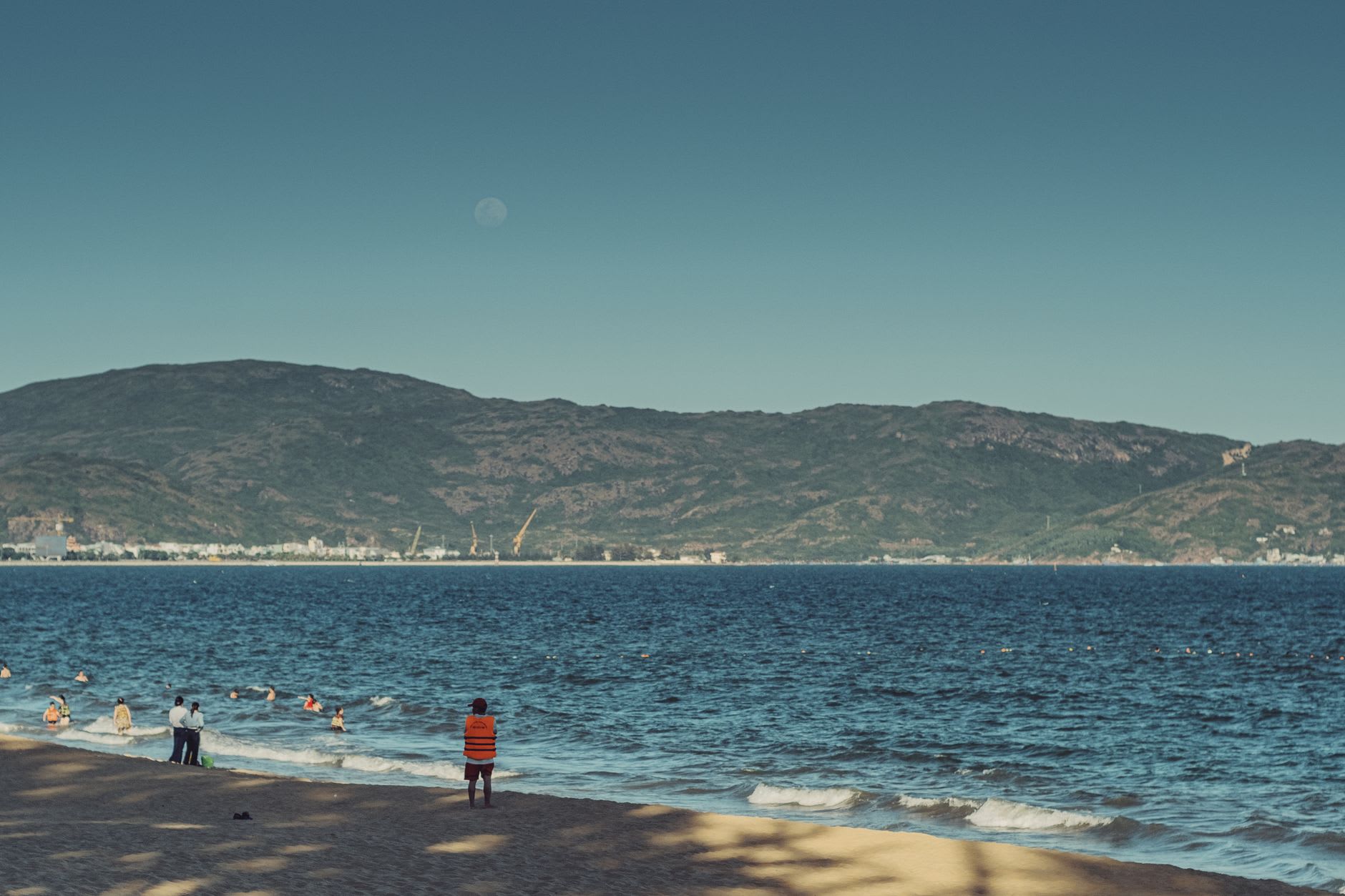
Quy Nhơn is the capital of Bình Định province, a city of about three hundred thousand that has the texture of a place that does not depend on you for its existence. The central market operates on its own schedule; the seafood restaurants along Xuân Diệu beach road fill at six PM not because they know tourists are coming but because the city eats at six PM; the coffee shops open at five-thirty because people here start early. The beach itself — a long curve of relatively uncrowded white sand immediately north of the fishing harbor — is used principally by locals, who swim in the early morning and again after five, avoiding the midday heat with the pragmatism of people who have always lived here.
The food is why serious eaters have started making the journey. Bình Định has its own regional cooking traditions that diverge from both Huế’s refinement and Hội An’s tourist adaptations. Bánh ít trần are small steamed rice dumplings with a shrimp and pork filling, served with a dipping sauce that’s half fish sauce and half something else I never identified; they’re eaten for breakfast at pavement stalls where the plastic chairs are shorter than your knees. Bún chả cá 109, a restaurant on a side street near the market, serves fish cake soup in a broth that I have thought about on multiple occasions since — clear, deeply flavored from fish bones, the cakes themselves springy and faintly sweet, served with a plate of water spinach and a wedge of lime that performs a specific and irreplaceable function in the dish.
The Cham towers at Tháp Đôi, right in the centre of the city, and the larger complex at Tháp Bánh Ít on a hilltop forty kilometres north, are among the finest surviving Cham architecture — less well-preserved than Mỹ Sơn but more dramatically sited, with views over the coastal plain that explain exactly why the Cham built their sacred places on high ground. The rocky coastline north and south of the city throws up swimming coves and fishing villages accessible by motorbike on roads that don’t appear on most maps.
When to go: February through July is the reliable window — dry, warm, calm enough for the fishing harbour to be fully operational and the beach swimmable. Quy Nhơn gets less rain than the central coast further north, which makes it a viable alternative during the autumn monsoon that floods Hội An and disrupts Đà Nẵng. The city is most itself in the early morning: arrive for breakfast, eat the dumplings, see the fish pier. Everything else follows.