
Hội An
"By six in the morning the lanterns are already lit and the town still belongs to its cooks."
I arrived on an overnight bus from Da Nang, stiff-backed and half-asleep, and stumbled into the old town at six in the morning when the market vendors were still arranging their herbs. The smell hit first — lemongrass, woodsmoke, something frying in deep oil. A woman was ladling broth into bowls on the pavement beside a cart, and I sat on a plastic stool with my backpack still on and ordered whatever she was serving. It turned out to be cao lầu — thick wheat noodles with char-edged pork, crispy rice crackers, and just enough greens to make it feel honest — and I ate it watching the Thu Bồn River canal turn gold as the sun came up over the tiled rooftops. Hội An is at its truest at that hour, before the ticket booths open and the tour groups arrive and the lanterns start doing what lanterns do when they know they are being photographed.
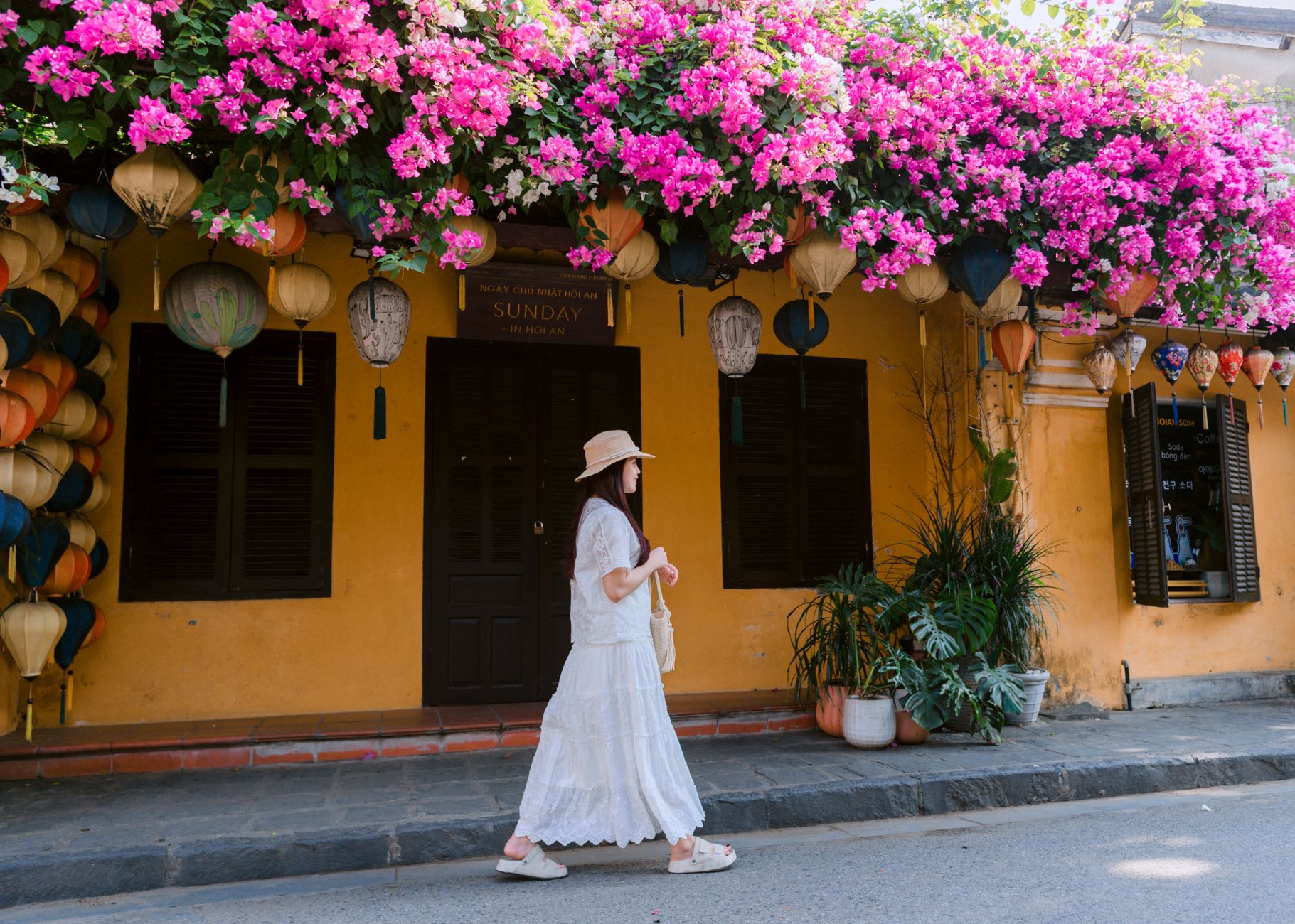
The old town itself is a UNESCO World Heritage Site, and it carries that designation with a certain baroque self-consciousness — a ticket system, shops selling the same silk lanterns in every doorway, restaurants with menus printed in six languages. But the architecture underneath all that is genuinely astonishing. The merchant houses on Trần Phú Street were built by Chinese and Japanese traders in the seventeenth and eighteenth centuries, and they reflect both traditions simultaneously: Chinese tiled roofs, Japanese interior proportions, French-era shutters grafted on during the colonial period. Walk through the Tấn Ký house and you pass through three centuries in sixty meters of corridor — carved wooden panels, ancestor altars, a courtyard where a jackfruit tree is reclaiming the flagstones. The Japanese Covered Bridge at the western end of the street was built in 1593, and it still carries foot traffic. It is more substantial in person than in photographs, and it smells of old wood and incense.
The town’s real life happens in the half-kilometre radius around the covered market, where the tourist circuit doesn’t reach its fingers. The Cẩm Hà commune to the north of the old town is where the vegetables come from — cycling paths cut through rice paddies still being worked by hand, and the women at the market at Cẩm Châu sell herbs so fresh they bleed when you break them. The tailors working in the old town are another kind of Hội An entirely: shops that have been fitting foreigners for decades, families that know the difference between what tourists say they want and what will actually fit them when they get home, seamstresses who work through the night before Tết and produce by six AM what they promised you by six AM.
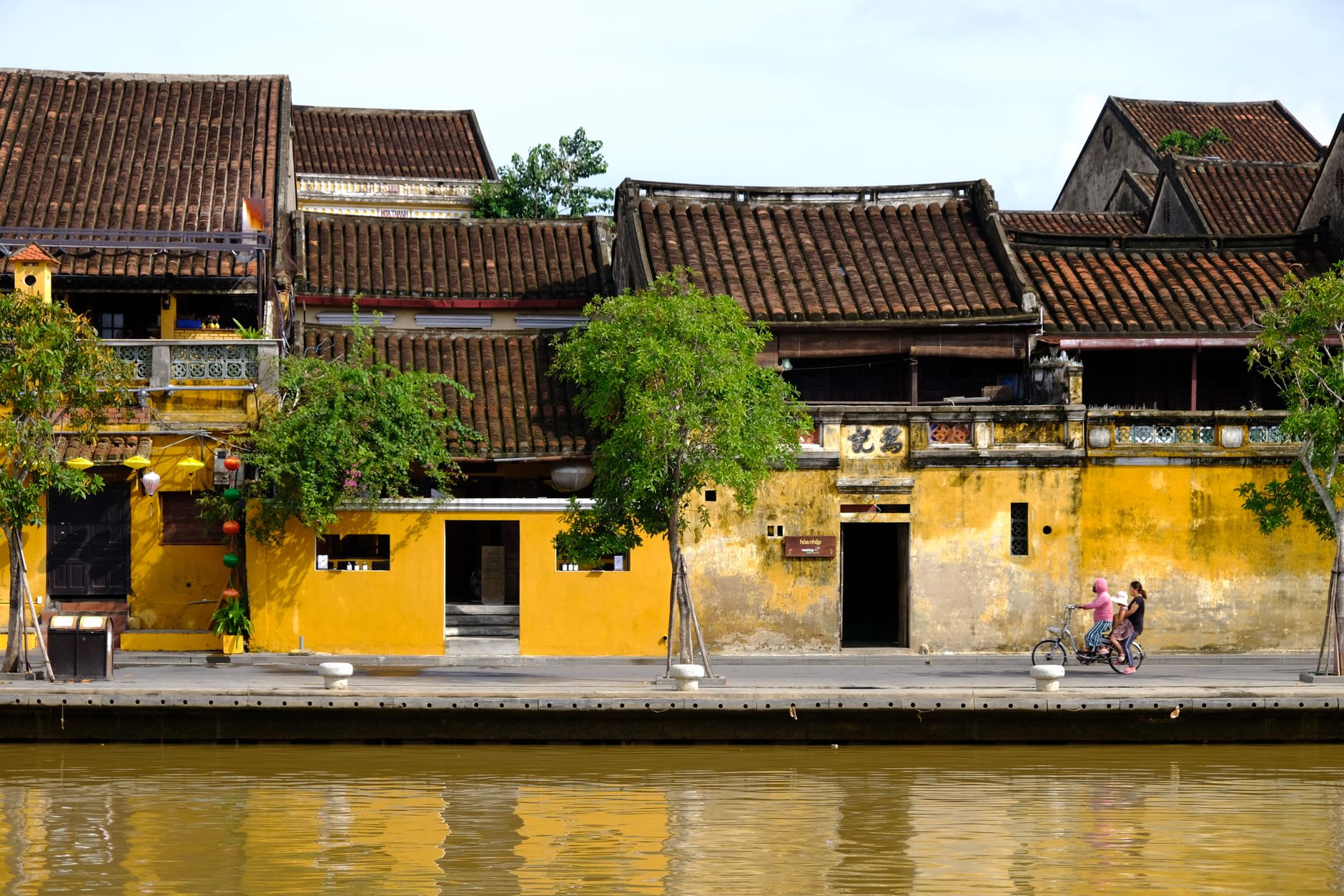
Evening is when the town tips into something harder to resist. The lanterns come on before dark, and by the time the river mist descends the whole historic district glows in a way that is, yes, completely engineered and completely effective. On the fourteenth of each lunar month the town holds a lantern festival — the electric lights go off, candles go on the river, and the old quarter reverts to something closer to what it must have looked like three hundred years ago when the merchants were here. I know it is a performance. I went twice.
When to go: February through May is the window, when the central Vietnam rains have passed and the summer heat hasn’t settled. March in particular has a quality of light on the river that feels specific to Hội An — low, golden, at a slant that makes the yellow walls glow. Avoid October and November entirely; the town floods badly and the lanterns don’t hold their poetry when your ankles are in water.