The DMZ
"The DMZ is the most peaceful place I have been in Vietnam. That is the most terrible thing about it."
I rented a motorbike in Đông Hà and drove north on Highway One to the Bến Hải River, which forms the former border between North and South Vietnam — the line drawn at the 1954 Geneva Accords that divided the country and was supposed to last two years. I parked on the southern bank and looked across. It is a small river, brown and slow, fringed with bamboo on both banks. Rice paddies stretch away on each side. There is a reconstructed bridge — the Hiền Lương, which was the only crossing point during the war, its northern half painted red and its southern half painted yellow, the colours of each flag. I stood on the bridge for a while and tried to make it feel like what it is. The river would not cooperate.

The Demilitarized Zone — the strip of land five kilometres wide on each side of the 17th parallel — was one of the most heavily bombed landscapes in the history of warfare. American B-52 strikes dropped more tonnage on this corridor than was dropped on all of Europe in World War Two. The Mường Giang caves at Vĩnh Mốc, seven kilometres east of the river on the coast, are where the entire village of Vĩnh Mốc dug itself underground between 1966 and 1972 to survive the bombing. The tunnels extend twenty metres below the surface in three levels, with ninety rooms that housed the village’s complete population — over a thousand people — continuously for six years. Seventeen children were born underground. I walked through the tunnels with a Vietnamese guide who was born in 1978, who told me about his parents’ stories of the war with the particular flatness of someone narrating something that happened to people he knows rather than events he feels he needs to perform. The tunnels are not air-conditioned and in July they are hot and close, and the dimensions — one metre wide in the main passages — are such that you can only move single-file. It takes about thirty minutes to walk through. I came out into the light unable to think clearly for a few minutes.
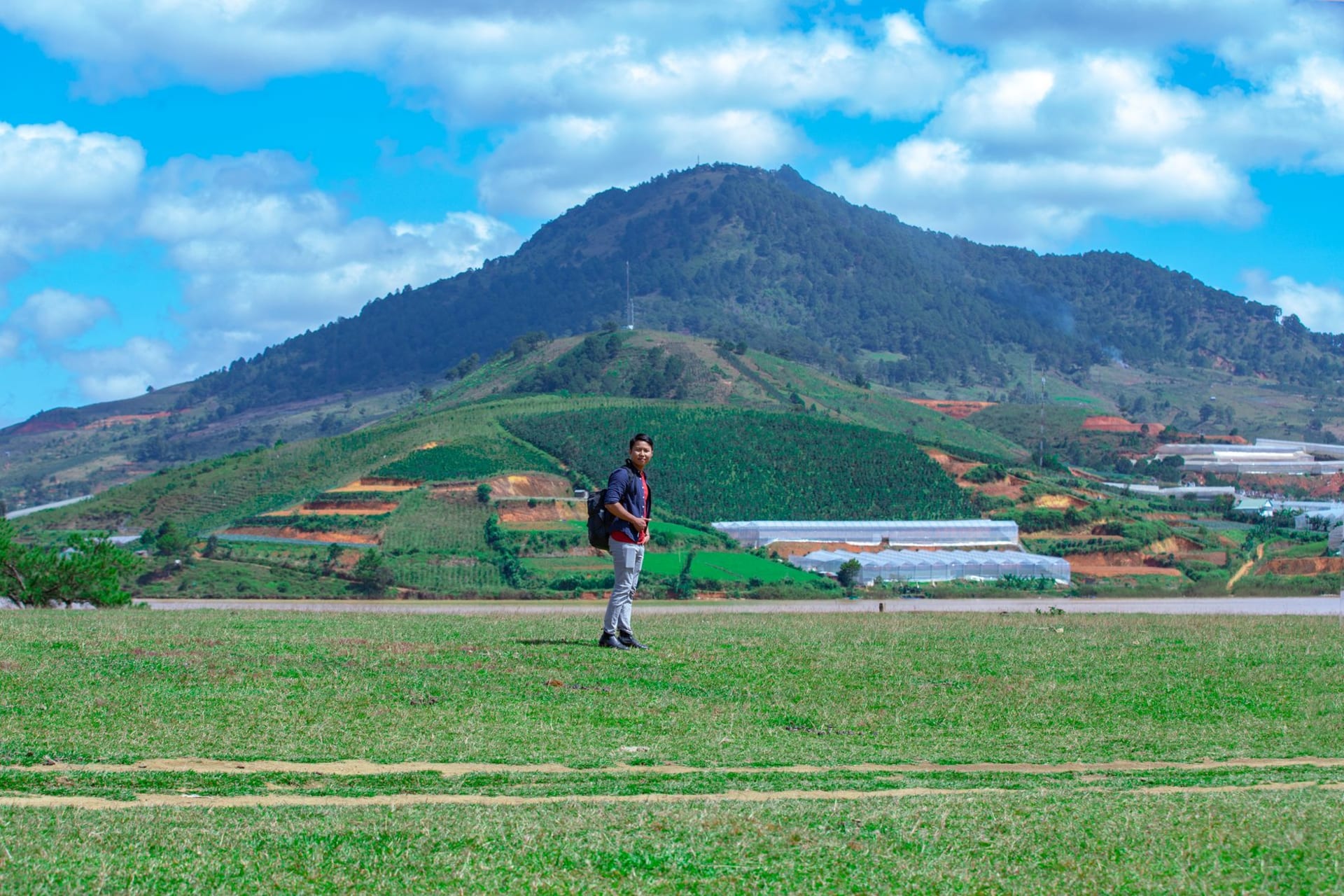
The landscape around the DMZ is oddly beautiful in the way damaged places sometimes are — flat and open and given to enormous skies, the grass and scrub slowly reclaiming the craters, the rivers running through everything indifferently. The Khe Sanh Combat Base, in the hills west of Đông Hà near the Laotian border, was the site of a 77-day siege in 1968 and is now a small museum set among the contours of the former base. The airstrip is still visible. An American tank and several artillery pieces sit in the open air. The mountains behind it are very green.

There are stretches along the road where the land is still not fully farmed — the UXO (unexploded ordnance) problem in Quảng Trị province means that an estimated three hundred thousand tonnes of undetonated bombs and shells remain in the soil, and accidents still happen. This is not ancient history. The Quảng Trị Unexploded Ordnance Victim Relief Centre exists because there have been victims recently. The DMZ is one of the few places where I have felt the weight of historical violence not as something to be aestheticized but as something still physically present in the ground.
When to go: February through May is the most comfortable period — dry, moderate temperatures, and the wide open landscape at its most legible under clear light. The DMZ is worth combining with Huế, an hour and a half south: rent a motorbike, drive north over the Đèo Ngang pass, spend a day on the river and at the tunnels, stay overnight in Đông Hà, and return. Allow a full day; it earns it.