Cù Lao Chàm
"The boat ride back to Hội An takes forty-five minutes. The distance in your head takes considerably longer."
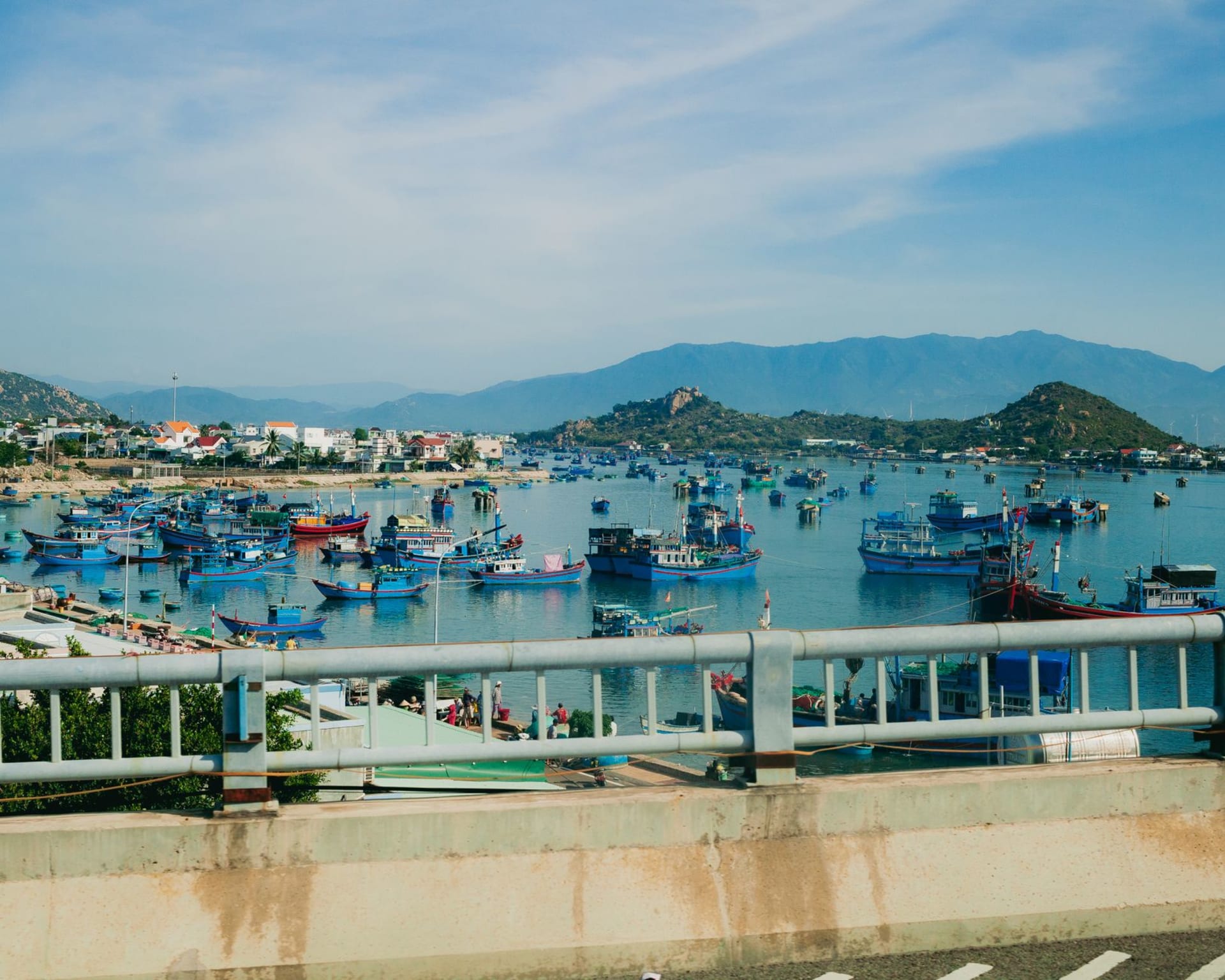
The speedboat from Cửa Đại beach takes forty-five minutes and deposits you on a wooden jetty in Bãi Làng village, the main settlement on Hòn Lao, the largest of the eight islands that make up Cù Lao Chàm. I stood on the jetty for a moment after the engine cut and listened: fishing boats knocking against their moorings, children somewhere up the hill, roosters, the long draw of the ocean on the rocks to the east. No horns. No motorbike engines. The archipelago achieved UNESCO Biosphere Reserve status in 2009 and has enforced a near-total ban on single-use plastic since 2009 — a level of environmental seriousness almost unparalleled in Vietnam, and immediately perceptible. The bays are clean. The water is clear to a depth that surprises you.

The island’s eastern coast has several beaches accessible by rented bicycle or on foot, each with a different character. Bãi Hương on the southern tip is the longest, a curve of white sand where the fishing families have been the same for generations and the snorkeling off the southern rocks reaches coral formations in surprisingly shallow water. Bãi Xếp, to the northeast, is narrower and rougher, accessed by a path through secondary forest where hornbills occasionally pass overhead and the light filters through in moving columns. The water at both beaches has the particular turquoise-over-sand quality that most of the Vietnamese mainland coast lacks — cleaner and more various than anything on the Đà Nẵng shoreline forty kilometres to the north.
The villages on Hòn Lao have about three thousand permanent residents who have fished these waters for generations and now navigate the additional economy of tourism with visible pragmatism. The restaurants in Bãi Làng serve cá bống kho tộ — braised goby fish in clay pots — and crab curry with thin rice noodles, and the morning catch is displayed at the pier for the restaurants to choose from before six AM. Families rent rooms in their homes and cook for you, and the food is consistently better than anything in the tourist restaurants of Hội An’s old town. There is a directness to it: this is what we caught this morning, this is how we cook it here, you can take it or leave it.

The Cham history of the island — it was a staging post on the ancient maritime trade routes between India, China, and the Malay archipelago — survives in fragments: a Cham temple above the village at Bãi Làng, ceramic shards washed up after storms, a small museum with trade goods recovered from the seabed. But the island doesn’t wear its history as its main attraction. What it offers is simpler and rarer: a coast that has been deliberately protected and a silence that costs no entry fee.
When to go: March through August is the window when the seas are calm enough for the crossing from Hội An. The winter monsoon makes the passage rough from October through February, and the island can be effectively cut off for days at a time. May is the sweet spot — the water is warm, clear, and the fishing families are between high seasons. Stay at least two nights; the island takes time to slow you down.