Ba Na Hills
"I rode one of the longest cable cars in the world up into the clouds to visit a fake French village, and I have complicated feelings about how much I enjoyed it."
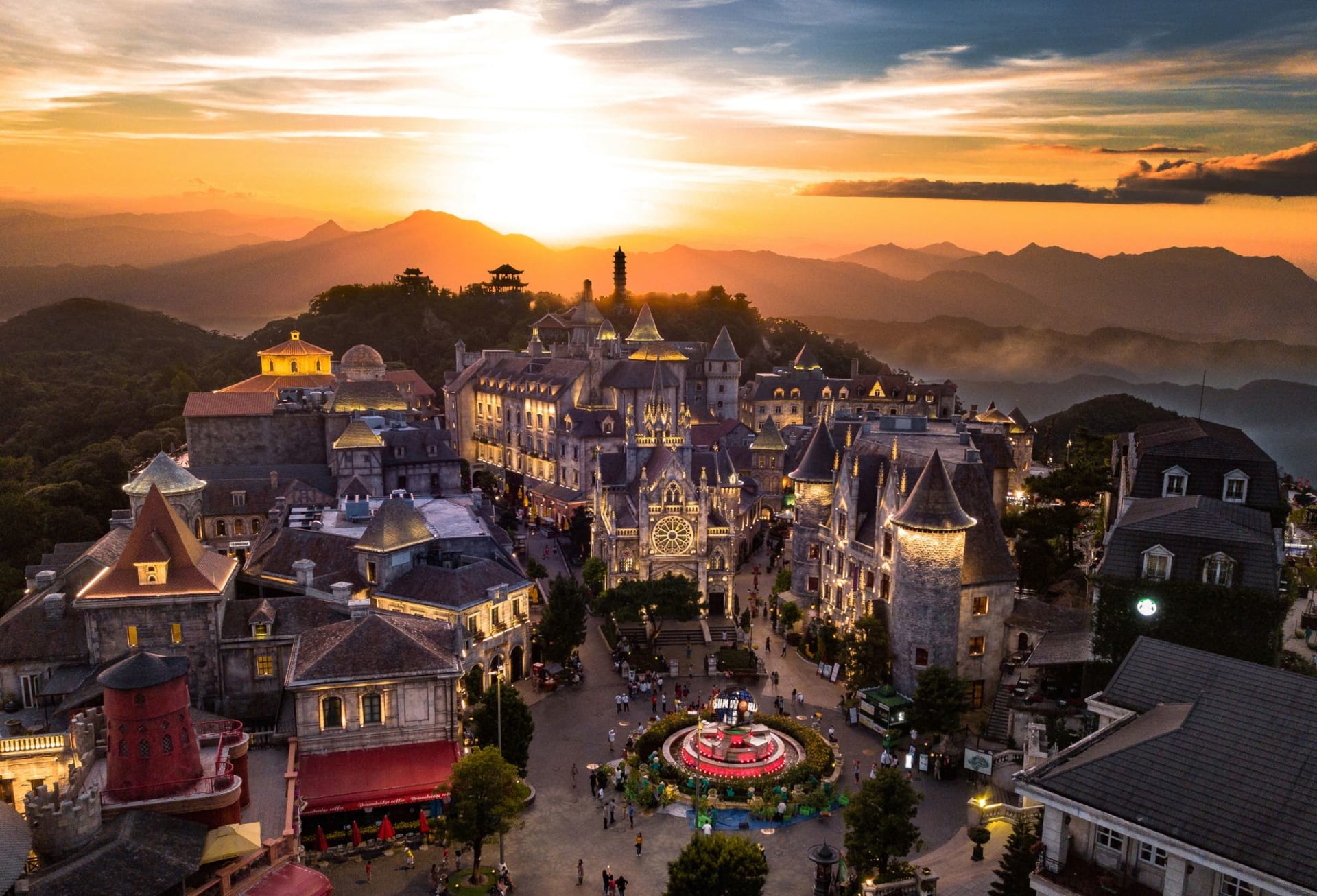
Let me set my critical faculties on the table before I say anything nice: Ba Na Hills is, on paper, the kind of place I instinctively avoid. It is a privately owned theme park built on a mountaintop above Da Nang, complete with a reconstructed French village, a faux-Gothic cathedral, a fantasy castle, and an indoor amusement arcade, all wreathed in artificial fog and Edith Piaf playing from hidden speakers. It should be insufferable. Lia talked me into it, I went braced for cynicism, and I came down genuinely, annoyingly charmed. I am still not entirely sure how that happened.
The cable car and the Golden Bridge
The journey up is the first thing that disarms you. The Ba Na cable-car system holds several world records, and the longest single-span line climbs nearly 1,400 metres of vertical gain in one continuous, slightly terrifying ascent, lifting you out of the humid green lowlands and up through the cloud layer into a different world. You break out above the clouds and the temperature drops ten degrees and the light goes silver, and then you arrive at the thing everyone comes for: the Golden Bridge, that now-globally-famous walkway that curves out from the mountainside held aloft by two colossal, deliberately weathered stone hands.
It is, frankly, a brilliant piece of design. It only opened in 2018, it is completely Instagram-engineered, and it absolutely works — walking out along it with cloud streaming through the giant stone fingers, the green of the Truong Son range falling away below, I forgot to be snobbish about it for a solid ten minutes. The trick, as with so much of central Vietnam in the high season, is timing: get on the first cable car of the morning, before the bridge fills with people doing the same poses, and you’ll have a window of relative calm and the best chance of clear cloud-tops rather than a flat grey blanket.
The French village and the strange charm
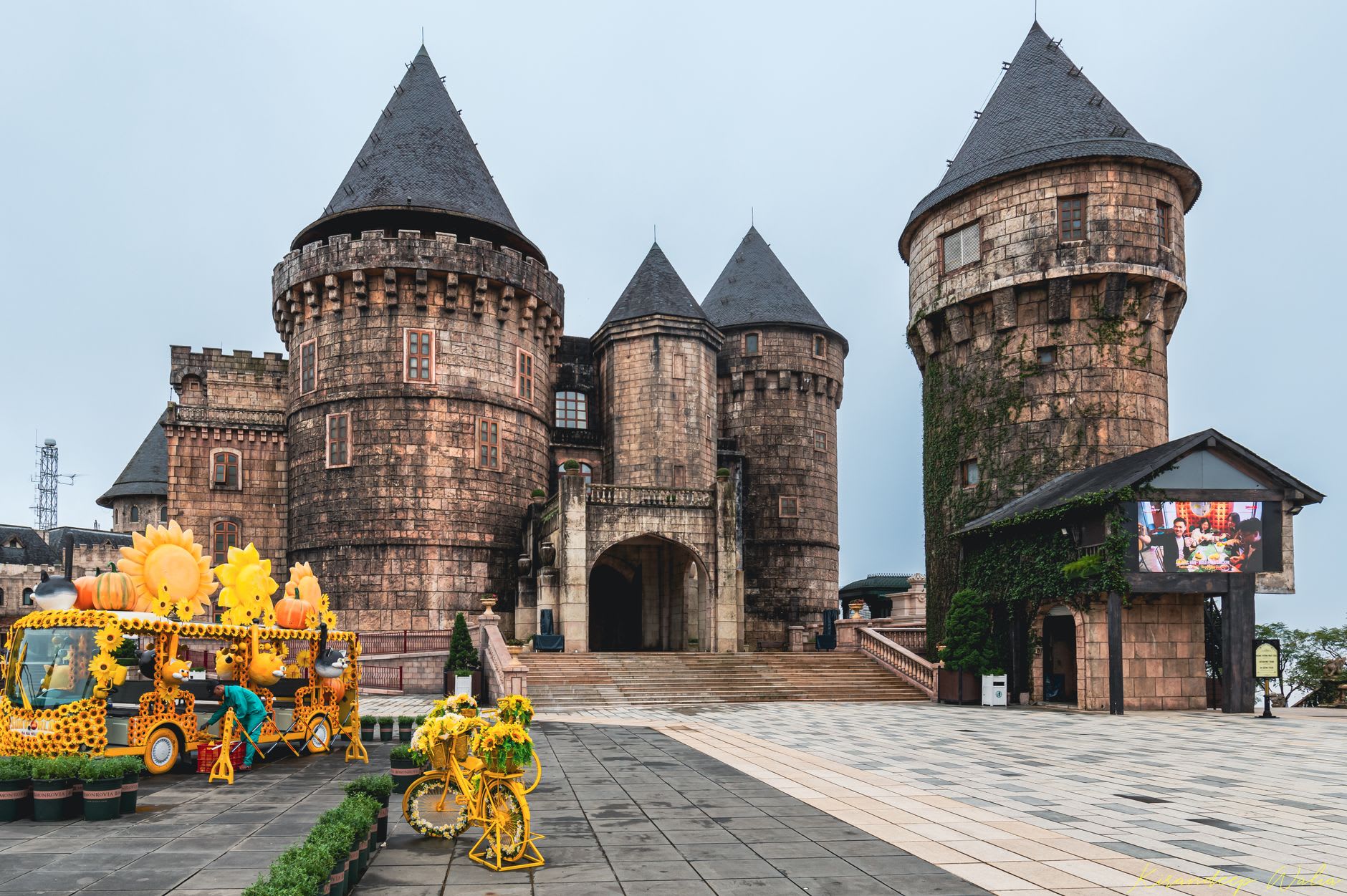
Up top, the “Le Jardin d’Amour” gardens, the cobbled square of the French village, and the cathedral are pure stage set — none of it is original, it’s all maybe fifteen years old — and yet the location does something to it. At nearly 1,500 metres, drifting in and out of actual cloud, with cool air and the smell of pine, the artificial Frenchness stops feeling like a tacky simulation and starts feeling like a genuinely odd, dreamlike mountain-top folly. We drank overpriced coffee on a fake-old terrace while real fog rolled through, and I admitted to Lia that I was having a good time, which she had the grace not to gloat about for more than a few minutes.
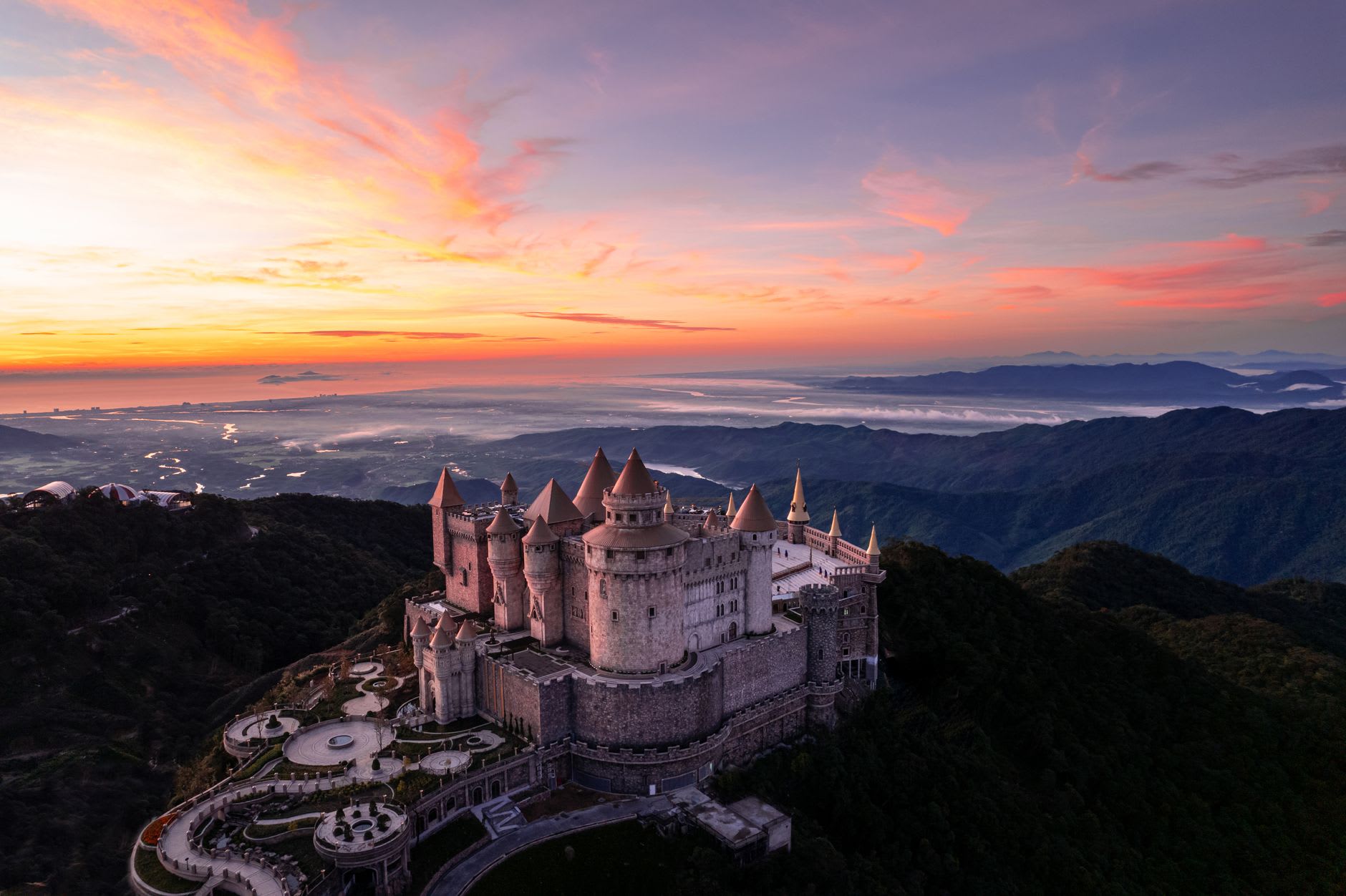
Is it authentic? No. Is it the “real” Vietnam? Obviously not. But it is a wildly popular day out for Vietnamese families as much as for foreign tourists, and there is something to be said for taking a place on its own terms rather than the terms you arrived with. I would not build a whole trip around it — but as a half-day contrast to the genuine heritage of Hoi An down the hill, it is good, daft fun.
When to go
Go on a weekday and take the first cable car up, around 8am, to beat the tour groups and the queues. The mountain weather is unpredictable year-round; the drier months from March to August give the best odds of being above the cloud rather than inside it. Buy tickets online in advance — the all-inclusive entry covers the cable cars and most attractions. Bring a light layer; it is genuinely cool at the top even when Da Nang is sweltering.