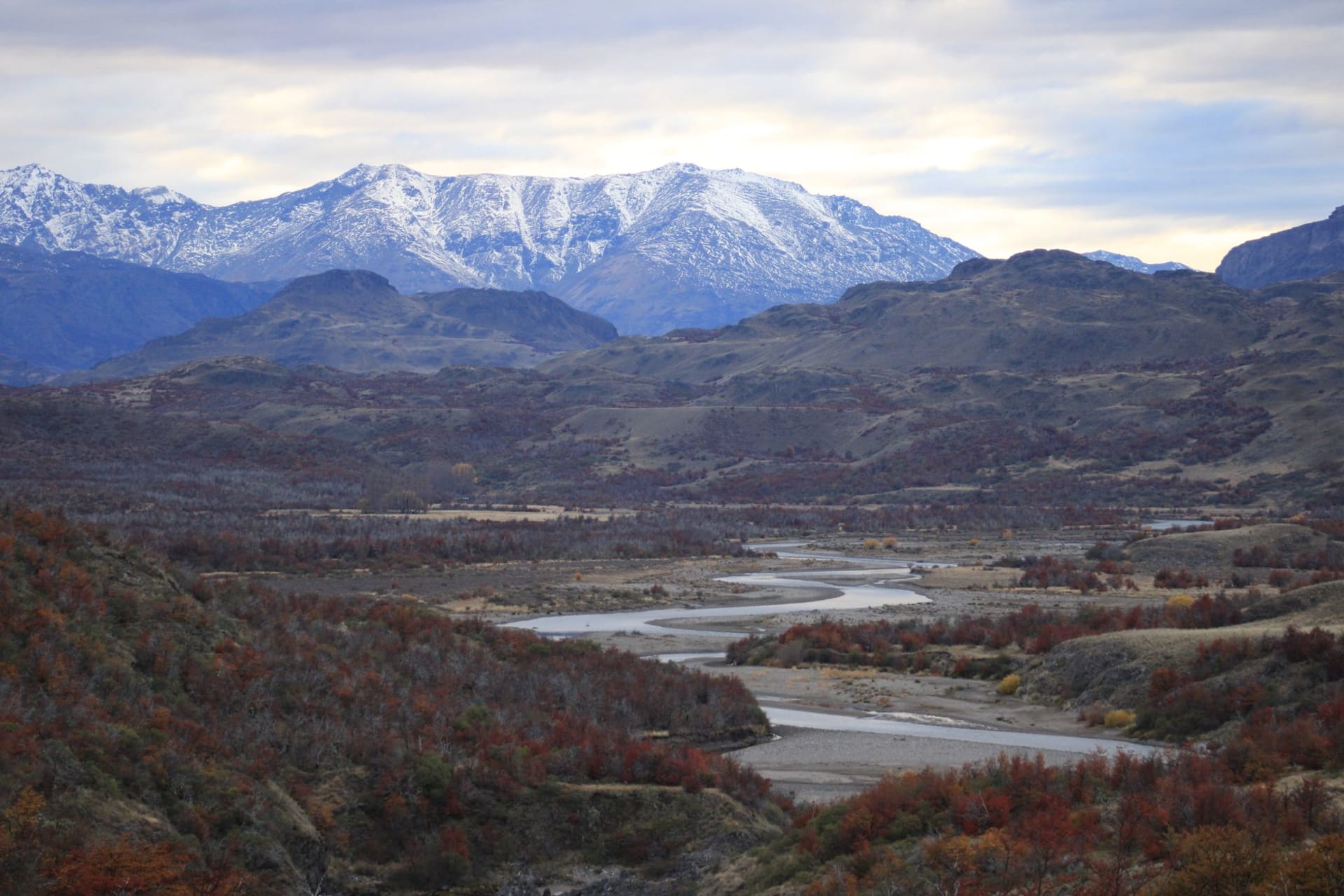
Apalta Valley
"The valley bends around you like it's trying to keep something a secret."
I nearly missed Apalta entirely. It sits twelve kilometers west of Santa Cruz down a road that becomes gravel where the valley tightens, and nothing on the main highway signals that you’re about to enter a horseshoe of hills that produces some of the most extraordinary wine in South America. I found it by following a hand-painted sign that read simply “Lapostolle” with an arrow pointing left, and I turned because the name meant something and because the road looked interesting. Both reasons were good ones.
Apalta is the kind of microzone that serious wine people talk about the way serious music people talk about specific recording sessions — in reverential terms that mean nothing to outsiders and everything to initiates. The geography is particular: the valley curves into a near-circle, the hills rise steeply on three sides, and the combination of reflected heat, maritime fog threading in from the Pacific, and decomposed granite soils creates conditions that are almost unreplicable elsewhere. Carménère, the grape that was lost in France after phylloxera and rediscovered in Chile in 1994, grows here with a quality that made international critics pay attention and made Chilean winemakers understand what they’d been sitting on all along.

At Casa Lapostolle’s Clos Apalta cellar — a gravity-fed facility cut into the hillside so that wine moves by weight rather than pump — I joined a small tasting with a guide named Rodrigo who had been working the vineyards for nine years and spoke about individual blocks the way a farmer speaks about animals in his care. This block runs cooler, he said, gesturing east. This one catches the morning first. He poured a Clos Apalta that had been cellared six years and I tasted something that had clearly been thinking for most of that time, developing opinions about itself that I wasn’t entirely qualified to evaluate. I wrote notes anyway. Something about blackberries and graphite and a finish that didn’t seem in any hurry to leave.
The hills around Apalta are walkable in the early morning before the heat establishes itself, and the views from the ridgeline above the valley floor are the kind that make you understand why people choose to spend their lives making something from a particular piece of land. The vine rows below catch the light differently at each angle of descent. The coastal range in the west goes grey-blue in the haze. A dog followed me from the cellar door all the way to the top and back down, interested in my presence without being demanding about it — which felt like exactly the right level of companionship for that particular ridge.

There is no town in Apalta, no plaza, no café. Just the wineries and the road and the hills and the silence between them. Montes also operates here — their Folly Syrah comes from the steep slopes that most people thought were unworkable until Aurelio Montes proved otherwise. I ate lunch at a picnic table outside their tasting room: cold cuts, good cheese, bread from Santa Cruz, and a glass of Alpha M that turned the hour into an afternoon.
When to go: Harvest in March and April is when the valley hums with activity and picking crews move through the rows at first light. For visiting the cellar doors with ease and cooler temperatures, September through November is ideal. Call ahead — some facilities require reservations and tastings fill quickly during harvest season.