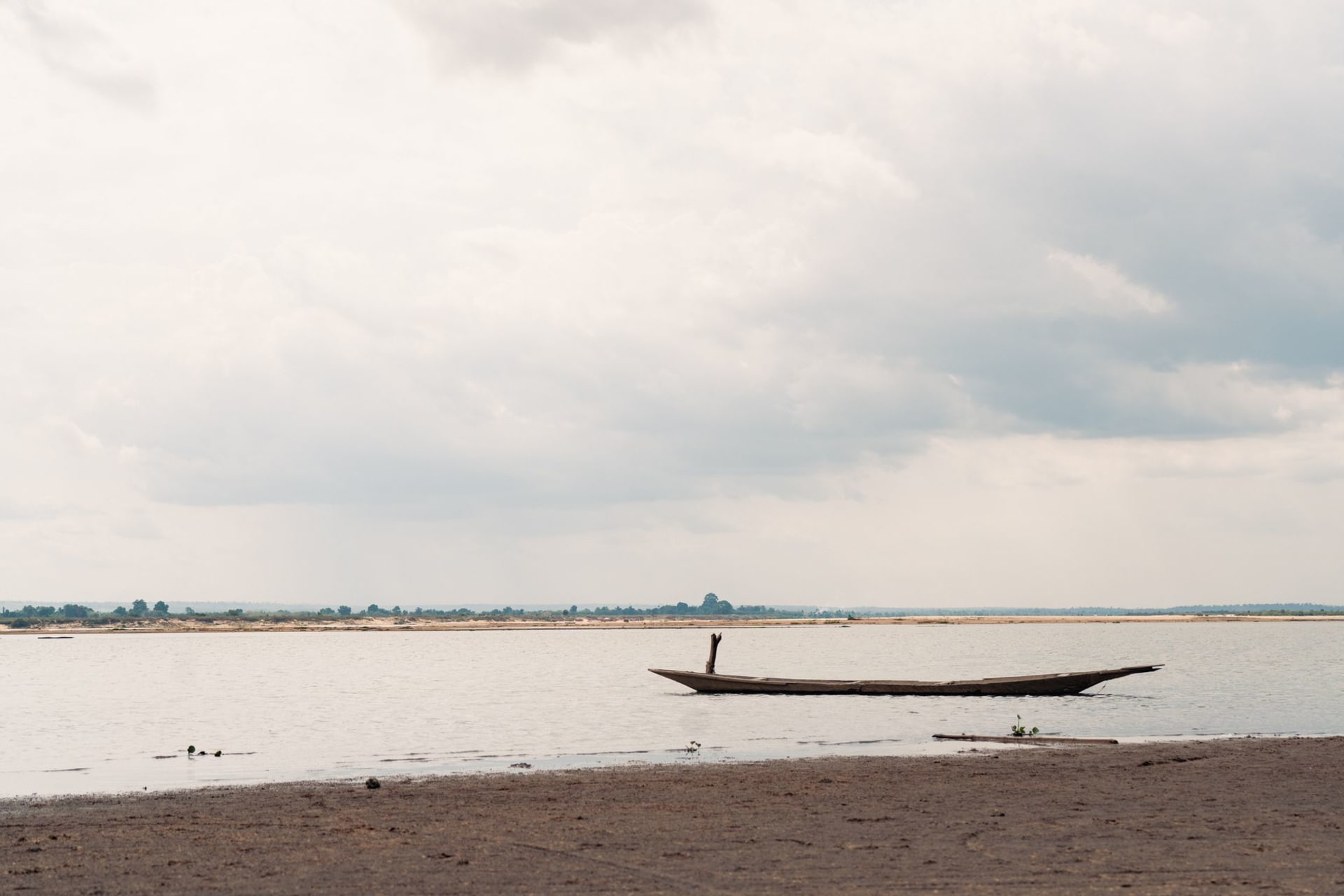
Sangha River
"On the Sangha, the only sounds are the paddle and the birds — until a hippo surfaces ten meters off the bow."
The pirogue pushed off from the bank at Bayanga just before six in the morning, when the river was the color of tea and the mist was still clinging to the surface in long, slow shapes. The paddler — a man named Théodore who had been working this river for twenty years — didn’t say anything for the first half hour. There was nothing to say. The forest came right down to the water on both sides, its reflection doubling everything, and the only sounds were the soft percussion of the paddle and, somewhere in the canopy above the left bank, a hornbill working its territorial call with the intensity of something that had been at it since before we were born.
The Sangha River is the artery of the Dzanga-Sangha reserve, running south through one of the last intact stretches of Congo Basin rainforest and eventually joining the Congo River far to the south. From Bayanga you can travel it for days, passing between Central African Republic, Republic of Congo, and Cameroon — a tri-national zone of protected forest that contains one of the highest densities of large mammals remaining in Central Africa. The geography of the three borders, all converging in and around the river, gives the Sangha a particular quality of existing outside any single jurisdiction. The forest simply continues on both sides, indifferent to the lines humans have drawn across it.
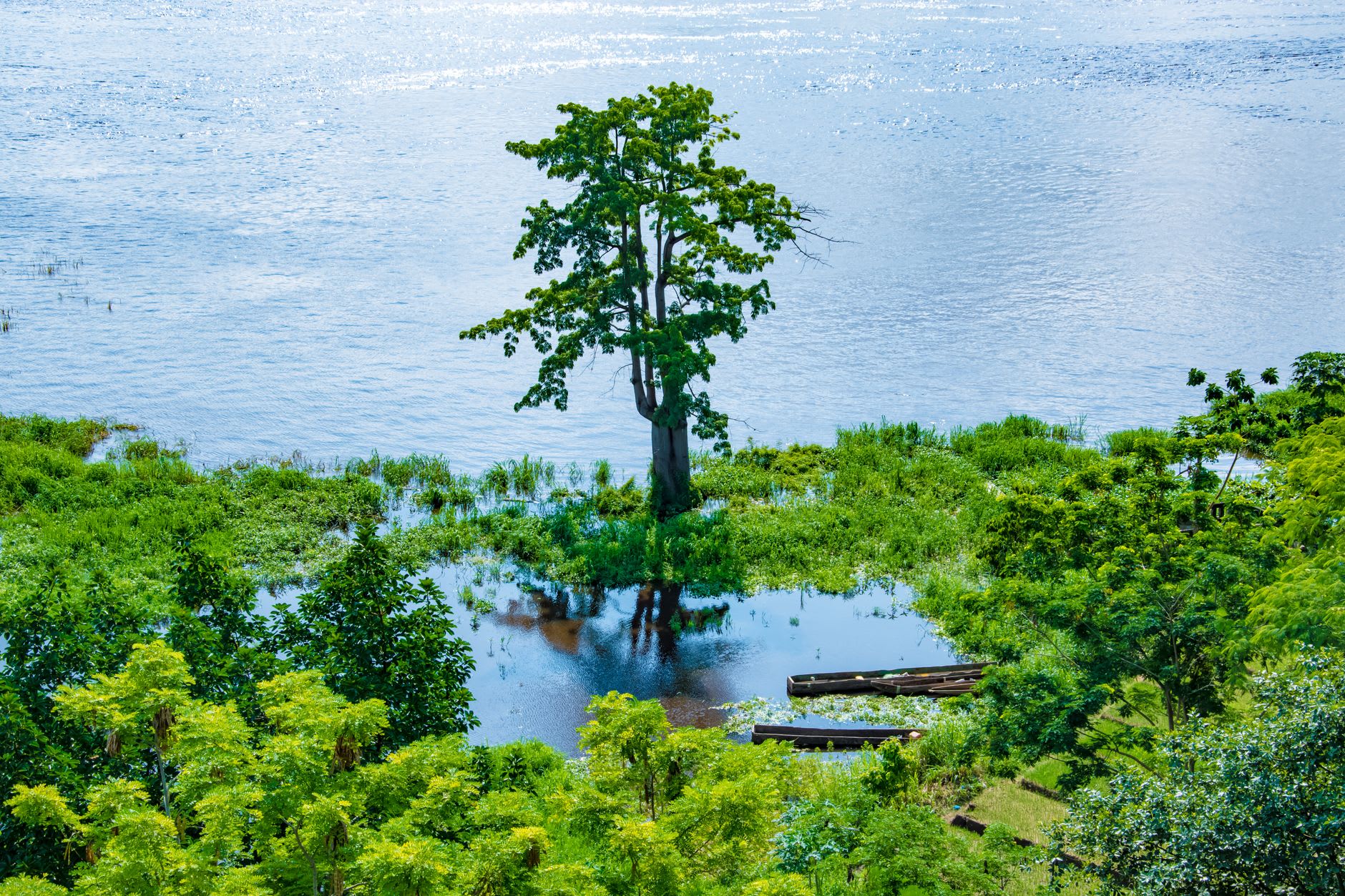
By eight o’clock we had already seen a group of forest buffalo on the right bank, standing chest-deep in a shallow section and watching us pass with large, entirely calm eyes. Théodore pointed to the waterline ahead — a series of rounded shapes like submerged stones that weren’t stones. Hippos. Six of them, in a loose cluster, watching us with the specific vigilance that hippos maintain. He gave them a wide berth without any drama, the pirogue tilting slightly as he redirected, and we moved past them at a distance that felt adequate to him and very slightly inadequate to me. Nobody said anything.
Fishing villages appear every few hours along the river — small collections of structures at the water’s edge, built on stilts in some places against the seasonal flooding, with canoes drawn up on the mud and nets drying on bamboo frames. The villagers on the Central African side are mostly Sangha-Sangha and Aka people; across the water in Congo, the same communities, the same fish. People wave from the banks. Children call out. A woman washing clothes at the waterline looked up as we passed and then immediately back down to her work, because a pirogue on the Sangha is not news, whatever the person in it looks like.
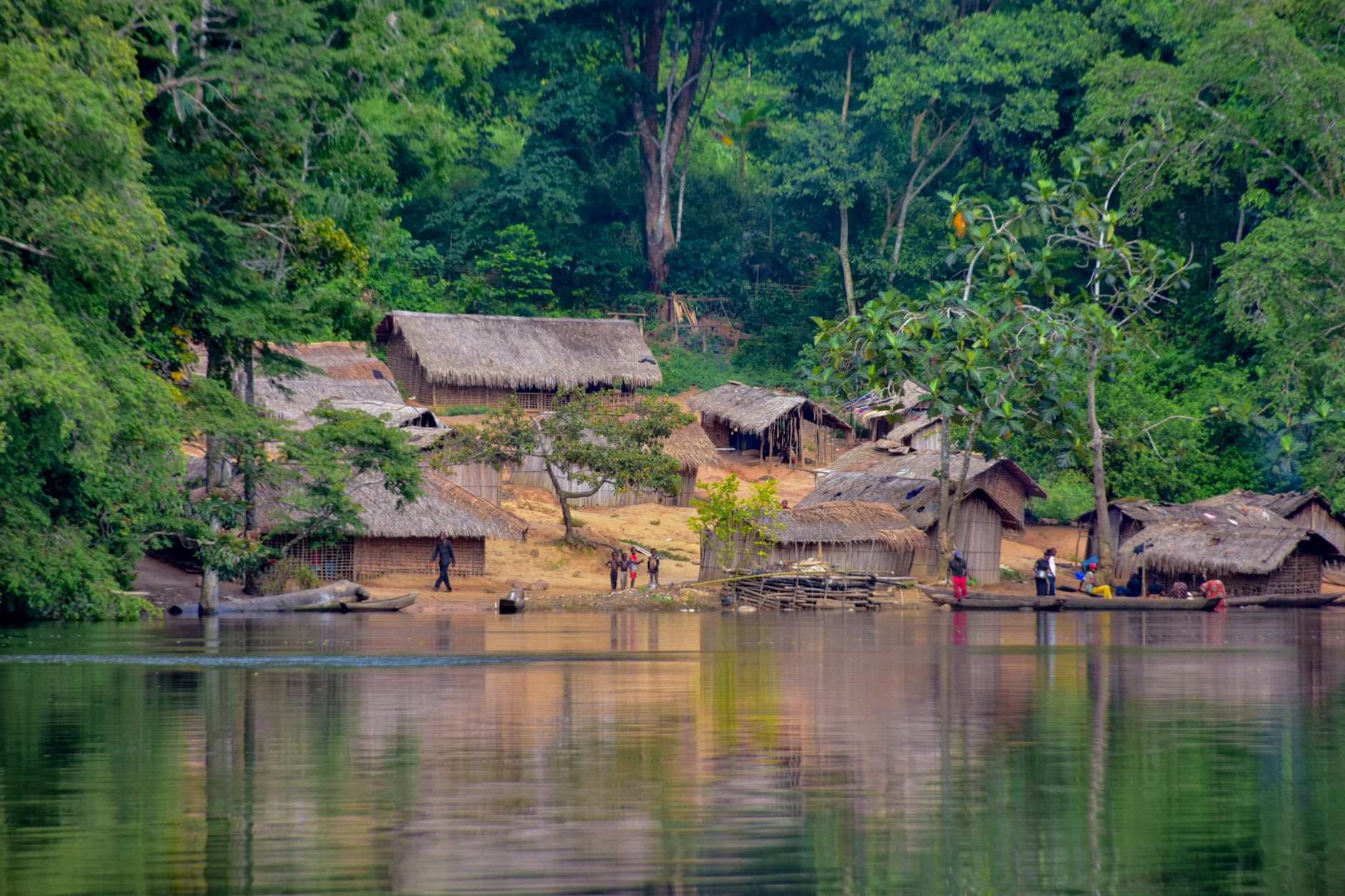
By mid-morning the light had changed to something direct and flattening, the mist burned off entirely. Théodore began to talk — about the decline in certain fish species over twenty years, about a crocodile he knew by territory whose behavior had changed in recent dry seasons, about the forest on the Congolese bank being different from the CAR forest in ways he could explain but that I would need years to see. He spoke in Sango with occasional French when precision required it, and his knowledge of the river was not romantic or sentimental — it was practical, accumulated, the kind of knowing that comes from moving through a place in all its seasons and moods. I wrote none of it down. Some knowledge doesn’t travel.
When to go: December through February for dry-season paddling conditions and maximum visibility in the forest. The river is navigable year-round, but high-water season (June through October) changes the experience entirely — some banks disappear, forest animals move to higher ground, and the river itself takes on a faster, darker character.