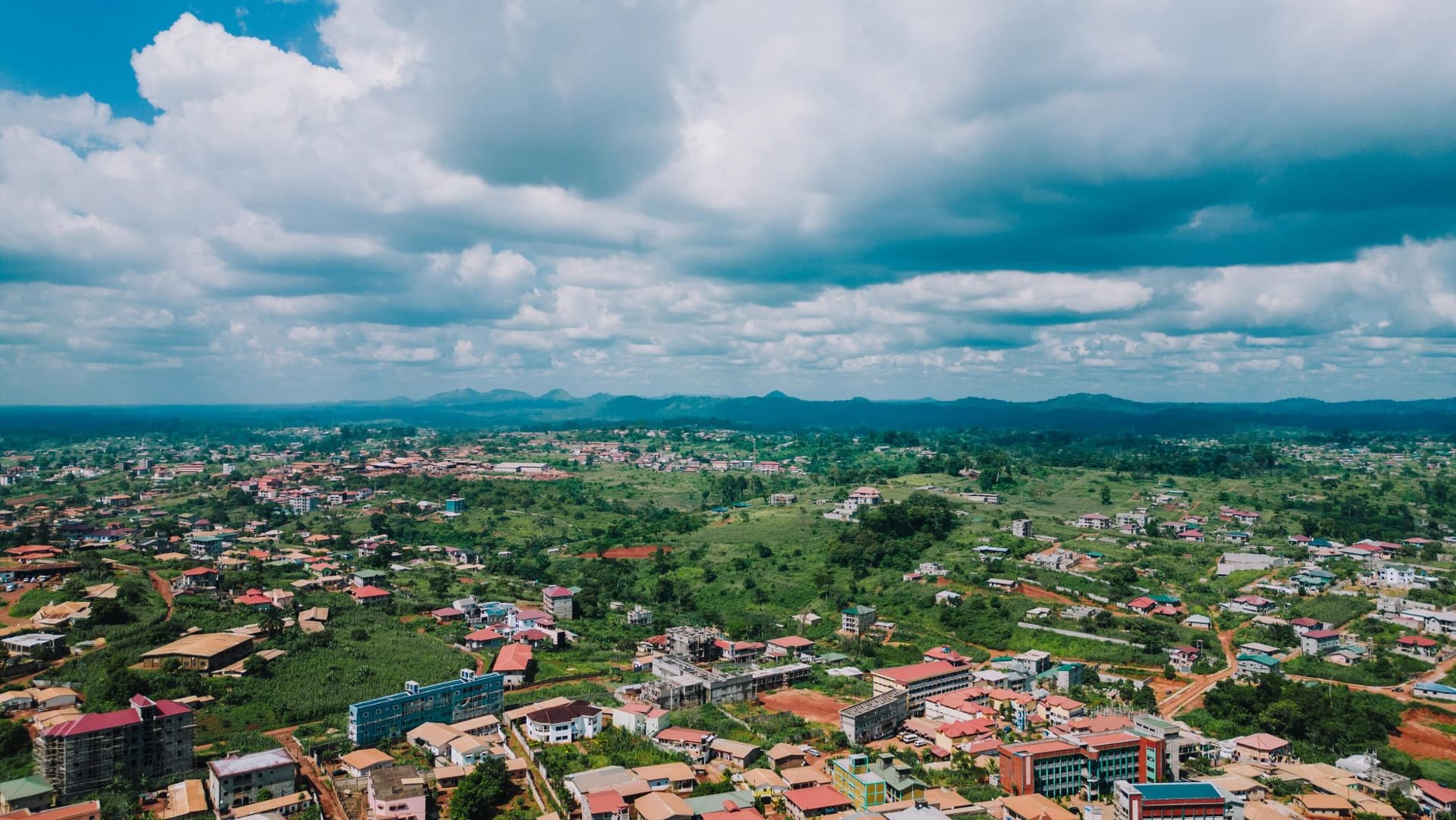
Bayanga
"In Bayanga, the forest isn't scenery — it's the other half of every conversation."
The road to Bayanga ends in Bayanga. There is no through route, no continuing toward something else. You follow the red laterite track southwest from Berbérati for several hours — past villages where children appear at the road’s edge as if summoned, past cassava fields cut from forest that presses in close on both sides — and then the trees get bigger and the road gets worse and eventually you arrive at a collection of wooden buildings on the bank of the Sangha River, and that is it. Bayanga is not a destination you pass through. You go there because you mean to.
The town has a particular feel that I keep trying to name. It is not remote in the way a mountain village is remote. The forest is not a landscape here — it is a presence, the way a river is present in a riverside town. Every yard backs up against it. The smell of it — wet earth, green rot, something floral and impossible to source — comes in with every breeze. At night, from the porch of the reserve guesthouse, you hear sounds from the forest that have no obvious explanation. The Ba’Aka men I asked about this the next morning laughed, not unkindly, in the way of people who find certain ignorances genuinely funny.

The Ba’Aka are the original forest people of this region — hunter-gatherers who have lived in and around the Congo Basin rainforest for longer than the earliest records of the Bantu-speaking peoples who now surround them. Their relationship with the forest is not romantic or performed. It is functional, intimate, and utterly specific. A tracker named Henri spent a morning walking me through the edge of the reserve and I quickly understood that I was moving through a landscape I could not read at all. He could. He stopped at a tree I had already passed and pointed to marks in the bark — elephant had rubbed here, three days ago, traveling west. He put his ear to the forest and separated its layers of sound: a specific bird call that meant clear skies by noon, a rustle pattern that meant a small antelope, not a large one. The knowledge was extraordinary and entirely untranslatable into anything I could have written down.
In the evenings, if there is a ceremony, you will hear the polyphonic singing from the Ba’Aka village before you see any light. It is unlike any choral music I have encountered — voices weaving in and out of each other in a way that sounds improvised and is probably not, creating harmonics that feel less like music and more like the forest singing to itself. A World Heritage designated form of intangible cultural heritage, though standing there in the dark with the Sangha audible through the trees, that categorization felt completely beside the point.
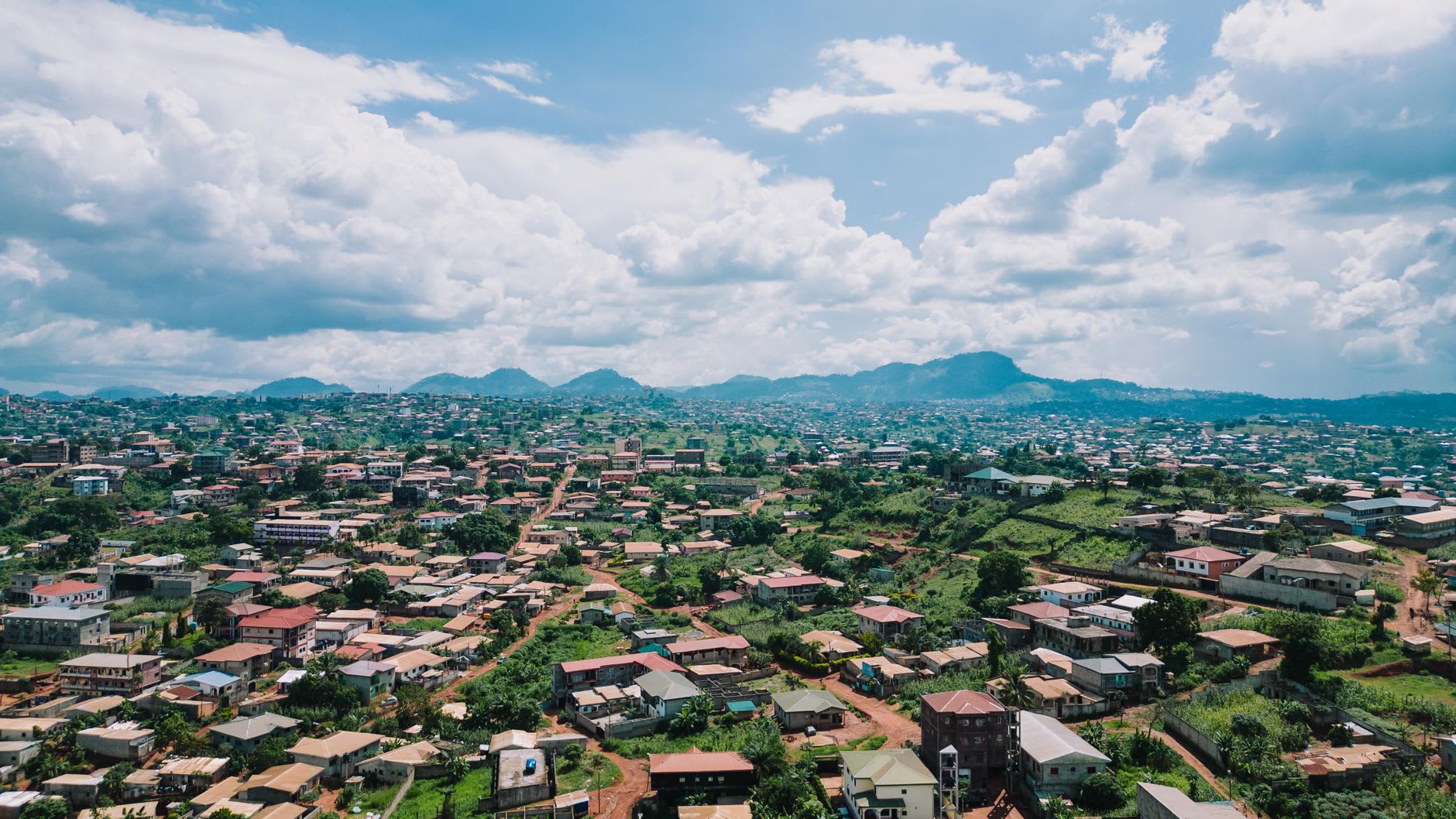
Bayanga itself is small enough to walk in an hour. There is a market that fills up on certain days, selling dried fish, forest fruits, palm wine, and the kind of goods that travel long distances to reach small places — soap, phone credit, batteries. The Dzanga-Sangha reserve office is here, and the staff who work it are knowledgeable and genuinely invested in what happens to the forest. Permits for Dzanga Bai, for gorilla tracking, for accompanied walks with Ba’Aka trackers — all arranged here, all worth the paperwork.
When to go: December through March offers dry-season access with the firmest roads and most predictable wildlife activity. That said, Bayanga’s essential character — the forest, the Ba’Aka, the Sangha — does not change with the rains, and the wet season has its own rewards in bird density and green intensity.