Bangui
"The Grand Marché doesn't perform for visitors — it ignores them completely, which is its greatest quality."
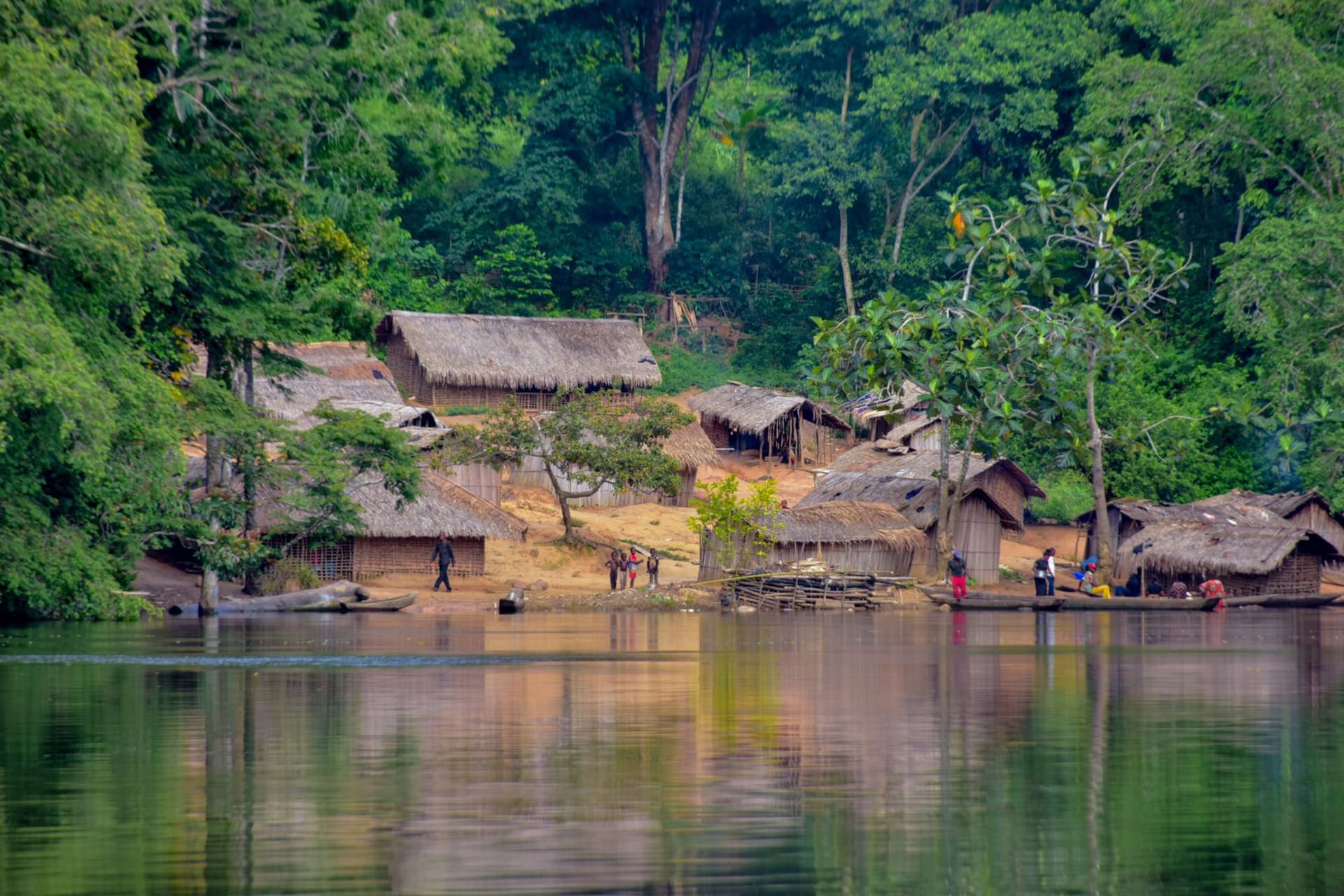
I arrived in Bangui from the south, coming in along the river road where the Ubangi runs wide and brown and impossibly still against the noise of the city waking up. The DRC is visible from the waterfront — a thin green line of forest on the far bank, close enough that at night you can see lights flickering. Bangui is one of those capitals that offers no buffer zone between arrival and immersion. You are in it immediately. The city has no appetite for easing anyone in.
The Grand Marché on a Tuesday morning is worth any early alarm you can set. I was there by seven and it was already in full swing: pyramids of smoked fish stacked on wooden tables, the smell hitting you before you see them. Cassava leaves sold by the bundle, palm wine in repurposed plastic jugs with handwritten labels, brilliant orange piles of palm oil in open buckets. The noise is total — arguing, laughing, the high-pitched bargaining of women in printed wax cloth who know the price of everything and are not interested in negotiation theater. A vendor pressed a plastic cup of palm wine into my hand before I understood what was happening. It tasted sweet and slightly fermented and it was seven in the morning and I drank the whole thing.
Food in Bangui has the direct, uncompromising quality of things grown and caught close by. At a wooden table behind the market, I ate fufu — dense, sticky, requiring concentration — with a groundnut stew that had layers of flavor I kept trying to decode: something smoky underneath, something sharp on top, a softness from the peanut that made it feel almost comforting despite the heat. Grilled catfish from the Ubangi appeared later, pulled apart with the hands, eaten with the fingers in the way the man beside me demonstrated without being asked. Bangui feeds you before it explains itself.
The river in the late afternoon takes on a particular quality of light. I walked down to the waterfront near the old port and sat on a concrete ledge while pirogues moved slowly across the water, silhouetted against the orange sky. On the far bank — the DRC — nothing moved. The border here feels less like a line on a map and more like an old scar, present and visible but no longer bleeding. The Notre-Dame cathedral behind me throws a shadow across the riverside road. Children were playing football in it.

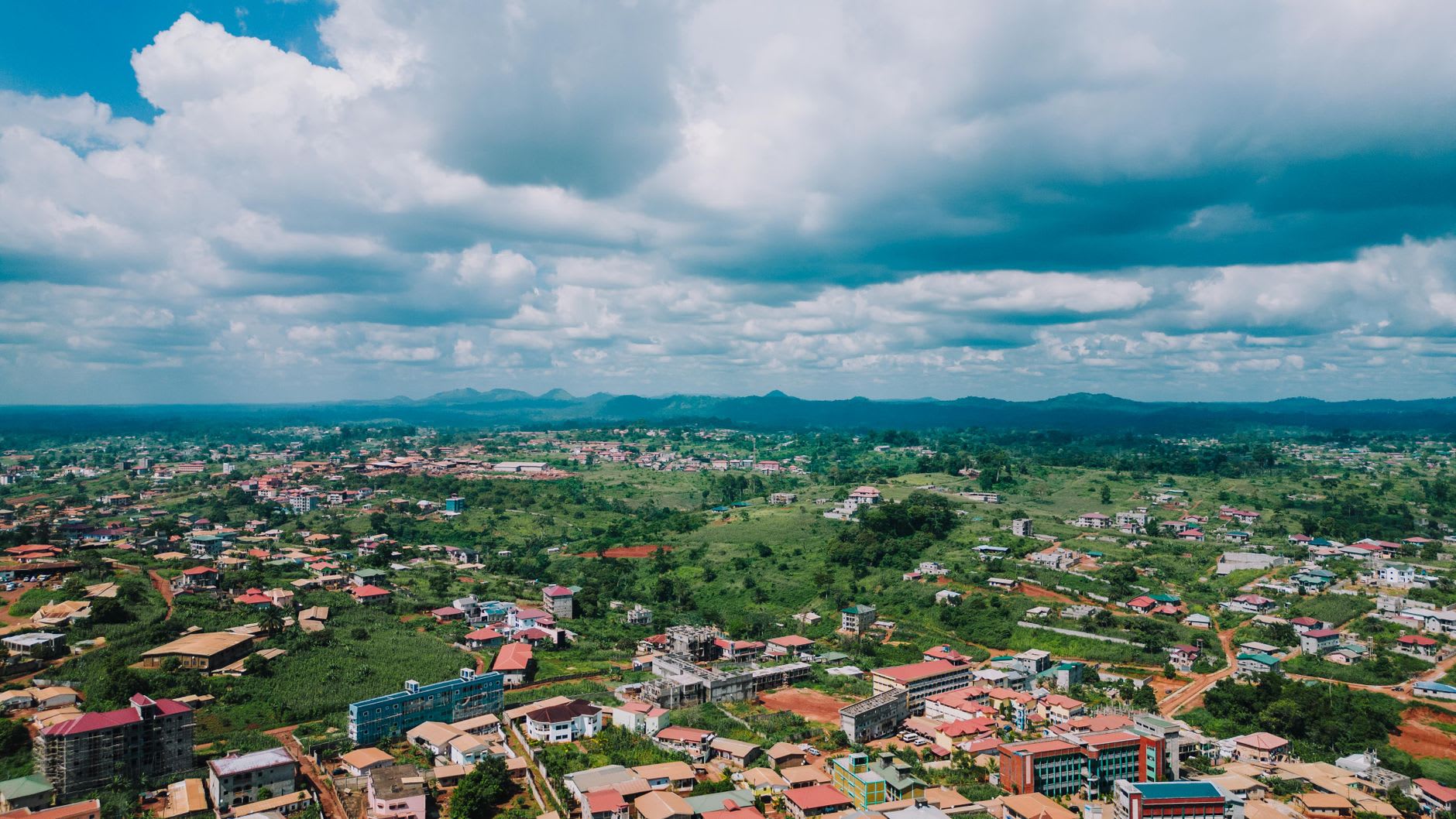
The city has layers that take time to reveal. The Boulevard de Martyrs runs through the center with its broken sidewalks and motorbike taxis — zémidjans — weaving between pedestrians with a confidence that suggests they know exactly how much space they need. The Chinese-built infrastructure sits alongside colonial-era French buildings, now repurposed in ways that would puzzle the original architects. Bangui does not pretend to be something it isn’t. It is a city of about a million people, most of whom are busy living, and the energy that comes off that simple fact is more interesting than anything you could call a sight.
When to go: December through February is the dry season, when the roads leading out from Bangui are at their most passable. The city itself functions year-round, and the Grand Marché has the same intensity in the rain. Avoid arriving during political tensions — check current advisories before travel.