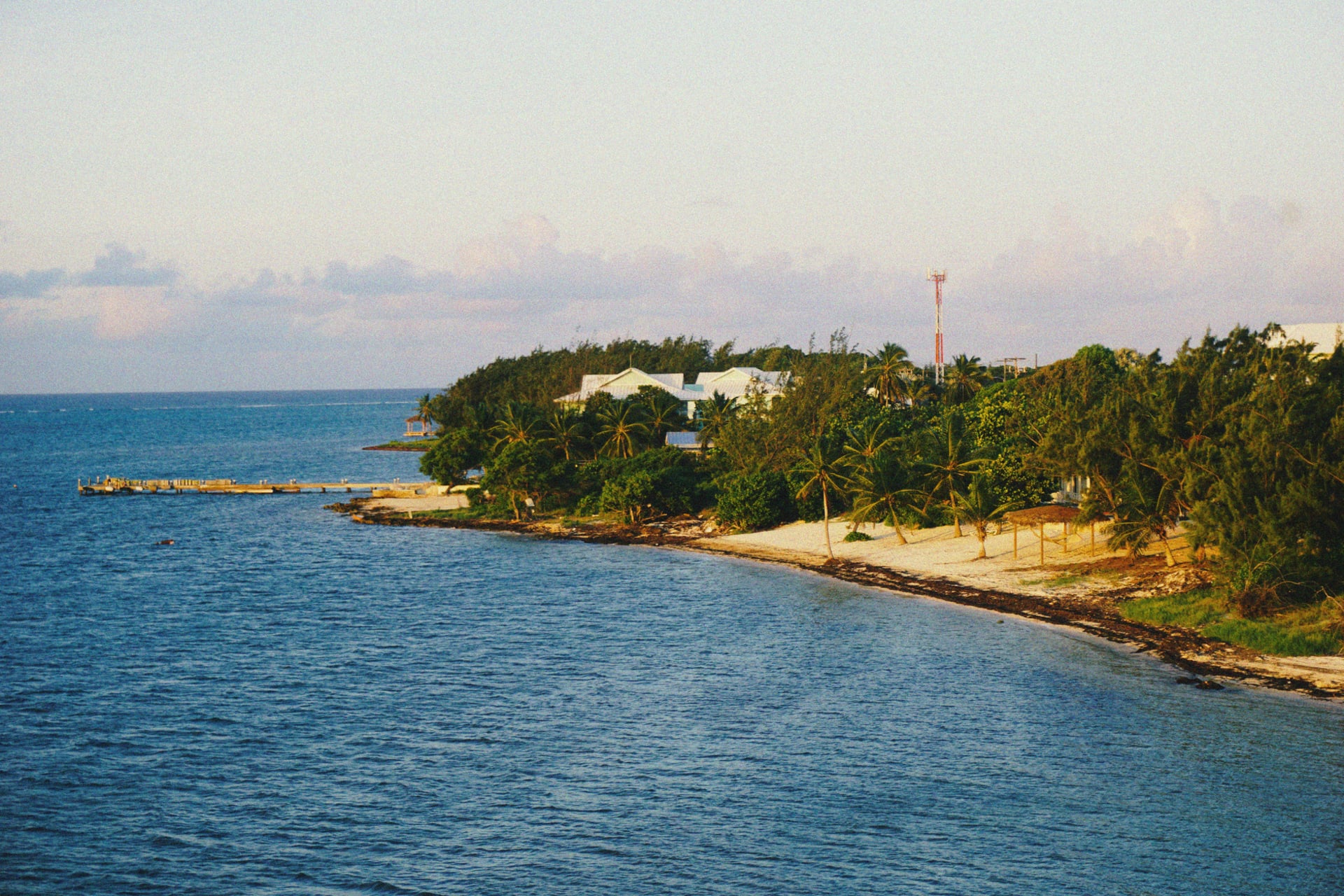
Rum Point
"I ordered a Mudslide and sat in a hammock and felt, with some embarrassment, genuinely content."
I came to Rum Point by accident, which is probably the correct way to arrive. I had been driving north from George Town with a vague intention of reaching the Wreck of the Ten Sails, a historical marker on the northeast coast where a convoy of British ships ran aground in 1794. I took a wrong turn — the road signs on Grand Cayman’s north side are optimistic about their own informativeness — and ended up on a sandy track that dead-ended at a small beach with hammocks strung between sea grape trees and a wooden bar open in the middle of the afternoon.
The water at Rum Point is inside the North Sound, which means it has no swell whatsoever. The surface was flat as glass on the afternoon I arrived, and the color was extraordinary: a pale seafoam green in the shallows that deepened very gradually over a hundred meters to something approaching turquoise. The bottom was fine sand all the way out. I waded in and kept walking and the water was at my waist for a very long time. This is Caribbean snorkeling-by-accident territory — no coral, no dramatic life, but the simple pleasure of walking through warm, pellucid water with the temperature varying slightly where the shallower sand had been heated more thoroughly by the sun.

The bar is called the Wreck Bar and it serves a drink called a Mudslide — rum, Kahlúa, coconut cream, local milk — that was allegedly invented here, which I cannot verify but am willing to believe. I ordered one. It arrived in a large glass with ice and was exactly as sweet and cold as the afternoon required. I got in a hammock with it. This is not the kind of travel experience I usually write about, because it is passive and involves very little motion and no particular cultural insight, but there is a specific form of contentment that comes from lying in a hammock on a calm beach with a cold drink in a place where nothing is expected of you, and Rum Point has that in abundance.
The drive to Rum Point from Seven Mile Beach takes about forty minutes on a road that cuts across the island’s interior — flat agricultural land, some scrub, the occasional housing development — before arriving at the north coast and following it east. The transition from the west coast resort corridor to the north coast is one of those Grand Cayman moments where the island reveals a different personality: quieter, greener, the road almost empty on weekday mornings. There are a few private houses along the north coast road and occasional side tracks leading to small beaches that appear on no map.

Rum Point also serves as a ferry terminus: a small passenger ferry runs across the North Sound from Rum Point to Camana Bay and back, cutting the drive around the sound to a ten-minute boat crossing. I used it on the return and spent the crossing watching the mangrove fringe along the sound’s edge, and a brown pelican working a school of fish in a way that involved dramatic elevation and a dive that seemed far too steep to end well, and then ended perfectly.
When to go: Rum Point is a dry-season destination in the practical sense that the drive is more pleasant and the beach less crowded from December through April. But the north coast has a different quality in the shoulder seasons — May and November — when the tourist pressure eases and the beach returns to locals who use it on weekends with the comfortable familiarity of people who have been coming here for years.