Lahic
"A village that sells its copper everywhere, and keeps its silence entirely to itself."
The road into Lahic from Ismailli drops into the Girdimanchai river valley and the village materializes below as a dense cluster of flat-roofed stone houses clinging to both banks of the river. The first thing you hear, before you can see any of it clearly, is the hammering. Not percussion, not music — a rhythmic, purposeful metalwork sound that bounces between the stone walls of the lane and follows you all the way through the village and out the other side. Lahic has been a copper-working center since at least the fifteenth century. The sound is centuries old and shows no intention of stopping.
I arrived on a Friday afternoon and walked the main lane — the only real street, cobbled with flat river stones, rising gently from the bridge to the top of the village — past workshop after workshop where men in leather aprons sat on low stools hammering trays, bowls, jugs, teapots, and samovars into shape with a focused patience that made the whole lane feel contemplative rather than industrial. The copper is worked cold, then heated, then hammered again, in a process that takes days for a single piece and produces objects of genuine beauty — the patina on old Lahic work is a deep warm orange-brown that photographers travel here specifically to photograph.

The village has about two thousand inhabitants and almost none of them are from anywhere else. Lahic is ethnically Tat — an Iranian-speaking people who settled in the eastern Caucasus centuries ago and maintained a distinct language and craft tradition despite being absorbed into Russian and then Soviet administrative structures. The language you hear on the street is not Azerbaijani, not Russian, not anything with an obvious family resemblance. It is Tat, and it sounds like something spoken in a small room.
There is a small museum in the village that holds examples of Lahic metalwork from various centuries alongside photographs from Soviet-era ethnographic expeditions. The museum director was also the man who gave me tea without being asked, sitting at a table in the courtyard with two glasses already poured when I arrived, as if he had been expecting me since Tuesday. The tea was brewed dark in a copper pot and drunk with sugar held between the teeth in the old style — not dissolved in the cup but bitten through as you sip, the sweetness gradual and controlled.

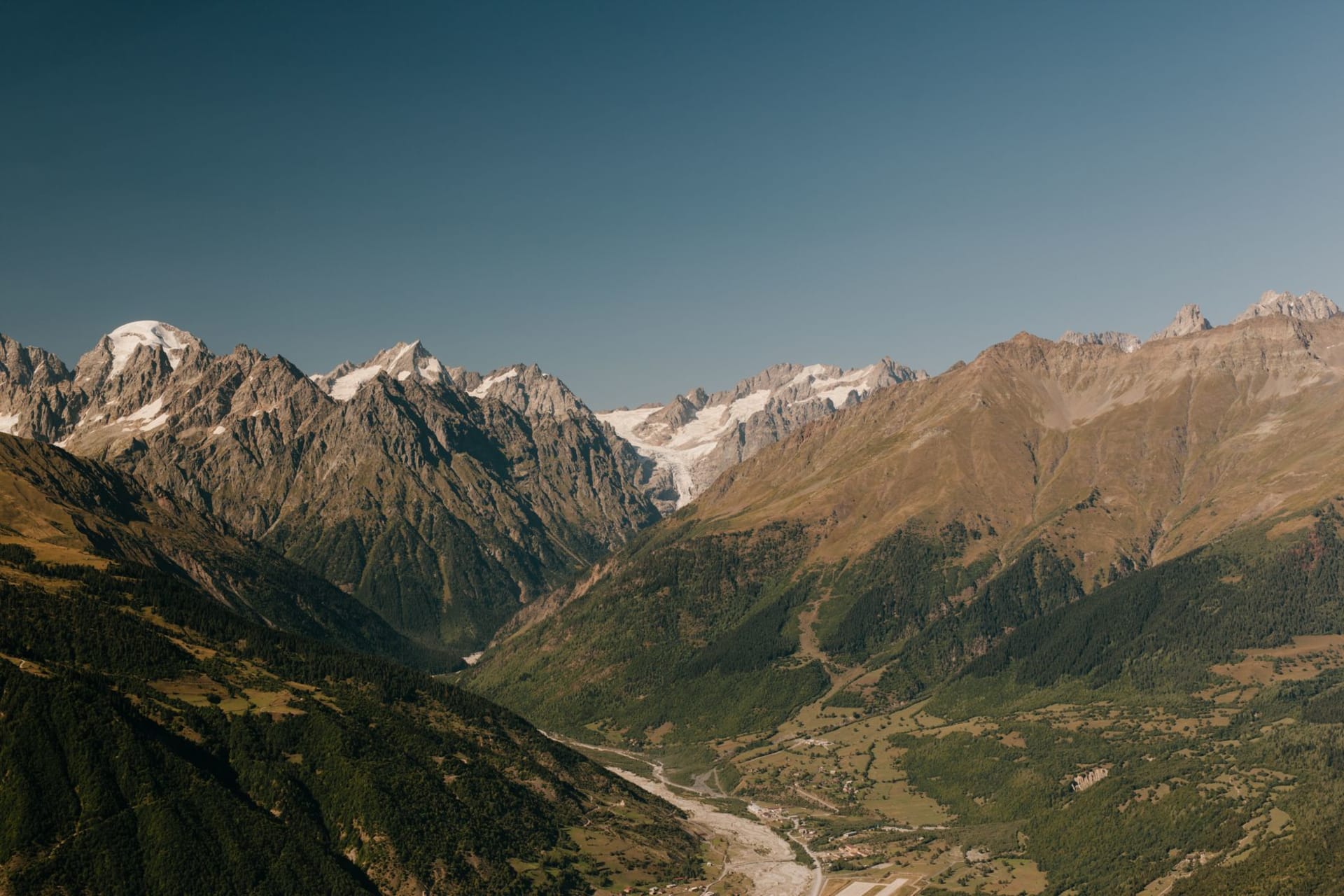
The mountains above Lahic are the southern slopes of the Greater Caucasus, and the hiking is excellent for anyone willing to leave the craft-tourism circuit. A trail above the village climbs to high summer pastures where Azerbaijani shepherds bring their herds in July and August. The air up there is entirely cold and clean and the view back down the valley — Lahic as a terracotta smudge in the green gorge — has that particular quality of a landscape that humans have been looking at for so long it has stopped being scenery and become something more like home.
When to go: May through October for pleasant temperatures and full access. Lahic can be visited year-round, but the mountain road from Ismailli closes occasionally in winter. Summer weekends bring Azerbaijani day-trippers from Baku, so weekday visits or early September offer the quietest experience.