
Dariali Gorge
"Alexander the Great reportedly fortified this gorge. Looking at it, you understand immediately why and also why it wasn't enough."
The Georgian Military Highway enters the Dariali Gorge about thirty kilometers north of the Jvari Pass, and the canyon closes around you so abruptly that the change in light is measurable. The walls of the gorge rise to around 1,000 meters on either side, so close together in places that direct sunlight reaches the canyon floor only at midday, so the Terek river — running wild and grey-green over rounded boulders — exists mostly in shadow. I stopped the shared taxi I was in by asking the driver to pull over, which he did with the mild exasperation of a man who had been asked to do this before, and I stood on the shoulder of the road for twenty minutes looking up at walls of Jurassic volcanic rock that have been standing here since before humanity decided to walk upright.
The gorge has been used as a transit route since the earliest Caucasian peoples, and the historical layers are visible without any particular effort to find them. Near the narrowest point, where the Russian border is only a few kilometers north, the ruins of the Dariali fortress stand on a rocky spur above the water — a structure with disputed origins that has been claimed by Persians, Romans, Alans, and Georgians in various historical periods, and which now exists as a collection of stone walls dramatic enough in their placement to need no interior to justify the visit.
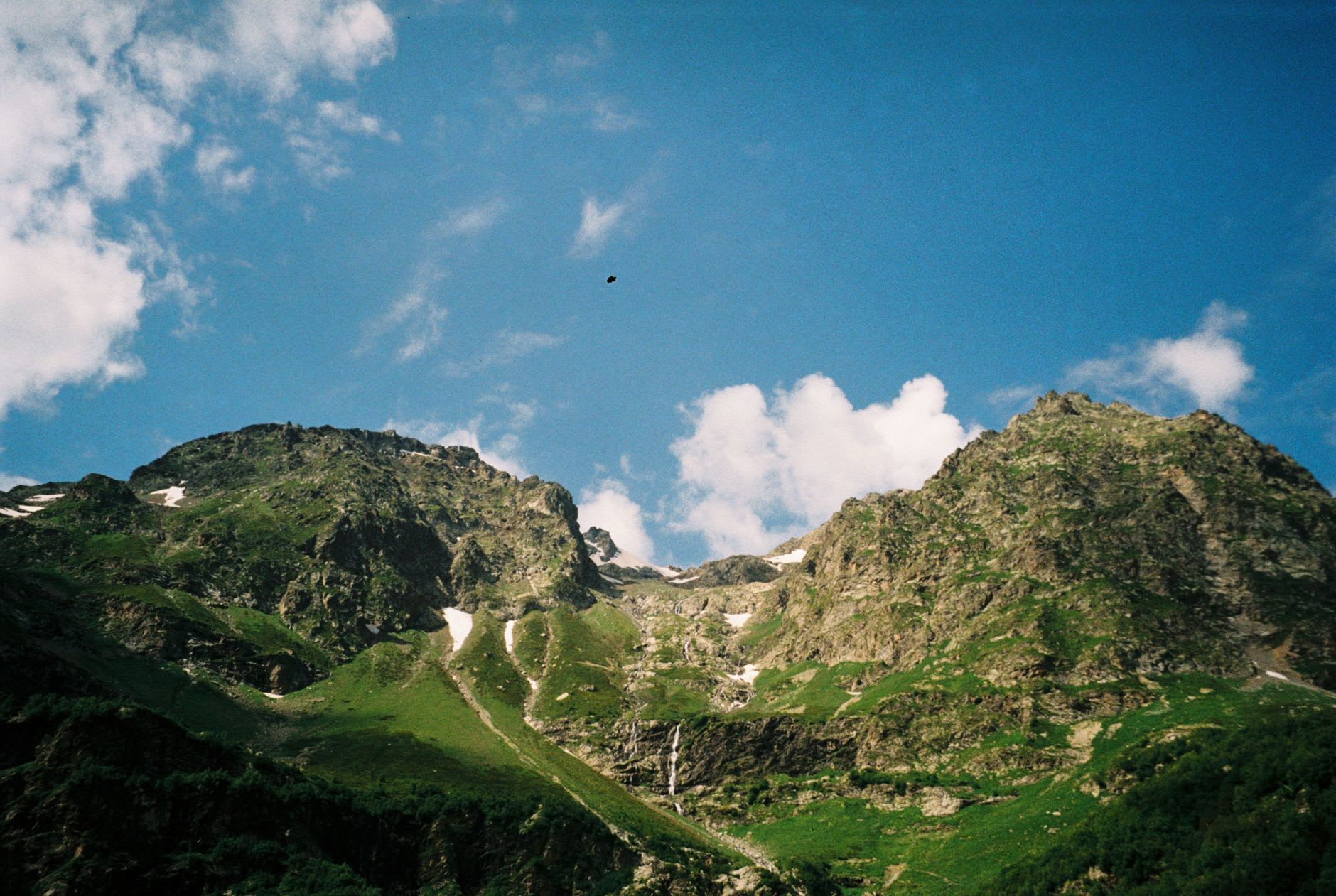
Pushkin wrote about this gorge. Lermontov wrote about it. The Romantic-era Russian poets who came through here as military men or exiles or both produced enough literature set in the Dariali that it accrued a kind of literary mythology long before tourism existed. Reading their descriptions before visiting is both useful and misleading — useful because they got the physical facts right (the narrowness, the light, the sound of the river), misleading because they wrote in a key of melodrama that the gorge itself does not require. The drama here is structural and geological, not emotional. The rock face does not care about your feelings about it.
The monastery at Dariali is recent — completed in 2012, built on the site of earlier religious structures — and sits at the base of the canyon wall in a position of such architectural confidence that it looks like it has been there for a thousand years. The monks there, when I visited in the late afternoon with the canyon in deep shadow, were quiet in a way that seemed less monastic than simply appropriate to the location. The sound of the Terek forty meters below the monastery was the loudest thing in the gorge.
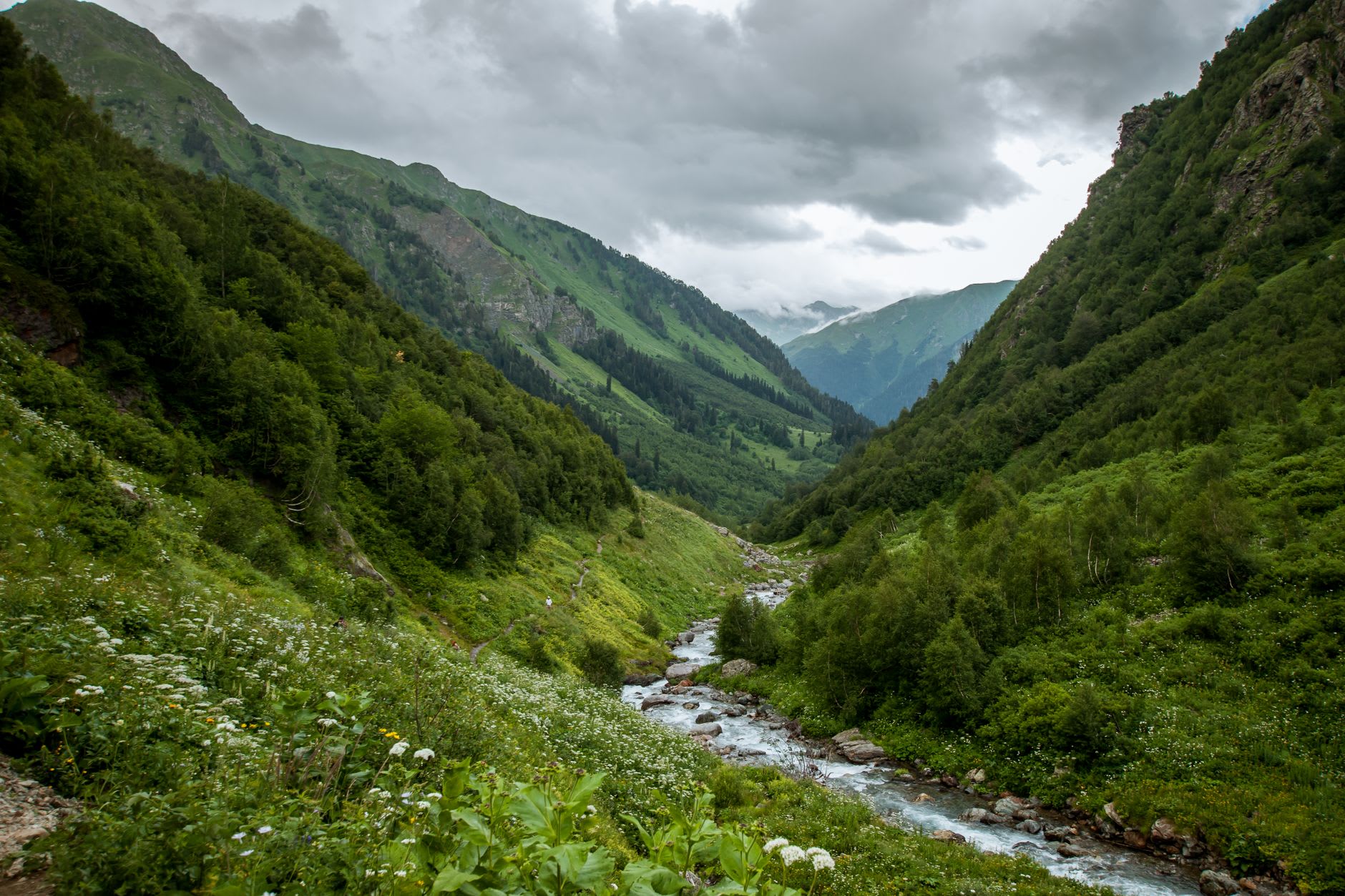
Dariali is not a destination in the way that Stepantsminda or Ushguli are destinations — it does not require a night’s stay, and there is no guesthouse network, no hiking infrastructure, no amber wine at a long dinner table. It is a place you pass through, or a place you stop at on the way to somewhere else. But stopping matters here, because the gorge at speed — viewed from a car window at 80 kilometers per hour — registers only as dramatic scenery, and dramatic scenery is not the same as understanding that this crack in the Caucasus is the gap through which armies, merchants, pilgrims, exiles, and poets passed for three thousand years to get from one half of the known world to the other.
When to go: Accessible year-round as part of the Georgian Military Highway. Summer visits allow more time to stop and explore the fortress ruins, though the canyon can be hot and airless in July and August when the sun is directly overhead. Autumn visits benefit from lower light angles that illuminate the canyon walls differently. Winter can bring ice on the road; check conditions before driving.