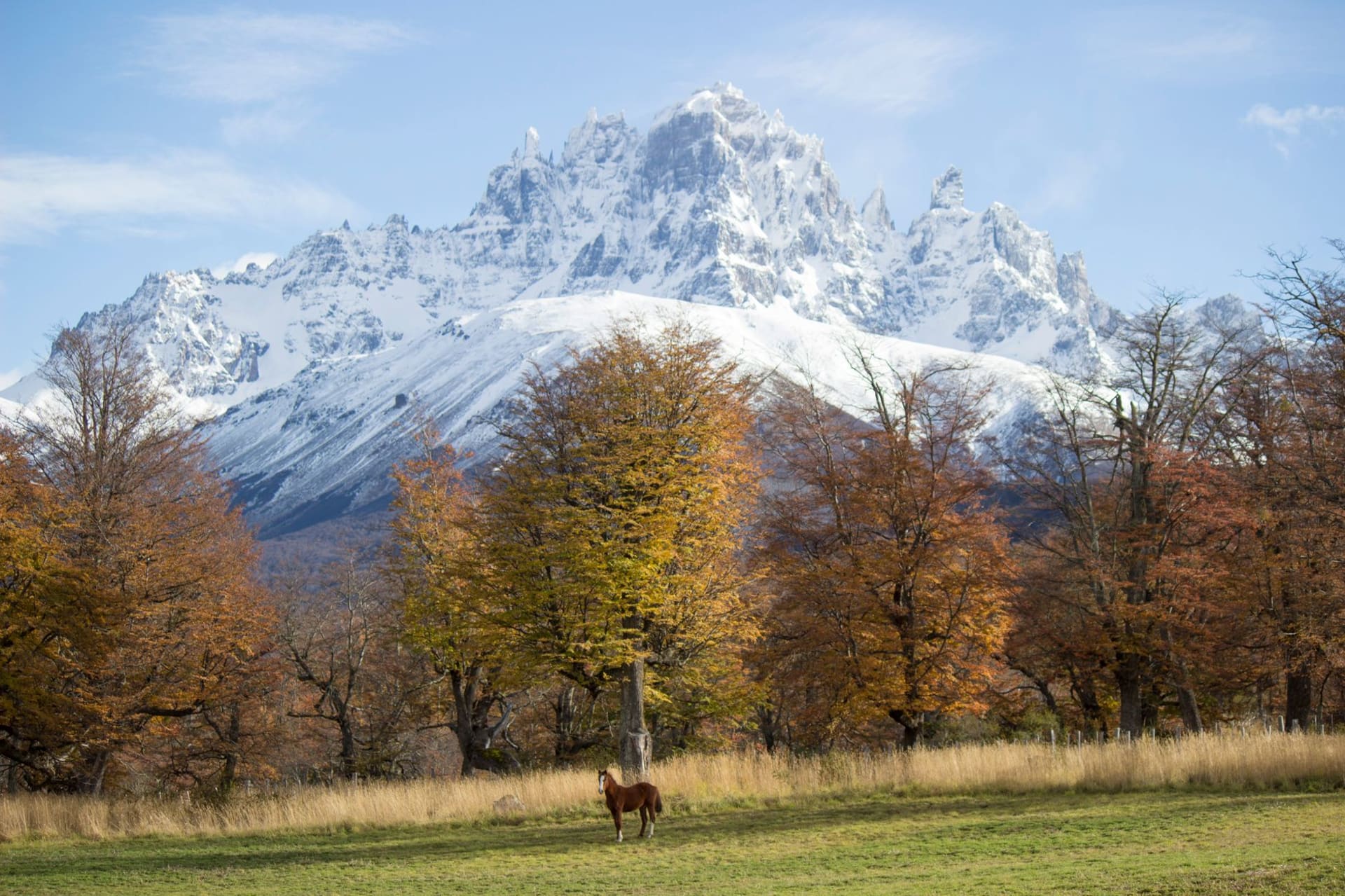
Cerro Castillo National Park
"People whisper that it is the next Torres del Paine, which is exactly why I went now."
Coming south on the Carretera Austral from Coyhaique, you climb a series of switchbacks and then the road delivers you, with no warning, to a viewpoint where the whole jagged crown of Cerro Castillo stands across the valley. It is named for the castle, and the name is not a stretch — a long ridge of dark basalt towers, turreted and broken, with snow caught in the gaps and a glacier slung beneath the summit like a frozen moat. I have seen a lot of Patagonian peaks now. This one made me put the coffee down.
The Mountain Everyone Is About to Discover
For years Cerro Castillo was the serious trekker’s secret — a four-day traverse through one of the most dramatic landscapes in Chile, with a fraction of the foot traffic that grinds down the trails of Torres del Paine. That is changing. The Chilean government folded it into the network of new Patagonia parks, and the word is spreading. We did the long day hike up to the Laguna Cerro Castillo, the milky-turquoise lake that sits directly beneath the spires, and even on this more accessible route we passed only a handful of others all day.

The climb is honest work — a steady haul through southern beech forest, then up across loose scree where the wind finds you and does not let go. Lia kept her hood cinched the whole way up. But the lagoon at the top is one of those rewards that rearranges your face: the water an impossible opaque turquoise from glacial silt, the spires rising straight out of the far shore, ice cracking off the hanging glacier now and then with a sound like distant artillery. We ate lunch with our backs to a boulder for shelter and did not say much.
The Village and the Hands on the Rock
The small town of Villa Cerro Castillo at the foot of the range is the kind of dusty, wind-scoured Patagonian settlement I have grown to love — a single main street, a few guesthouses, a shop that sells everything. Just outside it is the Alero de las Manos, a rock overhang painted with human hands by people who lived here several thousand years ago. I stood in front of those red stenciled palms with the great castle of stone rising behind me and felt the usual vertigo of deep time.

The woman who ran our guesthouse made us sopaipillas and told us the buses through the village had doubled in two years. She did not seem sure whether to be pleased. I understood the ambivalence completely.
How to Take It On
The full four-day traverse requires booking the campsites in advance through CONAF and a real tolerance for Patagonian weather, which can turn from sun to sideways sleet within the hour. The day hike to the laguna is achievable for fit walkers but still long and exposed — start early, carry layers and wind protection, and check the forecast knowing it may lie to you anyway.
When to go: December through March is the trekking window, with the longest days and the most settled conditions. Even then, never trust a blue morning to last; the mountain makes its own weather.