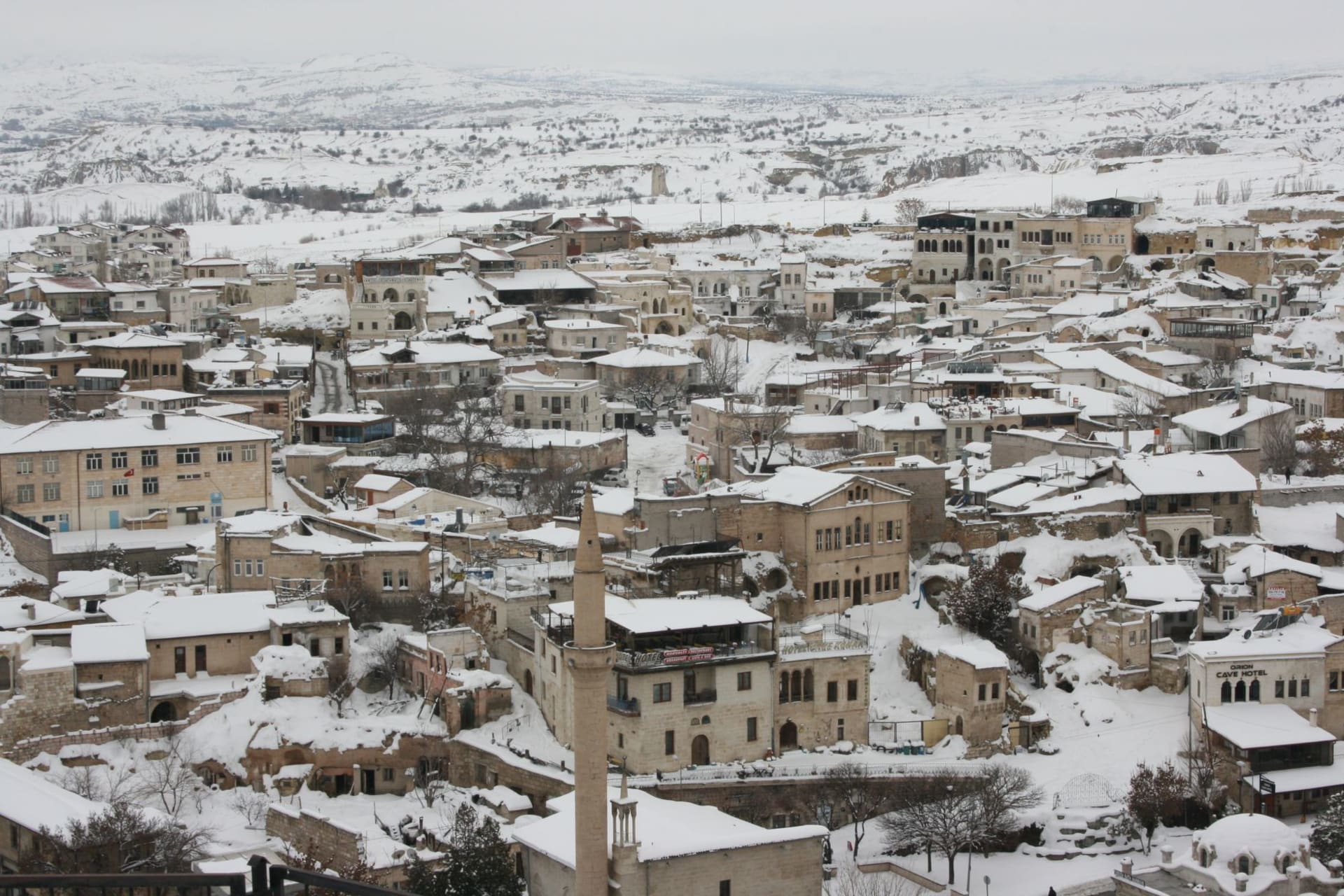
Ürgüp
"The wine was better than I had any right to expect, and so was the silence between the vines."
I arrived in Ürgüp on a Tuesday in October, which meant I had the town almost to myself. Most tourists in Cappadocia cluster in Göreme — understandably, given the balloon launches and the Open Air Museum — but Ürgüp has a different energy, less transactional, more settled. It feels like a place where people actually live rather than a place arranged for visitors to move through. Old men play tavla outside the teahouse by the main square. The fruit seller on the corner knows every customer by name. The muezzin call echoes off the hillside above the old Greek quarter and lingers in the air for a few seconds after it fades.
The town climbs a hillside of soft tuff and the upper neighbourhood is riddled with caves, some ancient, some converted into guesthouses with hammam tiles and heated floors. I stayed in one and lay awake the first night listening to the rock settle — a deep, intermittent tick, like a house cooling — before realising that the temperature inside the cave barely changed regardless of what the thermometer said outside. The Byzantines who first carved these chambers knew exactly what they were doing.

Cappadocia has been producing wine since the Hittites. The volcanic soil, the altitude, the dramatic temperature swings between day and night produce grapes with unusual character. Öküzgözü and Boğazkere, the local red varieties, give wines that are tannic and herbal in a way that French grapes don’t quite do. Ürgüp is the informal centre of this wine culture, and several family wineries on the edge of town offer tastings without pretension — you sit in a courtyard under a grape arbour and the winemaker brings out four or five glasses and talks about his soil the way farmers everywhere talk about land: with a particular mixture of pride and anxiety. I drank a glass of dry rosé made from Kalecik Karası just as the sun dropped behind the ridge and the air turned cold, and it was about as close to perfect as a moment gets.

The food here tilts toward the substantial. The market near the bus station sells rounds of fresh bread, blocks of aged tulum cheese, and jars of walnut paste. For dinner I found a place doing kuyu kebabı — meat slow-cooked in a pit in the ground overnight, then pulled and served with flatbread and pickled vegetables. It arrived falling off whatever bone it had once been attached to, smelling of woodsmoke and cumin. I ordered more bread and ate slowly.
When to go: Harvest season — late September through October — is when the vineyards are active and the wineries busiest, which makes it the most interesting time to visit. Spring (April to June) is also excellent. Summer works but the heat is punishing by afternoon.