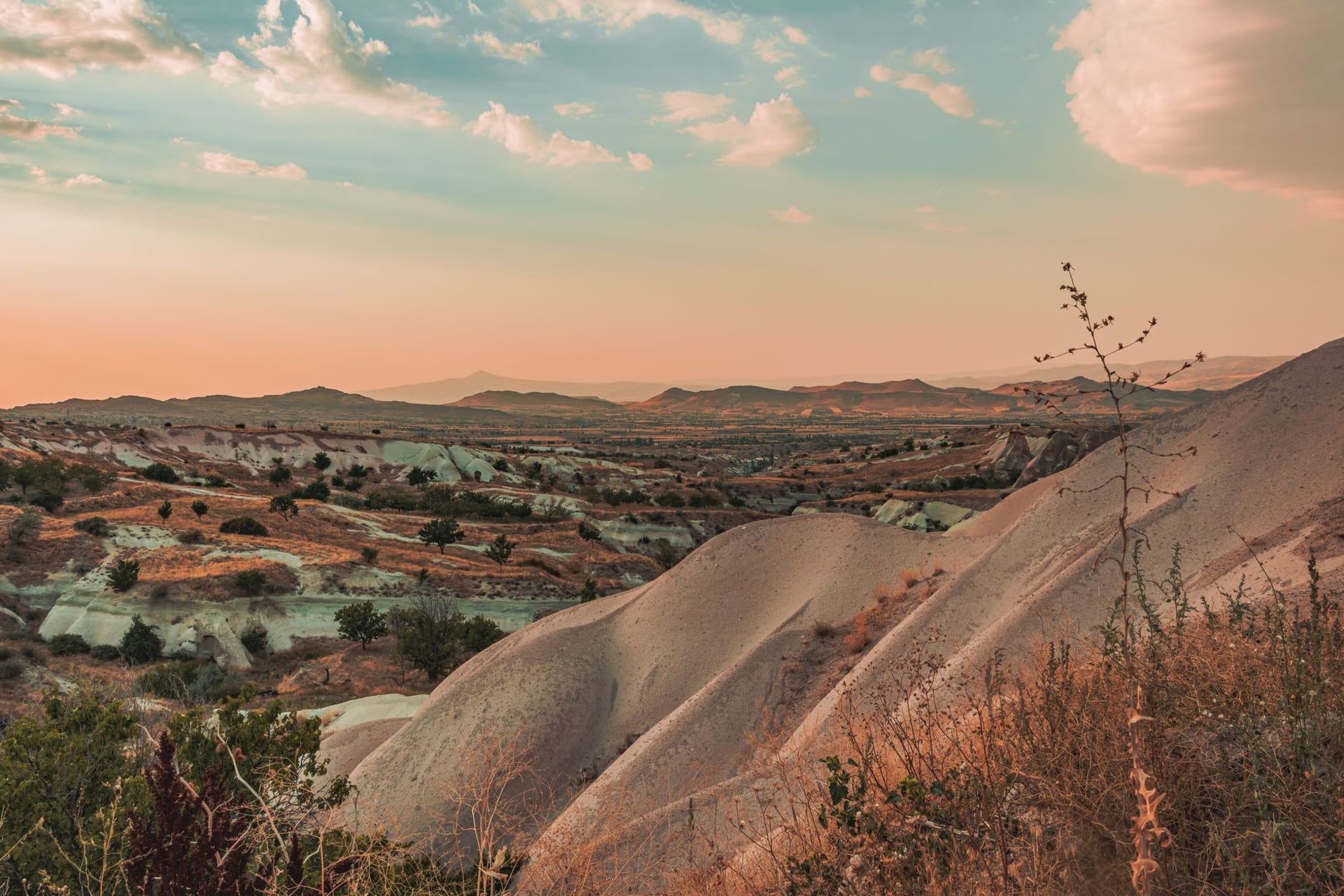
Derinkuyu
"Eleven stories underground, looking up at daylight through the ventilation shaft, I understood what desperation can build."
The entrance to Derinkuyu is deceptively modest: a low doorway in a hillside, marked by a sign and flanked by a small car park. I went on a weekday morning in April when the tour buses hadn’t yet arrived, and for the first fifteen minutes I had the upper levels largely to myself. The passages descend almost immediately. You hunch to fit through doorways that were carved for smaller people, or perhaps for people who understood that conquerors would not bend easily. By the third level I had stopped expecting to feel claustrophobic and started feeling something else — something closer to awe at the scale of what hand tools and centuries could accomplish.
Derinkuyu goes eleven stories below the surface, carved into soft volcanic tufa by early Christians — likely beginning in the Byzantine period, expanded over centuries as successive waves of persecution drove communities underground. At its peak it may have sheltered eight to ten thousand people for months at a time, with ventilation shafts, water wells, wine and oil presses, stables, kitchens, refectories, schools, chapels, and a cruciform church carved at the deepest level. The round millstone doors — massive basalt discs that could be rolled into passages from the inside to block them — stand in alcoves where they were left when the city was finally abandoned.
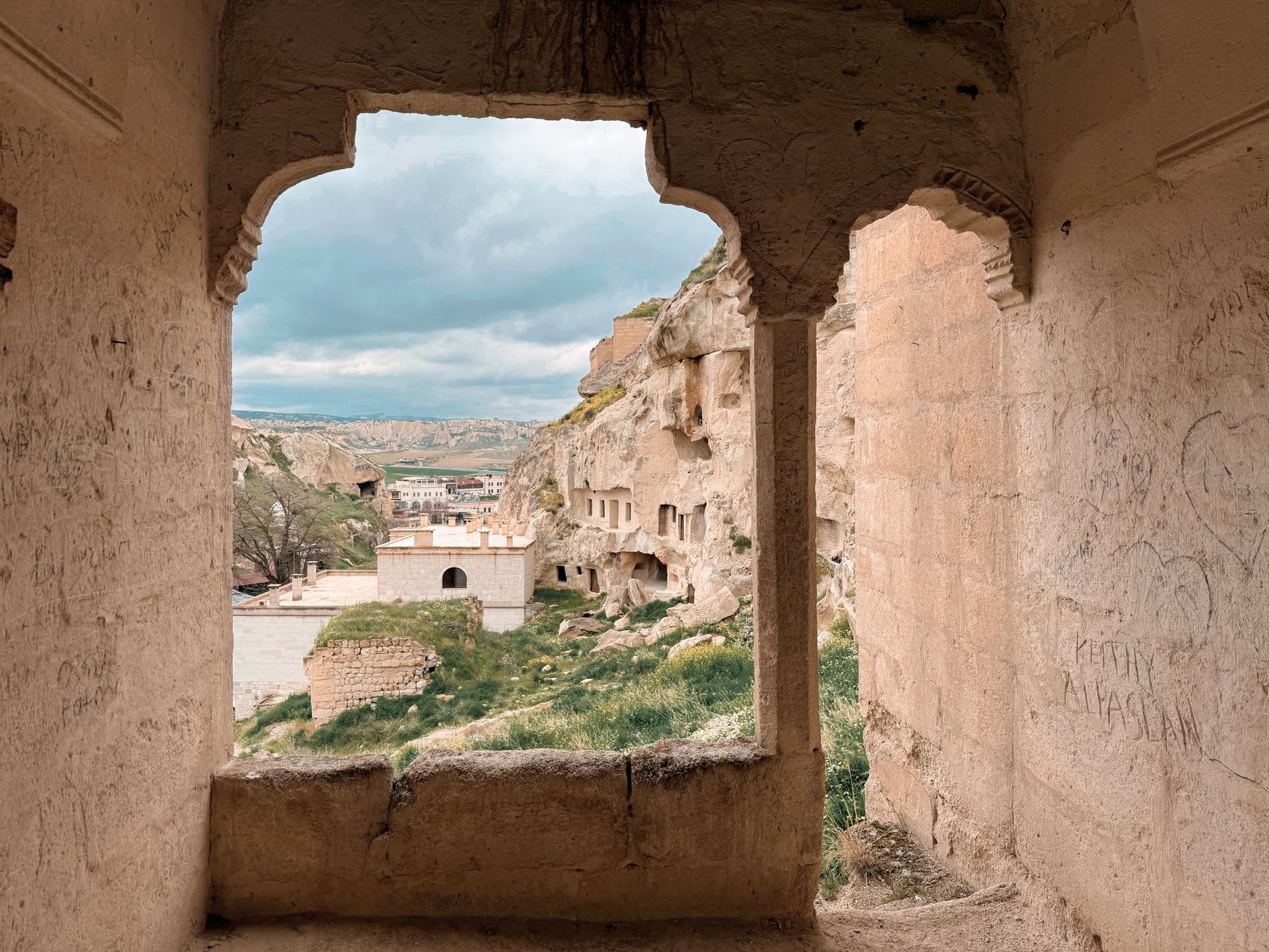
Standing in the lowest accessible level, I looked up through the ventilation shaft — a vertical tunnel cut through eleven stories of rock — and saw a column of blue sky the diameter of a dinner plate. The air down there is cool and slightly mineral, like the inside of a very old well. The silence is near-total apart from distant footsteps above and the occasional drip of water. I tried to imagine what it felt like to live here for weeks — cooking, sleeping, keeping children quiet, listening through the rock for sounds that might mean danger — and couldn’t quite reach it. The courage required is a different order of thing than I can properly imagine.

The upper levels show signs of how daily life continued underground: storage niches carved into walls at regular intervals, channels cut to drain liquid, the worn smoothness of floor stone where generations of feet passed. A missionary school near one of the middle levels has benches still carved into the walls. The whole place resists easy metaphor. It is not a monument. It is a home built by people who had run out of other options.
When to go: Go early — the site opens at 8 a.m. and the first hour before tour groups arrive is transformative. Spring and autumn mornings are ideal. Avoid peak summer afternoons when the queues compress the passages with groups. The underground temperature stays around thirteen degrees year-round, which makes it a genuinely good destination for the cool air alone in July and August.