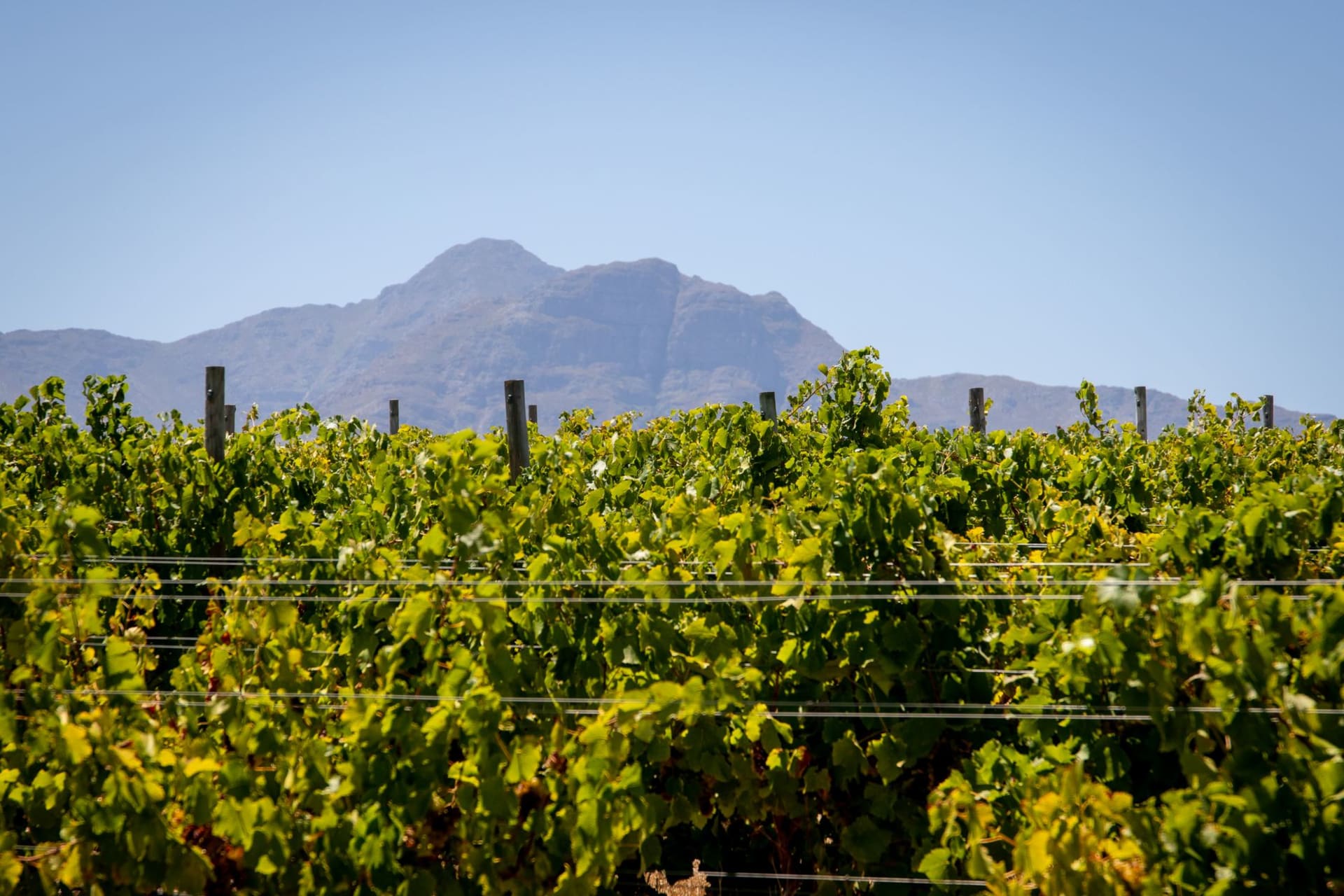
Elgin Valley
"The coldest valley in the Cape. The wines taste like they know exactly what they survived."
The turn off the N2 at Grabouw doesn’t prepare you for Elgin. You leave the highway and the road climbs immediately, winding through apple orchards that have been here since Scottish settlers brought the first fruit trees in the 1890s. The temperature drops noticeably as you gain altitude — Elgin sits on a plateau at around 200 metres, screened from the coast by the Houw Hoek and Groenlandberg mountain ranges and from the warmer Winelands to the west by the Hottentots Holland. The result is the coolest wine-growing climate in the Western Cape, with misty mornings, cold nights, and a growing season so long that grapes develop complexity here that they don’t get almost anywhere else in South Africa.
I first came in March during apple harvest, when the valley smelled strongly of fruit and the packhouses were running around the clock. The apple farmers and the wine farmers coexist in a relationship that is occasionally competitive and mostly symbiotic — they draw from the same aquifers, face the same frost risks, and share the same anxiety about weather in flowering season. The valley has a working agricultural quality that the more famous wine towns sometimes lack. There are fewer tasting rooms with designer interiors here, more cellars where you taste at a table covered with winemakers’ notes and last night’s dinner plates still drying on the rack.

The wines that came out of Elgin first made international noise around 2005, when a handful of producers started demonstrating what the cool climate could do with varieties nobody had expected. Paul Cluver, the family that pioneered wine farming here alongside their apple and pear orchards, was making Riesling and Chardonnay that was winning awards in Germany. Bouchard Finlayson — founded by a partnership between a South African and a Burgundian, which says something about what they were aiming for — produces a Pinot Noir that has become the standard-bearer for South African cool-climate expression. I tasted through their barrel room with the winemaker on a cold July morning, our breath making small clouds, and the wines were doing exactly what Pinot should do: smelling of forest floor and cherry and something faintly mineral that you could spend a long time trying to name.
The village of Elgin itself is small — a school, a post office, a nursery with an excellent café attached — but the valley community has the tightness of a farming district where people depend on one another’s labour in the busy seasons. The Saturday market at Oak Valley Estate brings together the valley’s producers in a way that makes you understand what farm-to-table is supposed to mean before it became a marketing cliché: cheese from goats you just passed on the road, bread from wheat grown in an adjacent field, wine made from grapes visible from the car park.

The Palmiet River Nature Reserve runs through the valley’s eastern edge, through a ravine that the road doesn’t reach. I hiked in from the Grabouw side one October morning when the proteas were beginning to flower, following the river through tall riverine forest where the canopy reduced the light to a green shimmer. The Palmiet itself runs clear and cold over quartz pebbles, and the sound of it — that particular small-river sound, neither rushing nor still — followed me for two hours until the path climbed back out into the apple orchards and the smell of blossom.
When to go: Autumn (March–May) brings harvest, vine colour, and the valley at its most purposeful. Spring (September–October) offers apple blossom and new vine growth. Winter is cold and frequently misty — which is precisely the atmosphere that makes Elgin feel like nowhere else in the Winelands, and rewards visitors willing to bring a warm layer and low expectations of sunshine.