Ceres
"Cross one pass and the wine country disappears — this is apple country, and it smells completely different."
A fruit-farming valley behind a mountain pass, where snow dusts the peaks and orchards replace vineyards.
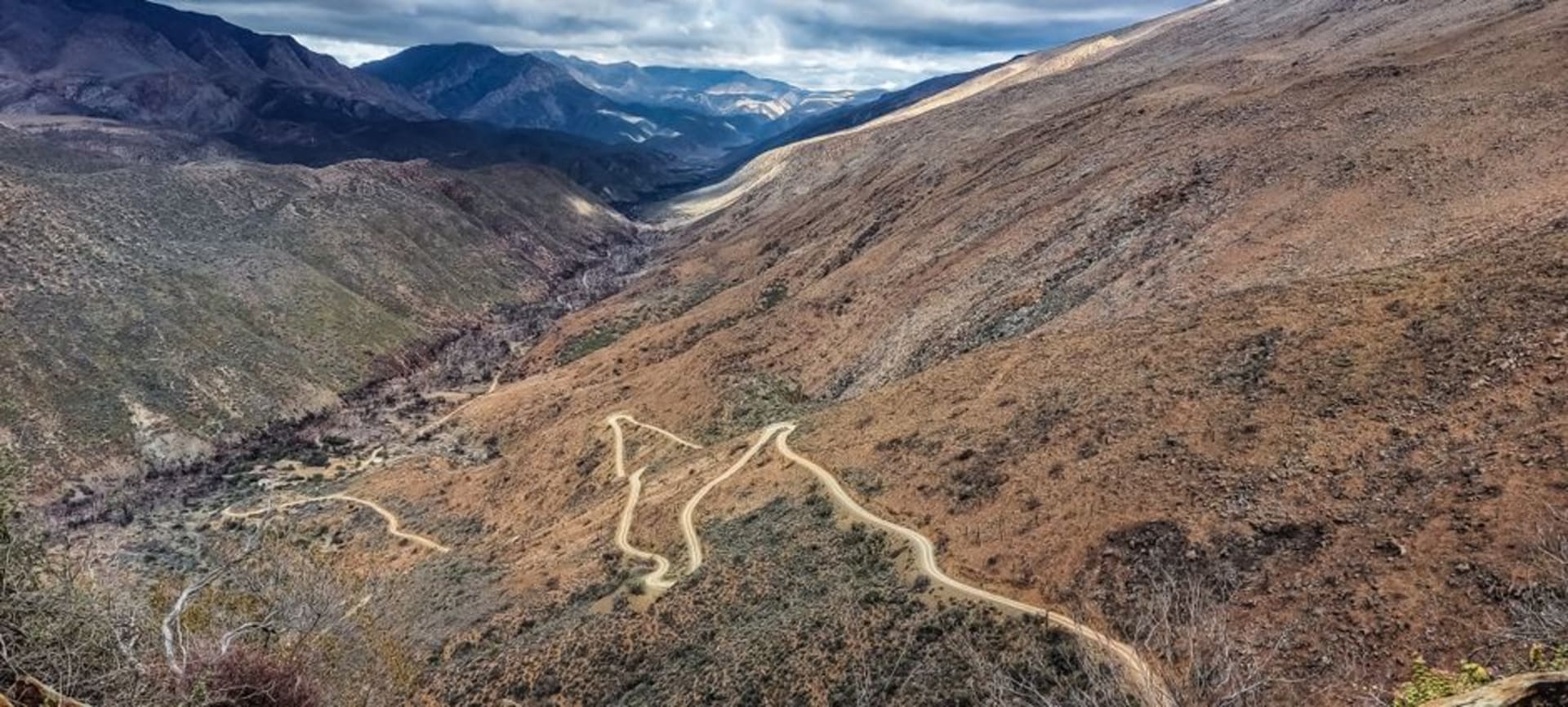
Lia and I nearly turned back at Michell’s Pass. We’d been driving through vineyard after vineyard for two days, lulled into thinking we understood the Cape Winelands, and then the road started climbing into the Skurweberg and the landscape just changed on us. I knew, vaguely, that Andrew Geddes Bain had engineered this pass in the 1840s — it opened in 1848 — but knowing a fact and feeling it are different things. You feel it in the switchbacks, in the way the rock walls close in and then release you into a completely different valley on the other side.
That valley is Ceres, and it does not smell like wine country. It smells like fruit. Named, somewhat grandly, after the Roman goddess of agriculture, the town earns the name honestly — apple orchards, pear orchards, rows of stone fruit running to the base of mountains that, unlike anything we’d seen near Stellenbosch, actually get snow in winter. We arrived in late afternoon and the light was doing that low, orange thing it does in farming valleys, catching the leaves just right.
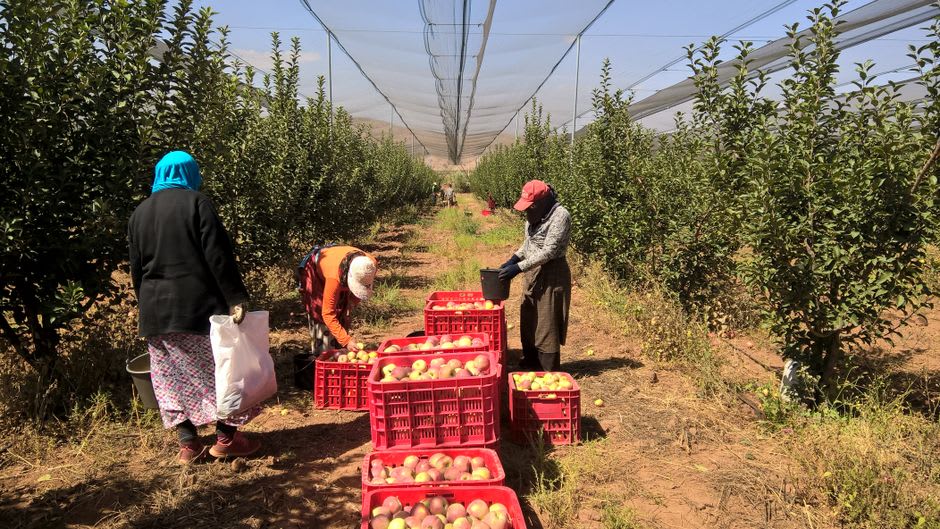
We stopped for coffee at a farm stall on the edge of town — the kind of place with crates of just-picked fruit stacked outside and a fridge full of the local juice brand that, I later learned, was literally born here in 1977 and now sits in supermarkets across the country. Lia bought a bottle without knowing the backstory and was delighted when I told her afterward. There’s something satisfying about drinking a household name at its source.
The next morning we drove out past the town toward Karoopoort, where the fold mountains start giving way to something drier and stranger — the first honest hint of the Tankwa Karoo. Somewhere along that stretch we pulled over at the rock formation locals just call Ceres Rock, more out of curiosity than any real plan, and stood there for a while doing nothing in particular. It’s a strange, quiet transition zone — one minute you’re in orchard country, cool and green, the next you’re staring toward semi-arid nothing.
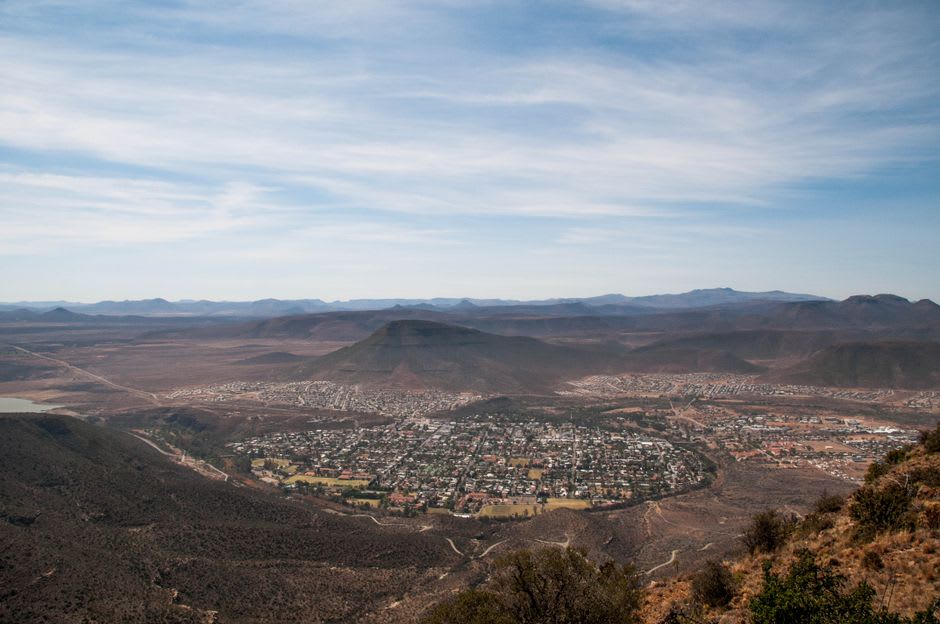
What stayed with me about Ceres wasn’t any single sight — it was the contrast. An hour from vineyards dripping with grapes, you’re suddenly in a valley cool enough for snow, growing apples instead. That’s the thing about the Cape Winelands nobody tells you: it’s not one climate, it’s a dozen, stacked behind each other’s mountains.
When to go: Aim for September if you want the orchards in spring blossom, or March–April if you’d rather time it with the fruit harvest and see the trees hanging heavy instead.