Praia
"The Plateau at noon: civil servants, street vendors, a man selling newspapers from a wooden box. Government happens here; so does everything else."
Most visitors to Cape Verde fly into Praia’s Aristides Pereira International Airport and immediately take a taxi to somewhere else. I understand the impulse — the airport road is not scenic, the traffic is real, and the all-inclusive resorts are not here. But I stayed three nights in Praia and I am glad I did, because the city is where Cape Verde’s creole identity is most alive and most unperformed, and you feel it in the way the market smells and the way people walk and the particular rhythms of a capital that has been running an African nation since independence in 1975 and carries that fact with a certain lightness.
The historic heart of Praia is the Plateau — a flat-topped mesa rising above the port and the lower commercial neighbourhoods, connected to the rest of the city by roads that wind up its sides. On the Plateau, colonial-era buildings line the central squares and pedestrian streets, painted in the faded pastels that the Portuguese seem to have specified into every place they built. The main square, Praça Alexandre Albuquerque, holds a small garden, the inevitable bust of a historical figure, and on weekday mornings a density of human activity — the post office, the ministry buildings, vendors with newspapers and phone credit, men in suits walking at the pace of people with somewhere to be.

The Sucupira Market spreads across several city blocks in the lower town, below the Plateau, and is the kind of market that makes shopping-as-tourism feel redundant because real commerce is happening here with complete disregard for observation. Fabric stalls, electronics, cooking pots, live chickens in one corner, and the food section — enormous pots of cachupa, grilled fish, rice with whatever — serving market workers and vendors and anyone else who shows up hungry. I ate a plate of cachupa guisado that had clearly been going since morning and paid less for it than I pay for an espresso at home in Mexico City. It was better than most things I eat in Mexico City.
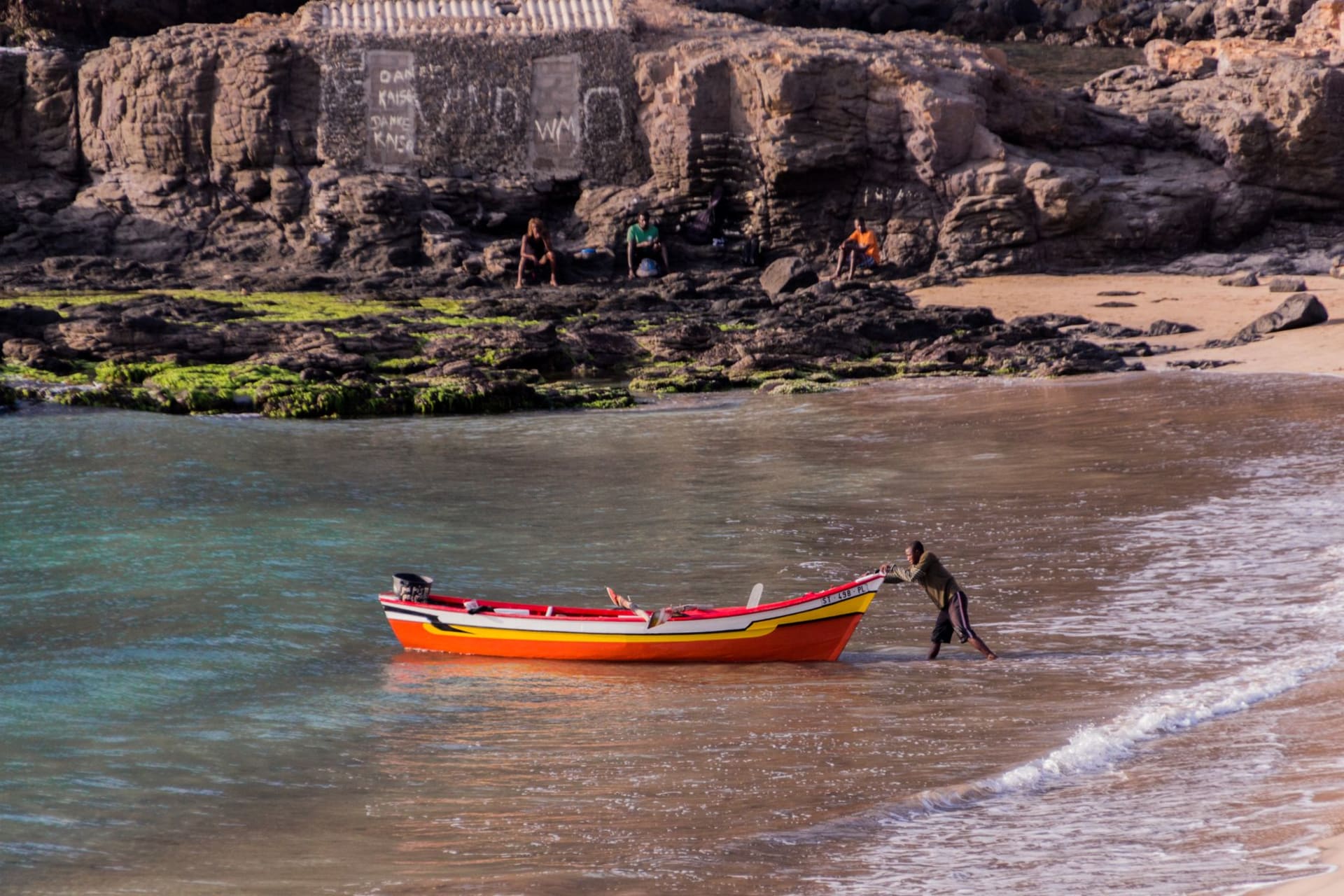
The seafront is raw and working in the way that port cities can be when they have not been landscaped for leisure — containers, ferries, fishing boats, a breakwater with pelicans. I walked it early one morning before the heat settled in and watched a cargo ship being loaded through a crane that wheezed with each movement. There is a beach here, Praia de Gamboa, not beautiful in the postcard sense but functional and used — local families on Sunday afternoons, children in the water, older men watching from plastic chairs.

On my last evening I found a small restaurant on a back street of the Plateau where a television was showing a football match and the volume was set to a level that permitted conversation only by shouting. I had grilled grouper and a bottle of Strela beer and watched the match and felt, as I sometimes feel in capital cities when you find the right table on the right street, that I had arrived somewhere the guidebooks had not yet processed into a recommendation.
When to go: Any time between November and May is comfortable — warm and dry, with cool evenings on the Plateau. Praia is a working city without a real tourist season, which is most of its appeal. Come during the week to see the Plateau at its most animated; weekends are quieter and the market is at its fullest on Saturday mornings.