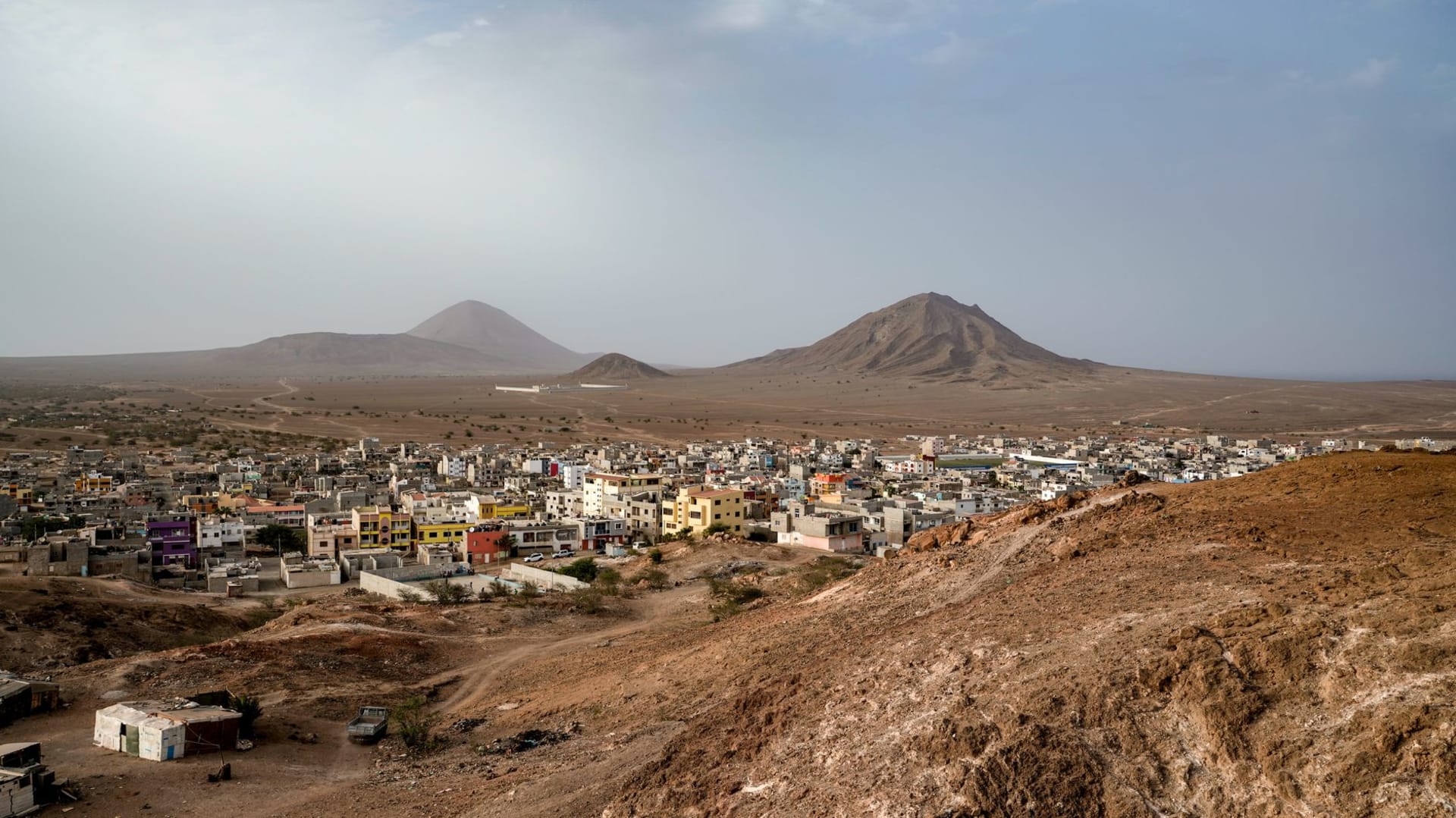
Pedra de Lume
"I stopped swimming because I couldn't. The water simply wouldn't let me sink. I lay on my back and looked at the sky and thought: right, this is something."
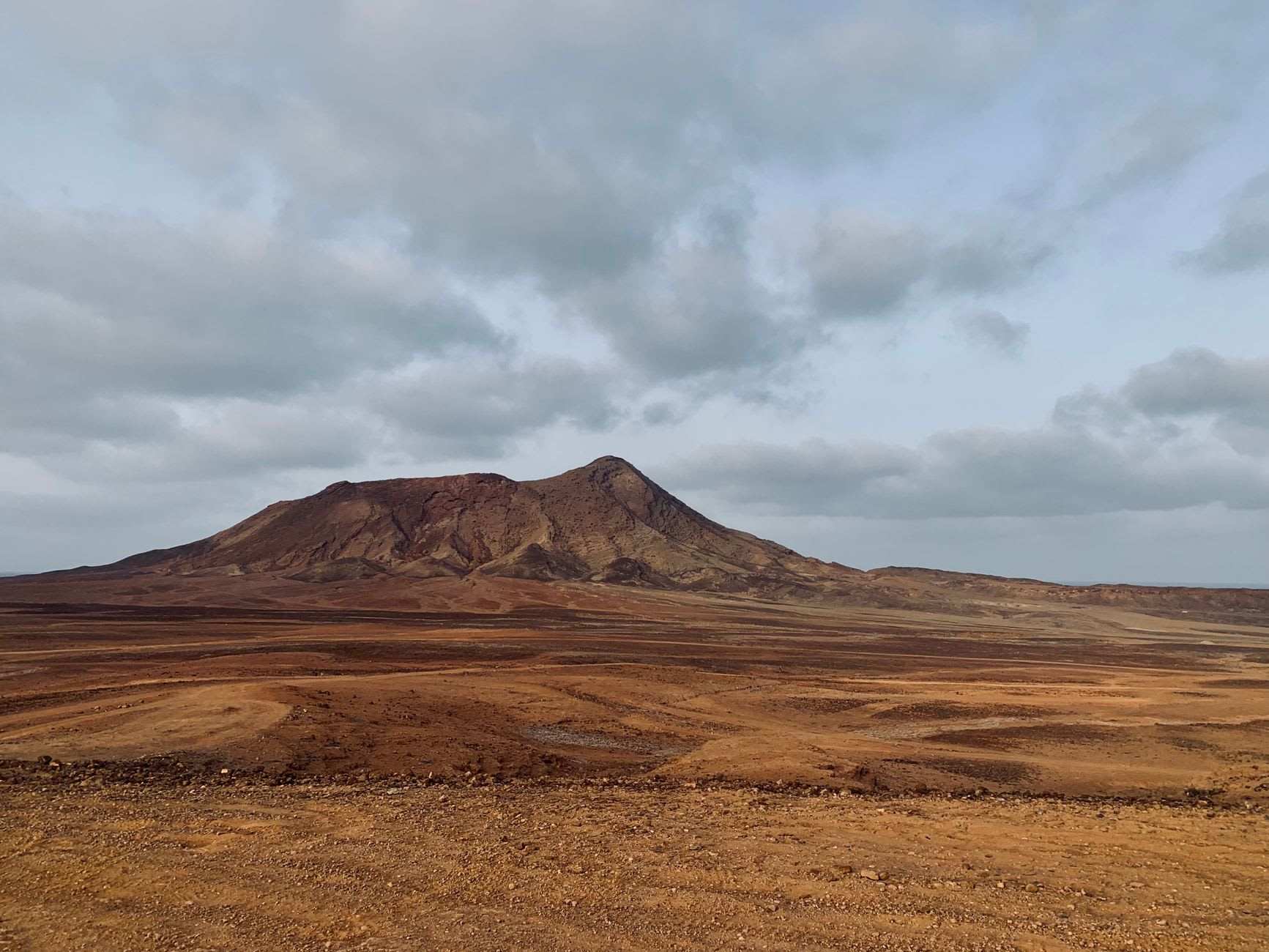
The road to Pedra de Lume runs east from Santa Maria across Sal’s flat volcanic interior — a landscape so devoid of vertical interest that the distant crater rim appears as the only geographic feature in the whole 360 degrees of view. You park outside a low building and walk through a short tunnel cut through the crater wall, and the caldera reveals itself on the other side: a natural amphitheatre of ancient volcanic rock, roughly circular, with the sky as its ceiling, and its floor entirely occupied by brine pools that shimmer in colour between white, pink, and a particular rust-orange that belongs somewhere between biology and geology.
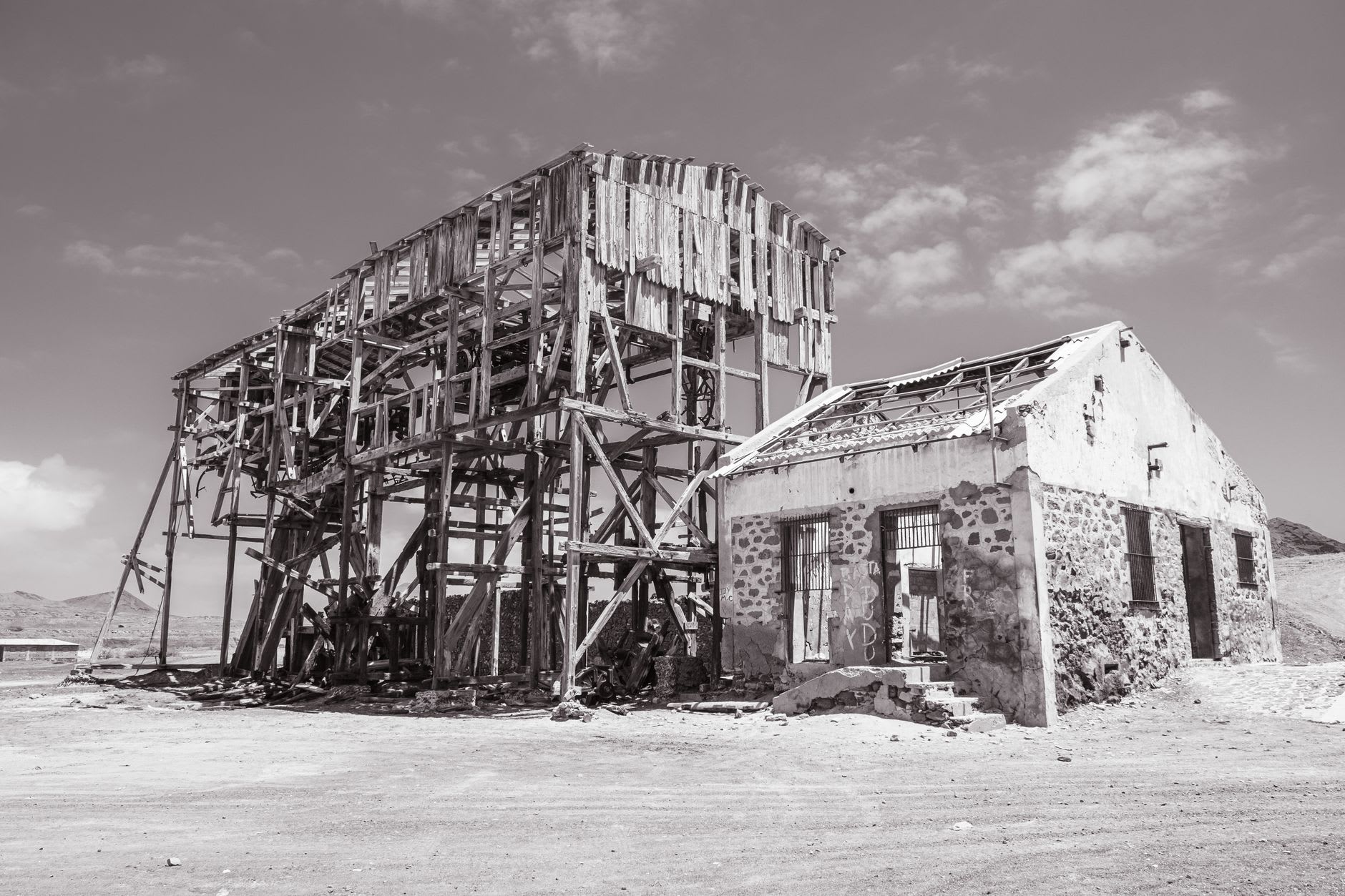
The salt works at Pedra de Lume were established in the early nineteenth century and operated until 1985, when industrial competition made them economically untenable. What they left behind is an eerie and beautiful landscape of channels, evaporation pans, a few roofless processing buildings, and the salt itself — crust on the water’s surface, piled at the channel edges, spread across the crater floor in white deposits that crunch underfoot. A narrow-gauge railway track, rusted and no longer useful, runs around the perimeter of the old operation. Walking along it with the brine pools on one side and the crater wall on the other is the kind of walk that makes you feel like you have arrived in someone else’s past.
The salinity of the pools is high enough — somewhere above thirty percent in the densest sections — to produce the Dead Sea effect: you climb down the wooden platform into the water and the moment you try to swim, normal swimming becomes impossible because the water insists on holding you up. I spent the first five minutes fighting this before accepting it, lying back and floating with a completeness I had never experienced in any body of water, my hands resting on the surface, the sun overhead, the crater walls encircling everything. The water has a warm slipperiness to it, almost oily, and it stings where it enters any small cut you had not noticed having. I emerged with my skin feeling tightened and slightly plastered, the way skin does when salt dries on it.
There is a low-key spa operation running from the pavilion at the entrance — mud from the crater floor, mineral-rich and dark, applied to various parts of the body and then baked in the sun before being washed off in the pools. I submitted to this with a certain self-consciousness that evaporated around the time a seventy-year-old German woman arrived at the mud station and began applying it with the practised efficiency of someone who has done this at least twelve times before. We exchanged a nod. We were both muddy. The crater had a democratising effect.
Late afternoon is the best time to be here. The day visitors leave around three o’clock and the crater takes on a different quality in the lower sun — the colours of the pools deepen, the shadows of the crater walls lengthen across the salt floor, and the silence settles back in. By four-thirty it was just me and a few people floating in the main pool, and the light on the water was doing things that my phone camera could register but not quite capture. Some views resist being taken home. This was one.
When to go: Year-round — the crater is accessible in all seasons and the floating is always possible. Visit in the morning for cooler temperatures and less direct sun on the crater floor (there is very little shade), or come late afternoon for the light. Midday in July and August is genuinely hot inside the volcanic bowl; bring water and a hat and you will survive it.