Maio Island
"Maio doesn't perform for you. It just lets you sit in the quiet and watch the tide come in."
A flat, salt-scented island of empty beaches and turtle tracks, where Cape Verde's tourist rush never arrived.
We almost skipped Maio. Everyone we met in Santiago waved a hand toward the horizon and said something like “there’s not much there,” which, after three weeks of ferry schedules and salt-air fatigue, sounded less like a warning and more like an invitation. Lia booked us two nights that turned into four. The island is flat and dry in a way that surprised me — no green volcanic spine like Santo Antão, just scrub and salt flats stretching toward a sky that never seemed to get cloudy. I remember standing on the deck of the inter-island boat as Maio came into view, low and pale, and thinking it looked less like an island and more like a sandbar that had decided to stay.
Vila do Maio, the only real town, still carries its old name in local memory: Porto Inglês. English salt merchants worked this coast from the seventeenth century, and you can feel it in the architecture — squat, colonial buildings the color of dried mango, facing a harbor that barely stirs. We had grilled wahoo at a tiny place two streets back from the water, the owner’s radio playing morna at a volume that suggested no one was in a hurry. Lia kept saying it reminded her of a town that had simply forgotten to grow, and I mean that as the highest compliment.
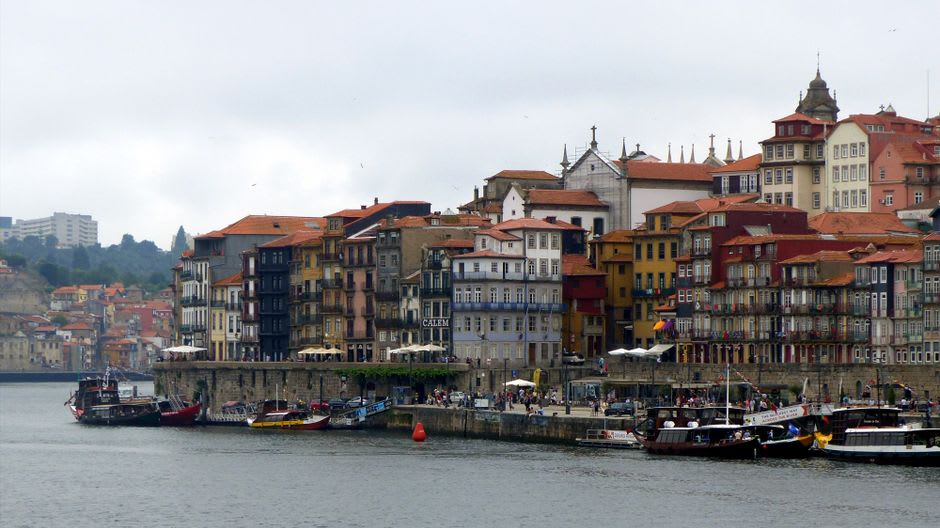
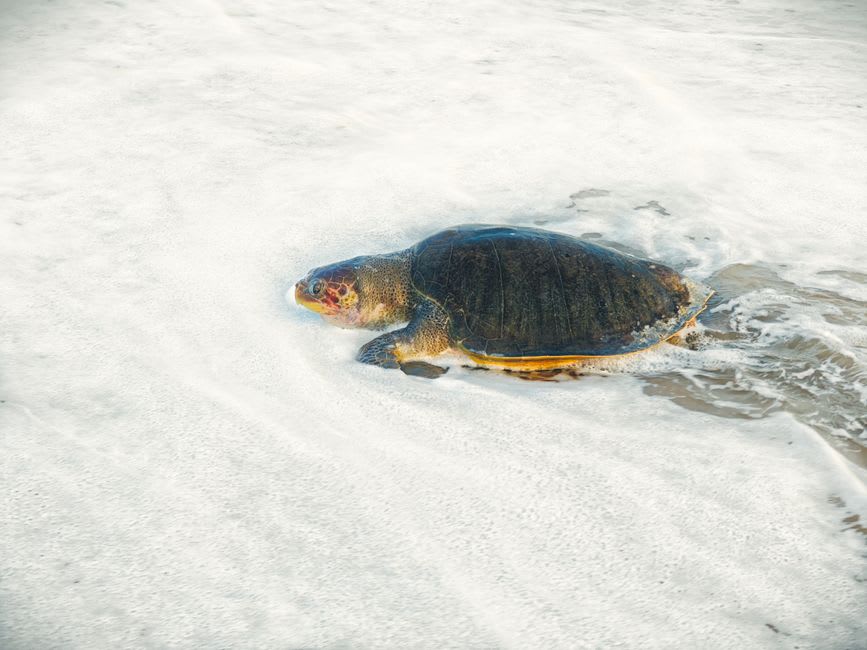
The salt pans are still out there past the edge of town, cracked white ground where traders once loaded ships bound for England, and walking through them at golden hour felt like stepping onto the surface of somewhere else entirely. But it was Praia de Ponta Preta that undid me. We went at dusk, half-hoping, and a local guide who ran turtle patrols pointed out fresh drag marks in the sand — a loggerhead had come up to nest hours earlier. We didn’t see her, but we sat there a long time anyway, Lia tracing the tracks with her flashlight beam, both of us quiet in a way we rarely are.
What I keep coming back to about Maio is how little of it has been arranged for a visitor. There’s no boardwalk, no beach club, just acacia scrub, salt, and a harbor town that outlived its trading heyday without bothering to reinvent itself. It’s the kind of place you go to slow down, not to be entertained.
When to go: aim for June through October if you want a shot at watching loggerhead turtles nest on Ponta Preta after dark, though if you’d rather have drier air and cooler days for wandering the salt flats, November to May suits that better.
Keep exploring
More from Cape Verde
 cape-verde
 Mindelo
Cape Verde's cultural soul — a Portuguese colonial port town where morna was born and Cesária Évora learned to break hearts.
Explore cape-verde
 Pedra de Lume
An extinct volcanic crater on Sal Island filled with hypersaline brine so dense you float without trying, surrounded by the ruins of abandoned salt works.
Explore cape-verde
 Pico do Fogo
An active volcano rising 2,800 metres from the Atlantic, with vineyards inside its caldera and a summit silence so absolute it stops feeling like absence.
Explore cape-verde
 Praia
Cape Verde's working capital — chaotic, warm, and genuinely itself in a way that most capital cities stop being the moment tourists arrive.
Explore cape-verde
 Santa Maria
Sal's only real town, where kitesurfers and fishermen share the same reef and the sun sets so slowly it feels like a ceremony.
Explore cape-verde
 Santo Antão
The archipelago's green counterargument — volcanic ridges dropping into terraced ribeiras so lush they look painted, walked by farmers who have been here for centuries.
Explore