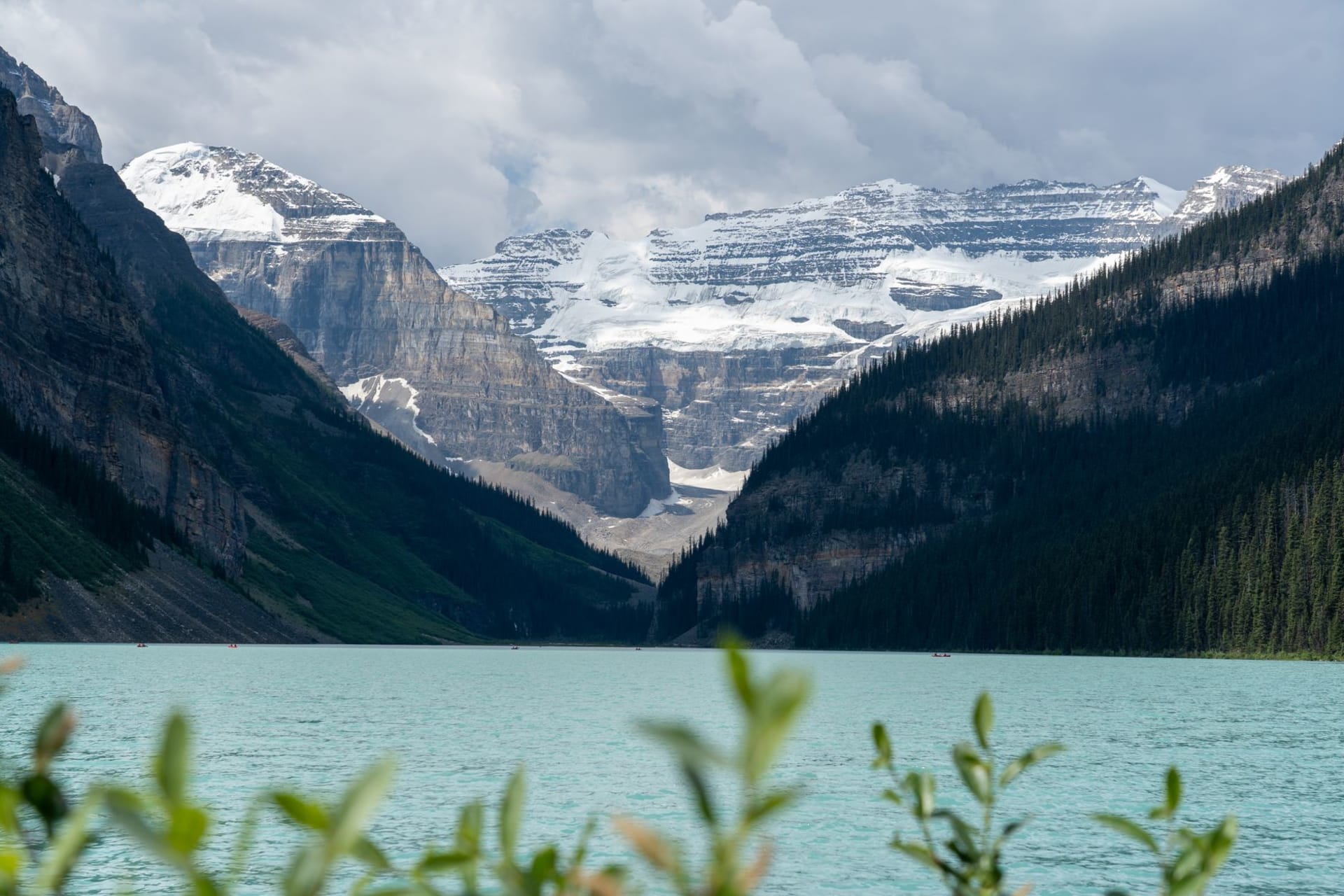
Lake Louise
"I stood there for forty minutes and still didn't feel like I'd earned the right to leave."
I arrived in the dark, which I think was the right way to do it. Parked the car at four in the morning, walked a trail I couldn’t really see by the light of my phone, and waited on the lakeshore while the sky went through its slow ceremony. When the light finally reached the water — that particular moment when the first grey-blue of dawn turns the surface from a mirror into something lit from underneath — I made a sound I’m not sure I’d ever made before. Something between a laugh and a gasp. The turquoise was already there before the sun fully arrived, as if it didn’t need the light to prove itself.
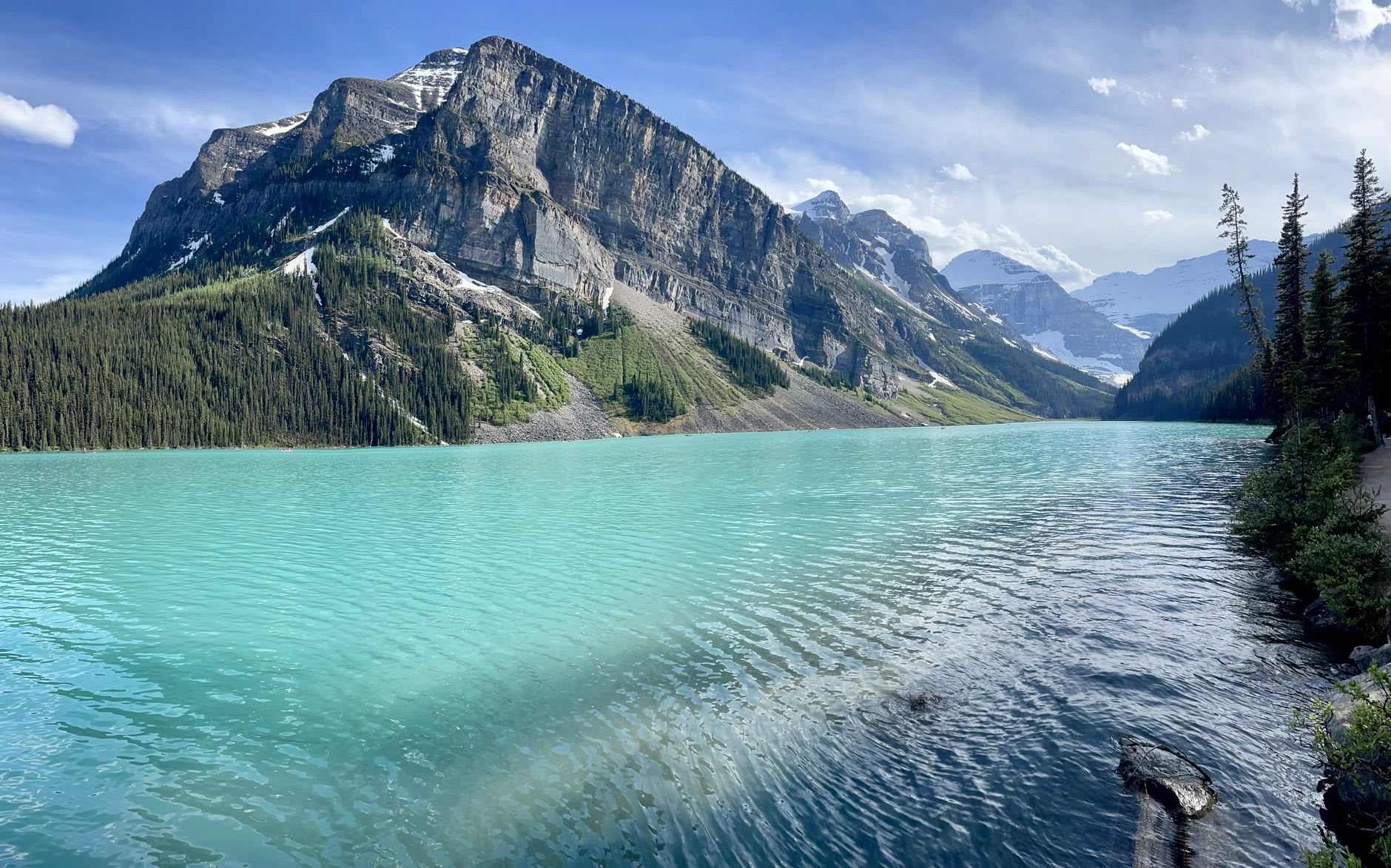
The colour comes from glacial flour — particles so fine they remain suspended in the meltwater, scattering the blue and green wavelengths of light in a way that has no real equivalent in the rest of the visible world. The science doesn’t diminish it. If anything, knowing that you’re looking at the erosive patience of a glacier ground into water makes the thing more impressive, not less. Victoria Glacier sits at the far end of the lake like a guarantee, feeding it slowly, the source made visible. The Château Fairmont looms on the north shore — a castle-red hotel that should feel absurd but somehow earns its place, its scale matched by the mountains behind it. I had coffee there one morning in the lobby, sitting in a leather armchair while outside the lake went about its impossible business.
The Plain of Six Glaciers trail above the lake is what most people skip, satisfied by the view from the shore. This is a mistake. The path climbs through forest and then above treeline onto a raw moraine, the lake shrinking below you until it becomes one jewel among many in a landscape of grey rock and permanent ice. A teahouse sits near the top, staffed by people who’ve packed in everything they need for the season and plan to stay. I ate oatmeal there in the cold while clouds moved through the peaks and a pair of pikas called to each other across the boulders. Nothing was easy about getting there. Nothing was supposed to be.
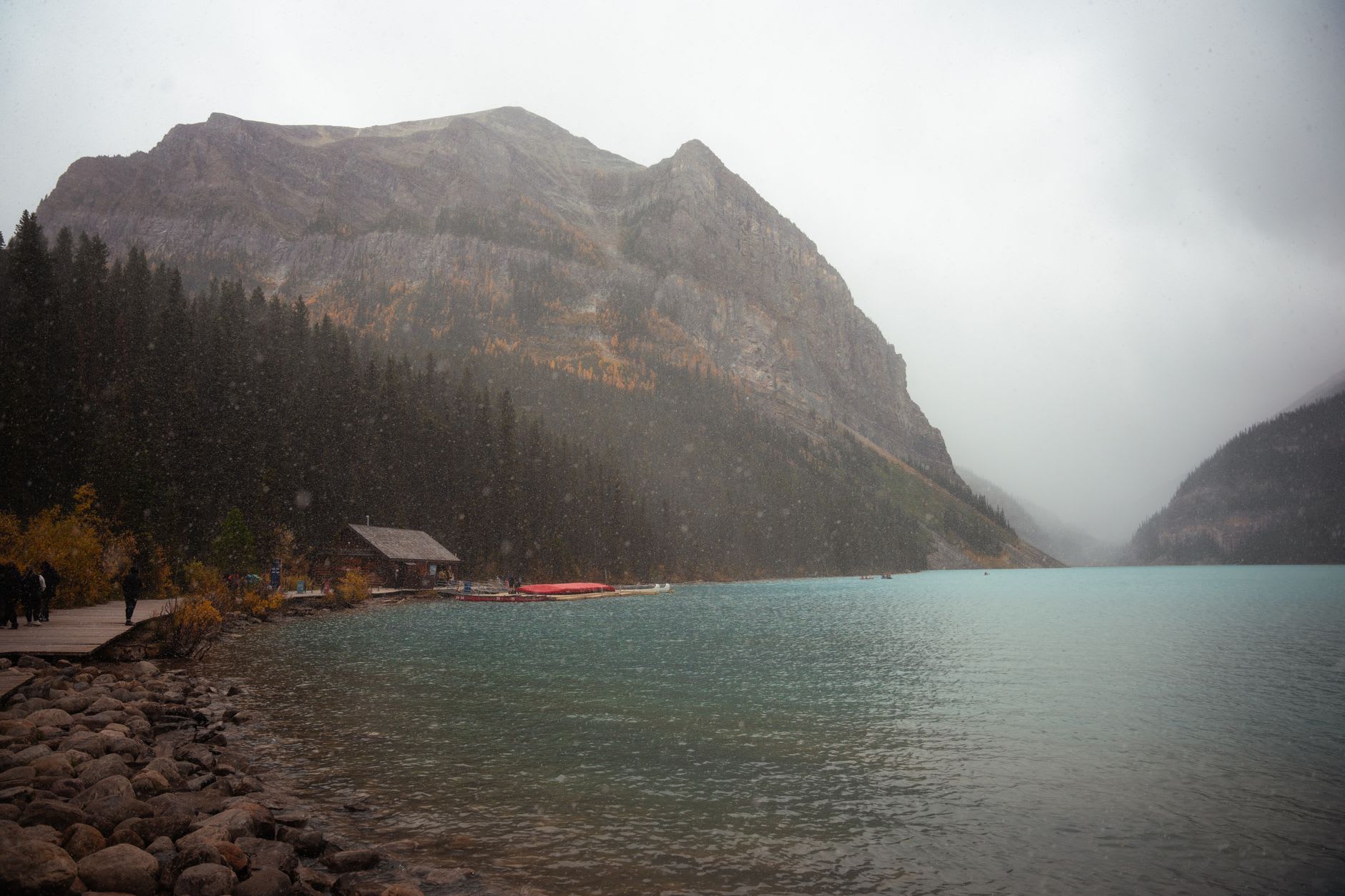
The lakeshore itself in summer is crowded in a way that feels genuinely industrial — tour buses, queued selfie spots, the particular sound of several hundred languages happening at once. I don’t hold this against the lake. The lake doesn’t notice. But arriving before dawn, or in late September when the cold has cleared the parking lots, gives you access to a completely different experience: the wind off the glacier, the smell of cold water and rock, the silence that has weight to it. That is the lake worth knowing.
When to go: Late September through early October for near-empty shores, gold larches on the surrounding slopes, and the first frost sharpening the air. Dawn arrivals in any season beat the crowds. Avoid July–August if solitude matters more to you than wildflowers — both are real, and only one comes with tour buses.