
Île d'Orléans
"Twenty minutes from downtown Quebec City, and suddenly you're in a farmhouse Quebec that predates the city itself."
A farming island in the St. Lawrence minutes from Quebec City, called the cradle of French America, where six historic parishes still grow the province's best strawberries.
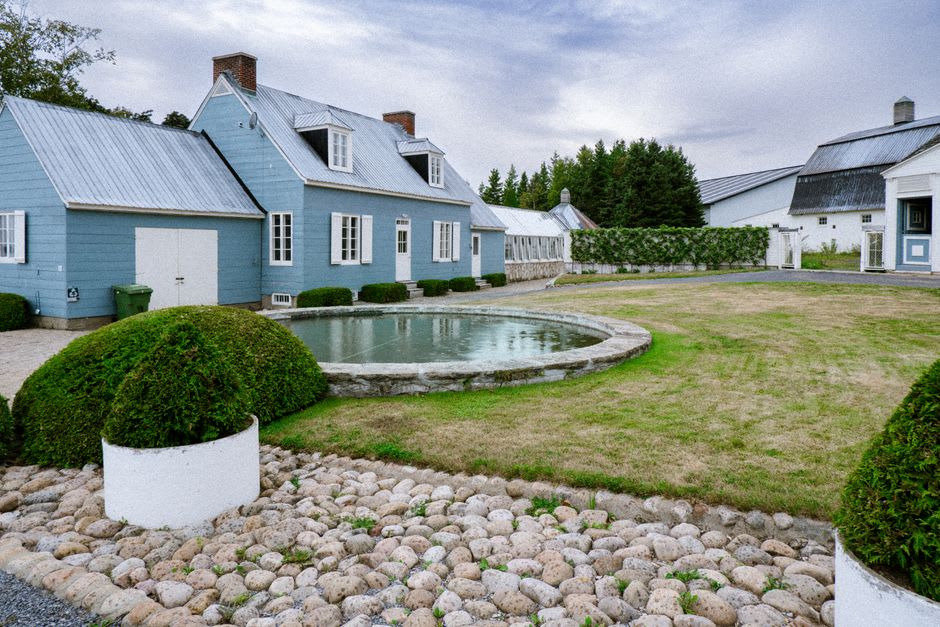
It takes about twenty minutes to drive from downtown Quebec City across the bridge onto Île d’Orléans, and in that short span the landscape rewinds two or three centuries. This island in the St. Lawrence — 34 kilometers long, ringed by a single road that loops its perimeter — is where some of the earliest French settlers put down roots in the 1650s, and it’s often called the “cradle of French America” because so many Québécois families, and by extension Franco-American families across New England, can trace their surname back to one of the island’s original parishes. I drove the loop road counter-clockwise on a whim and kept having to pull over, not for any single dramatic sight but for the accumulated effect of stone farmhouses, church spires, and orchard rows running down to the river.
The island is still, remarkably, a working agricultural landscape rather than a preserved one — strawberry fields dominate the southern parishes, and in June the roadside stands sell berries so ripe they’re borderline unshippable, sold within hours of picking. I stopped at one stand near Saint-Laurent, bought a basket still warm from the field, and ate most of it before reaching the next village, which the farmer running the stand seemed to find entirely predictable.
Six Parishes, One Road
The island splits into six historic parishes — Sainte-Pétronille, Saint-Laurent, Saint-Jean, Saint-François, Sainte-Famille, and Saint-Pierre — each with its own church, its own particular economy, and its own slightly proprietary sense of identity, which felt very familiar to me as someone raised among French villages that all insist their boulangerie is the region’s best. Sainte-Pétronille, at the island’s western tip, has the best view back toward Quebec City and Montmorency Falls across the water, and was historically the summer retreat for the city’s wealthier families, its houses noticeably grander than elsewhere on the island. Saint-Jean, on the south shore, was historically home to river pilots who guided ships up the treacherous stretches of the St. Lawrence, and the houses there still carry a certain maritime formality.
Cider, Cassis, and a Slower Register
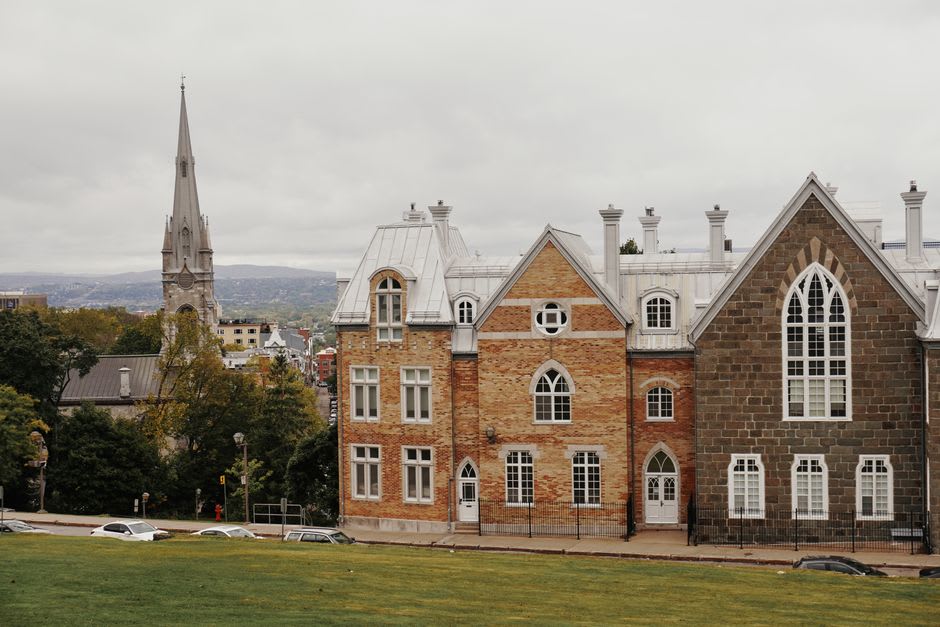
Beyond strawberries, the island has quietly built a reputation for cider houses and a black-currant liqueur called cassis, produced at a handful of small operations that have turned farm buildings into tasting rooms. I ended my day at one such cidery on the north shore, glass of ice cider in hand, watching the sun drop over fields that had been worked continuously since before Louis XIV. Quebec City’s skyline was visible in the distance, and the whole scene felt like proof that you don’t need to travel far to feel like you’ve traveled centuries.
When to go: June for strawberry season at its peak; September for apple harvest and cider tastings, with the added benefit of the island’s orchards turning color before the crowds arrive.