Hopewell Rocks
"I walked on the ocean floor in the morning and paddled a kayak over the same spot by afternoon."
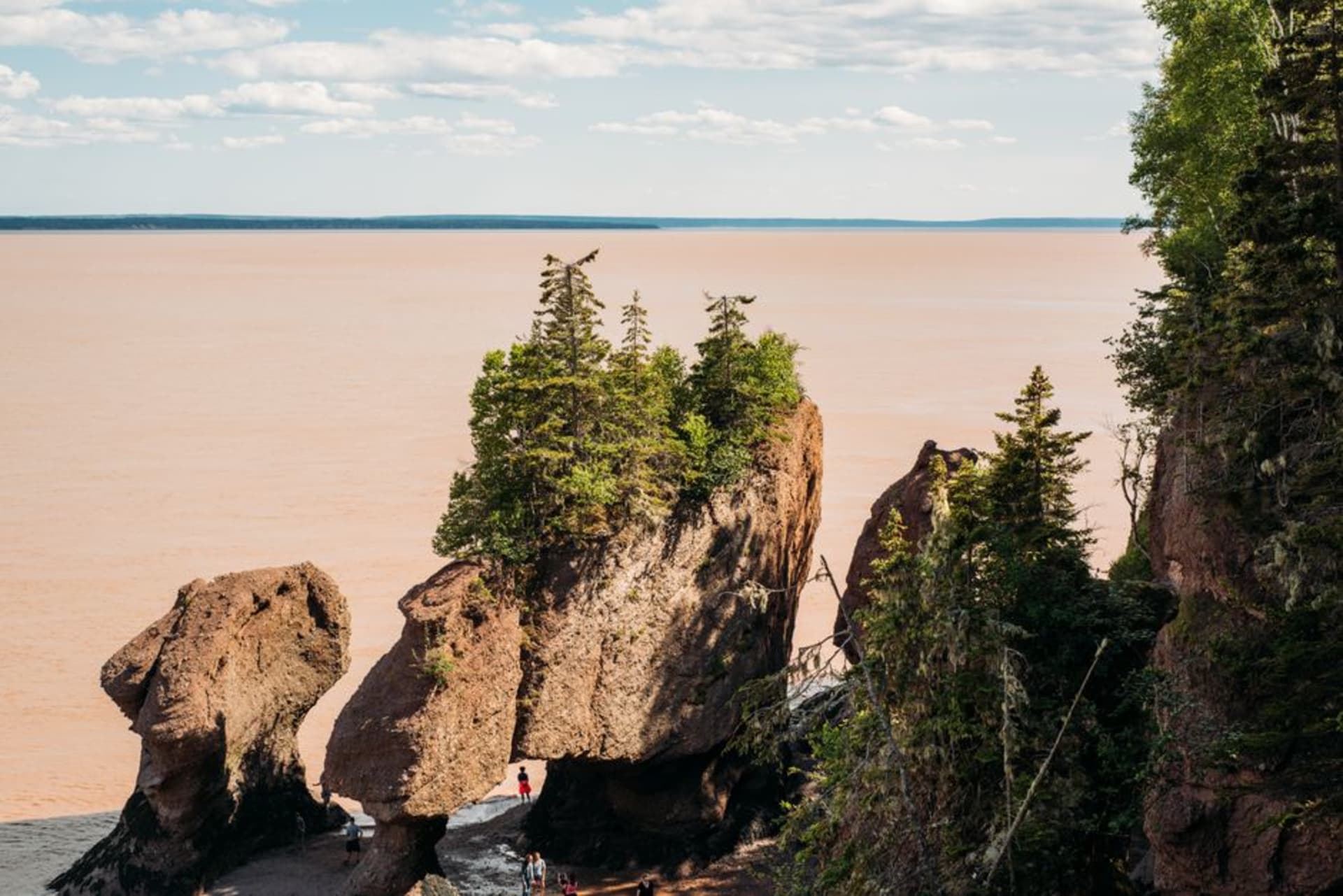
Flowerpot-shaped sea stacks you can walk beneath at low tide and kayak around at high tide, the same spot transformed twice a day by the world's biggest tides.
I arrived at Hopewell Rocks at nine in the morning and walked down a staircase onto the floor of the Bay of Fundy. That sentence still feels wrong to write, but it is exactly what happens here: at low tide, park staff open a gate and let you descend forty-some steps to walk among sandstone sea stacks that spend half of every day fully submerged under water twelve metres deep. The formations — sculpted by tidal erosion into narrow-waisted towers with tufts of spruce and fir clinging improbably to their tops — have earned the nickname “flowerpot rocks,” and standing at their base, craning my neck up at trees growing forty feet above me on a column of rock the sea carved, I had the distinct sense of trespassing somewhere I was not supposed to be able to go.
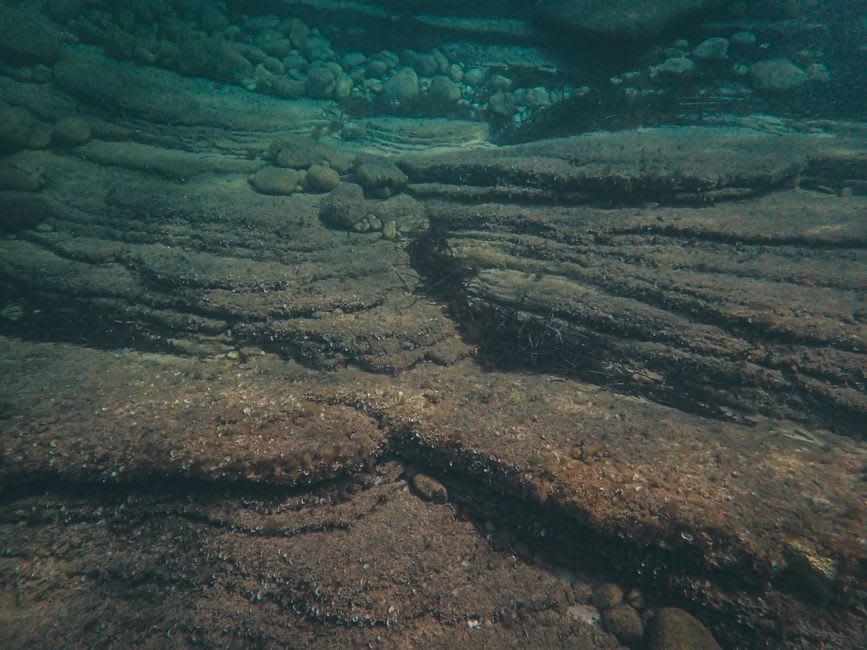
The geology is straightforward Fundy: soft conglomerate rock, brutal tidal action, millions of years. But knowing the mechanism does nothing to dull the effect of walking on rippled ocean-floor sand still glistening wet, past tide pools stranded between the rocks, while a Parks Canada guide explains that in roughly six hours every square metre of the ground under my boots will be under enough water to float a small boat.
The Same Spot, Twice
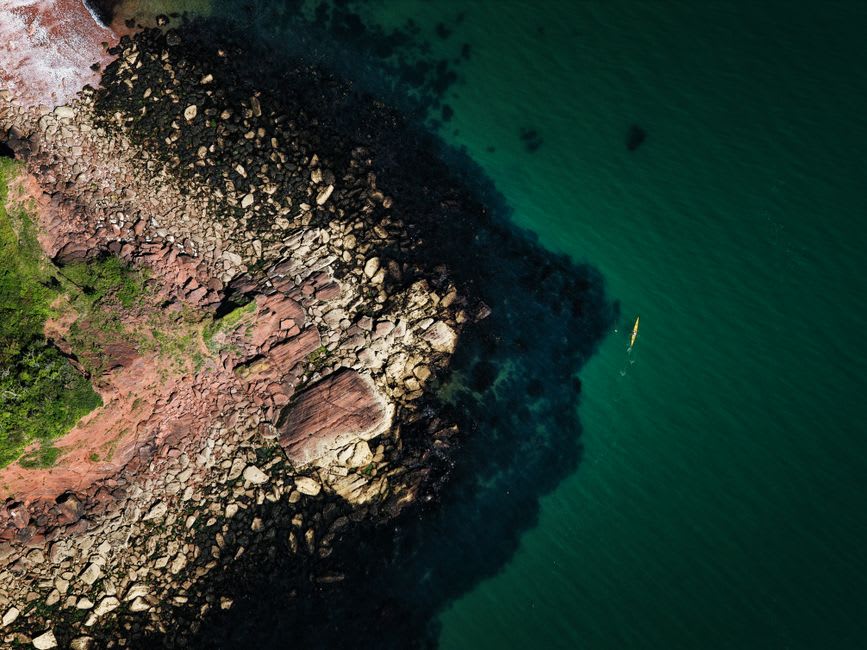
What makes Hopewell Rocks worth planning a full day around, rather than a quick stop, is coming back at high tide. I returned that same afternoon, rented a sea kayak from an outfitter working the cove, and paddled out over the exact ground I had walked on hours before. The flowerpot rocks that had towered thirty and forty feet above me at low tide now barely cleared the water by a few feet — I paddled directly between two formations I had stood beneath that morning, closer to their treetops than their bases. It is the single clearest demonstration I have found anywhere of what a sixteen-metre tidal range actually means: not a number on a sign, but the same landscape rendered twice, transformed so completely that I had to ask the kayak guide to confirm I was looking at the same rocks.
Timing Everything
The park publishes tide tables at the entrance and online, and the staff are militant, appropriately, about clearing the ocean floor well before the tide turns — the incoming water here does not creep, it arrives with real speed, and every few years someone gets a stern rescue story out of misjudging it. I planned my whole day around the tables: low tide walk in the morning, lunch at the interpretive center learning about the geology, kayak tour booked for a window a few hours before the next high tide. It required more scheduling than I expected from a nature stop, but that is rather the point of the place.
When to go: May through October, when the park is staffed and kayak tours run; try to time your visit around a low tide that falls mid-morning so you can also catch a high tide the same day. Photographers should aim for early morning or early evening for the softest light on the sandstone.