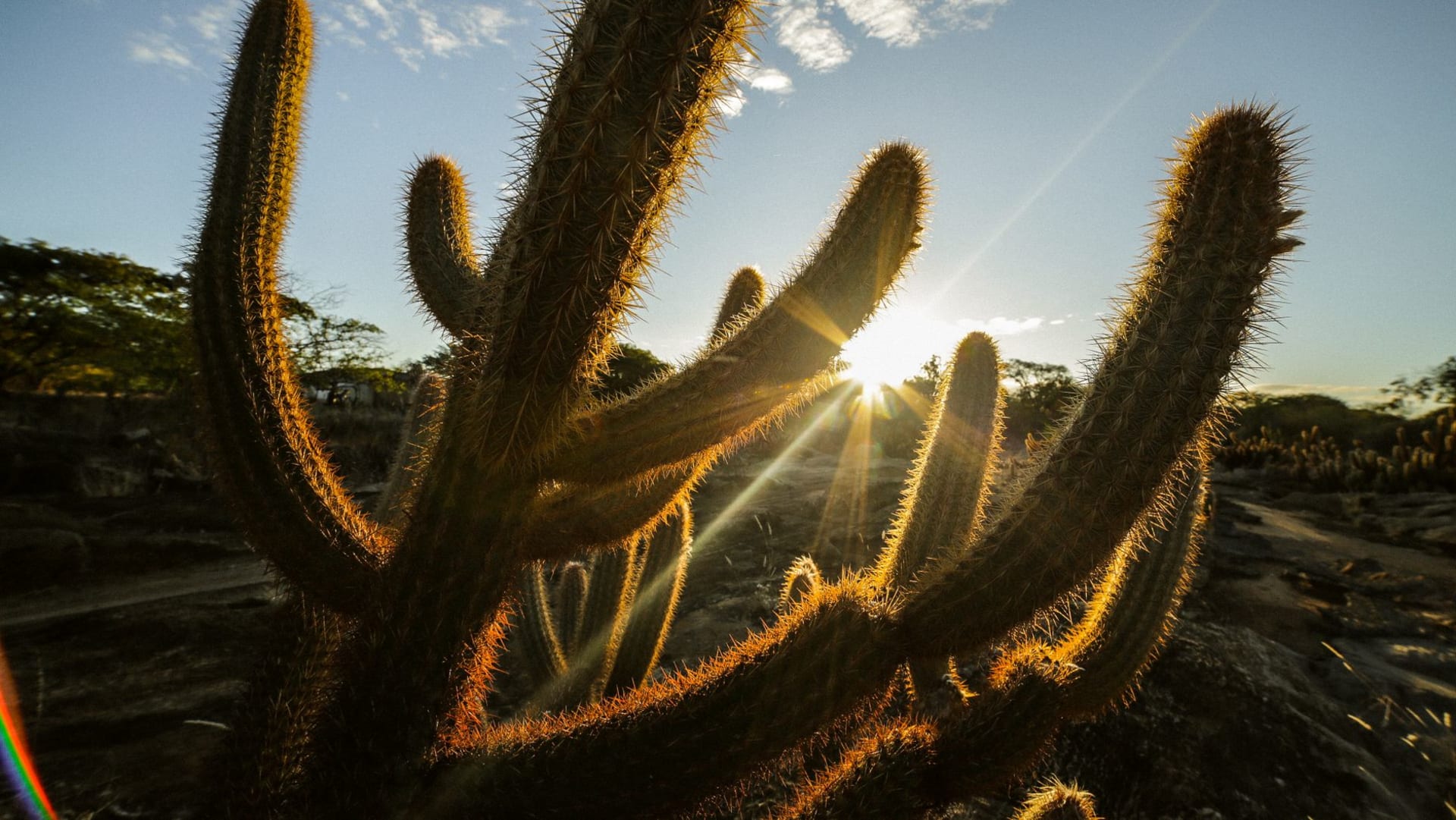
Serra das Confusões National Park
"The map calls it the park of confusions, and after one day inside it I stopped arguing with the name."
It took most of a day to reach Serra das Confusões — a long drive across the baked interior of Piauí, the road shimmering, the radio fading in and out, and the caatinga stretching away on both sides looking, to an untrained eye, like nothing at all. Lia kept asking if I was sure. I was not sure. Then the escarpments rose out of the haze ahead, red and abrupt, and the whole flat world suddenly had a vertical dimension.
A Park Nobody Talks About
This is one of the largest protected areas in Brazil’s northeast, and yet I have met Brazilians from the coast who have never heard of it. It sits in the deep sertão, linked by a wildlife corridor to the more famous Serra da Capivara, and it shares that region’s astonishing inheritance: cliff walls covered in prehistoric paintings, some of them thousands of years old, made by people who lived in this dry country long before anyone thought to call it harsh.

A local guide named Raimundo took us out in the early morning, when the rock still held the night’s coolness. He had grown up in the small town at the park’s edge and spoke about the paintings the way other people speak about family photographs. He showed us a panel of red figures — hunters, deer, a row of dancing stick-people holding hands — and then went quiet, letting us look. I am wary of the word sacred, but I do not have a better one for what it felt like, standing in the shade of that overhang with the heat building outside.
The Caatinga Is Not Empty
The great lie about the caatinga is that it is dead. Spend a morning walking it with someone who knows it and the lie collapses. Raimundo pointed out the swollen trunks of the barriguda trees storing water, the tracks of a six-banded armadillo crossing the sand, a pair of blue macaws — caatinga parakeets, really — screaming overhead. After the brief rains the whole grey scrub turns green almost overnight; we came in the dry season and saw it at its most stubborn, every plant a study in patience.

We ate lunch back in town — goat, naturally, slow-cooked the way the sertão has always cooked it, with farofa and a bowl of beans — and Raimundo told us the park gets so few visitors that some months he guides almost no one. I found that hard to reconcile with what we had just seen. Then again, the difficulty of reaching the place is exactly what keeps it as it is, and I am in no hurry to advertise otherwise.
Getting There Honestly
There is no easy way in. The nearest useful airport is in Teresina, and from there it is a long road south; renting a sturdy car or arranging a transfer through a local operator in Caracol or Cristino Castro is the realistic option. Hire a registered guide — it is required for the painted sites and you would not find them otherwise — and carry far more water than feels reasonable.
When to go: June through September, the dry season, gives the most reliable roads and cooler mornings for walking. If you want the caatinga green and flowering, gamble on the brief rains around January, and accept that the tracks may turn to soup.