Petrolina
"They grow mangoes and grapes in the middle of the driest biome on earth. The audacity of it is the whole point."
I crossed the São Francisco on the bridge from Juazeiro — Bahia on one bank, Pernambuco on the other — at midday, the river low and the colour of milky coffee, wide and slow and indifferent to the border it was serving as. Petrolina was on the other side and it was clearly a different kind of city from what surrounded it: the avenues broad, the commerce visible, cranes over a new building near the waterfront. This was a place that had recently decided to be a capital of something, and had followed through.

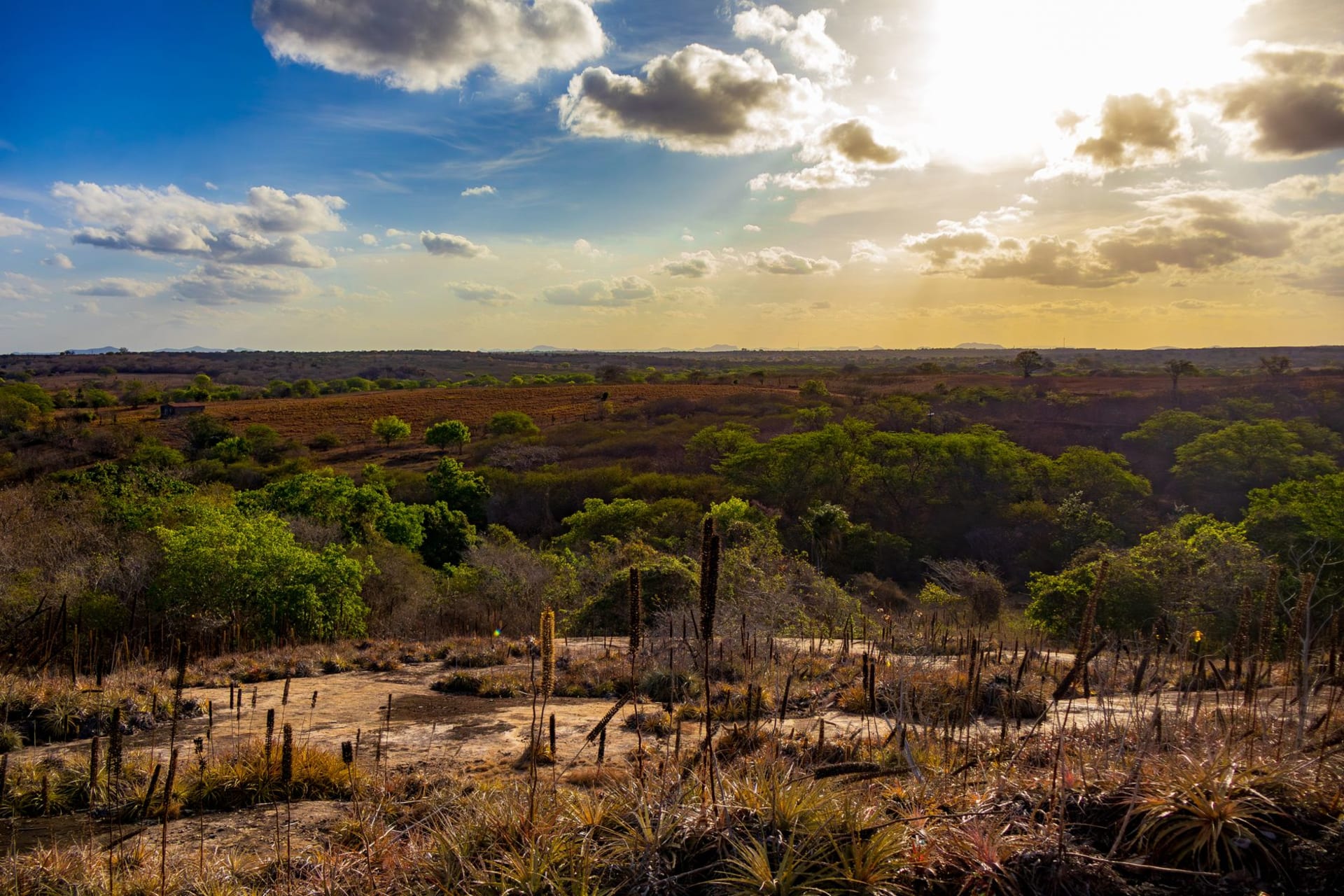
The something is fruit. The Vale do São Francisco is one of the great agricultural engineering stories in Brazilian history — an irrigation project that transformed the semi-arid caatinga into a major producer of table grapes, mangoes, guavas, and, in the last thirty years, wine grapes. The wines of this region are not famous internationally the way those of Argentina or Chile are, but they should be: the tropical growing conditions allow two harvests per year, and winemakers have learned to use this unusual cycle to produce wines with a freshness that the European market is beginning to notice. I visited two wineries on the Pernambuco side of the river — Vinícola Santa Maria and a smaller family operation near the road to Santa Maria da Boa Vista — and drank a Syrah rosé that was genuinely surprising.

The city itself wears its prosperity with a certain energy that feels earned. The Orla Fluvial, the waterfront promenade, is animated at night with families, food stalls, and the boats that still cross to Juazeiro carrying passengers and produce. At the Mercado do Produtor, the grapes are sold in enormous bunches at prices that make no sense to anyone who has bought them in a European supermarket. I ate a plate of grilled tucunaré fish — the peacock bass that was introduced to the São Francisco reservoir and is now the default catch — with rice and pirão, the thickened fish broth, and watched the river move south.
When to go: Year-round, as irrigation has decoupled the agricultural cycle from rainfall. August and September bring the main grape harvest season and the Vale do São Francisco wine festival. The city is hot year-round — morning and evening visits are most comfortable. December to March brings some rain but the river is higher and more atmospheric.