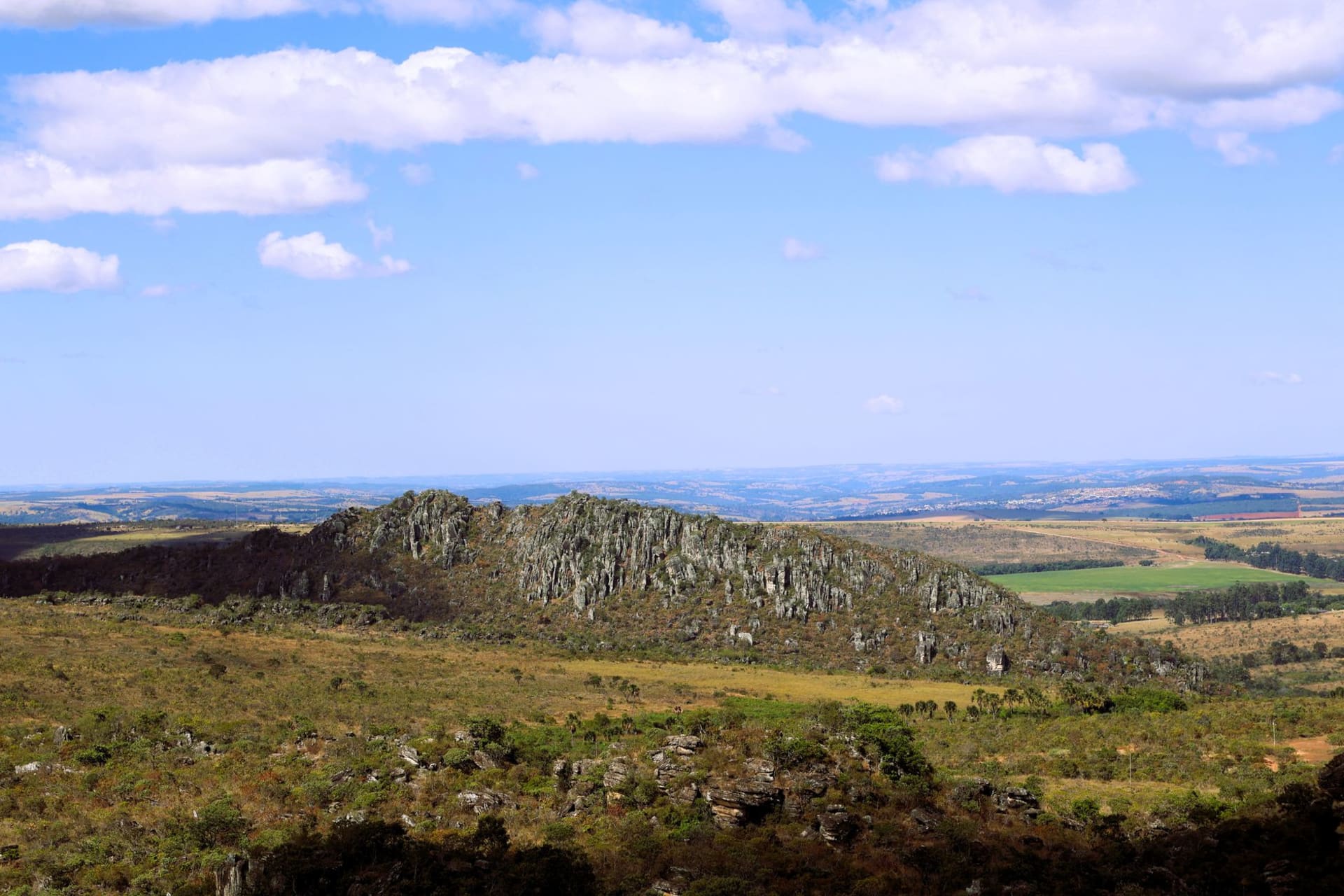
I arrived in Canudos on a flat October afternoon, the reservoir low and the sky doing nothing dramatic. A local told me to walk to the far bank where the water was dropping fastest. I did. And there they were — the tops of old walls, stone doorways standing to chest height above the waterline, the submerged skeleton of a town that was destroyed and then flooded and then half-resurrected each dry season. I stood at the edge in silence for a while. The silence was not peaceful. It had teeth.

The history is not easy to summarize. In 1893, a wandering lay preacher named Antônio Conselheiro led thousands of impoverished northeasterners to this backland valley and built a community called Belo Monte — a settlement that grew to perhaps thirty thousand people, living outside the authority of the newly formed Brazilian Republic. The government sent four military expeditions to destroy it. The first three were routed. The fourth, in 1897, came with heavy artillery and wiped the community off the map. Somewhere between fifteen thousand and twenty-five thousand people died. The war was Brazil’s Vendée and its Wounded Knee combined, and it is still not properly taught in most Brazilian schools. Euclides da Cunha, a journalist embedded with the army, wrote Os Sertões about what he witnessed. The book is one of the greatest works of Brazilian literature, and it is a document of atrocity as much as a landscape study.

The modern town of Canudos sits above the reservoir, practical and unremarkable. There is a small museum — the Museu do Sertão — where photographs and documents and plaster reproductions convey the scale of what happened, though nothing quite prepares you for the eerie quality of the ruins themselves when the water is low. Pilgrims come on the anniversary of Conselheiro’s death in September, and you can feel the ambivalence in the way people talk about him — part saint, part subversive, part victim of a brutality the republic would rather not name. The town’s bars serve grilled carne-de-sol with farinha and vinagrete, and the coffee comes very strong and very sweet. I drank three cups and still could not entirely shake the weight of the place.
When to go: August through October, when the reservoir is at its lowest and the submerged ruins are most visible. September brings commemorations of Conselheiro’s death and a palpable intensity to the whole town. Avoid January to March when rains make the access roads unreliable.