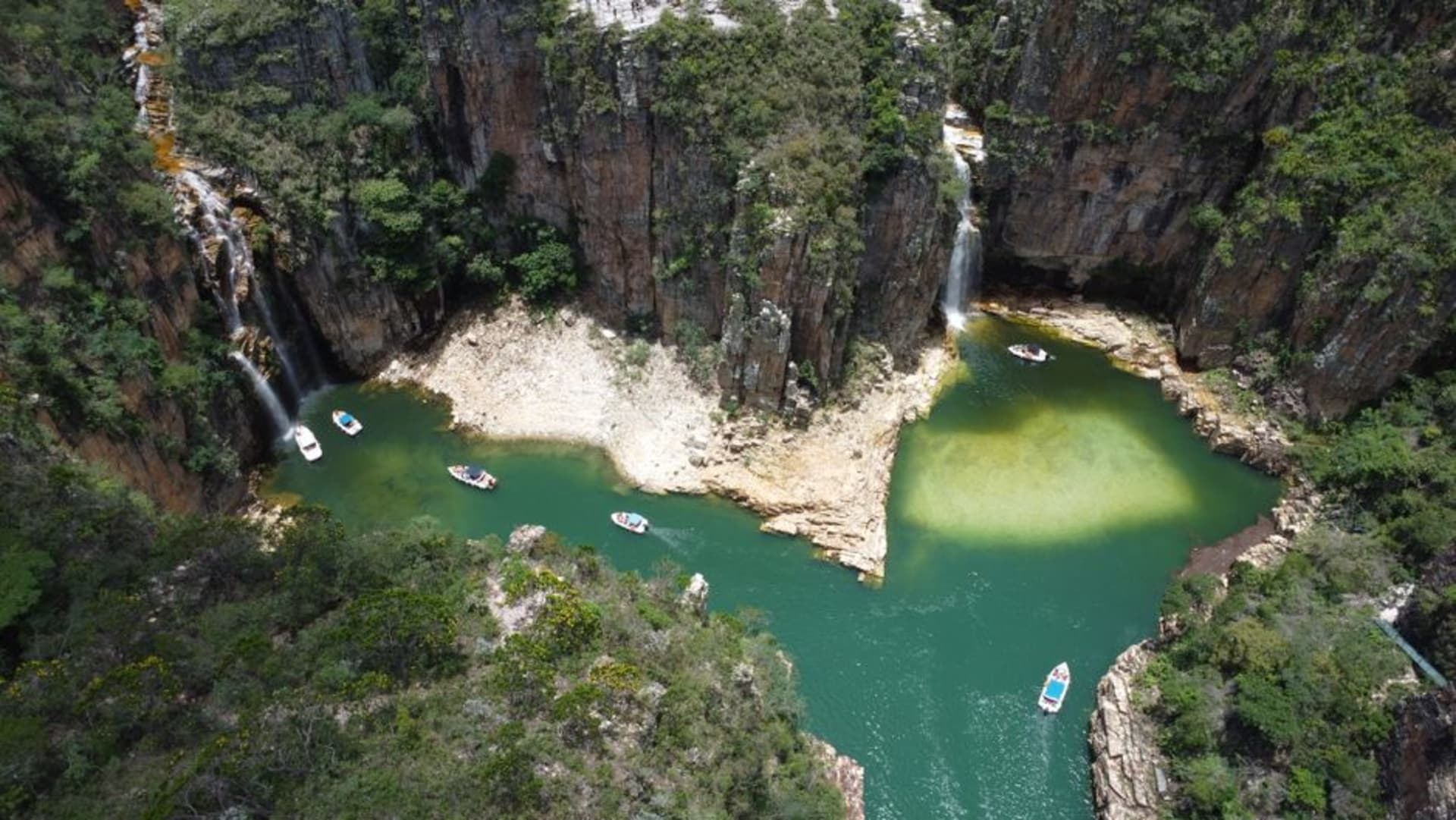
Cânion do Xingó
"I'd driven hours through thorn scrub to get here, and then the earth just opened up."
A river-carved gorge on the São Francisco where sheer cliffs meet clear green pools, and the sertão finally shows you its softer side.
Lia and I had been driving through Sergipe for most of the morning, the caatinga rolling past in every shade of brown and grey, when the road dropped us into Canindé de São Francisco and, a few minutes later, onto a boat dock that felt like a different planet. The Cânion do Xingó does that to you — one moment you’re surrounded by dry scrub and cactus, the next you’re staring down a gorge where the São Francisco River has spent millennia cutting through rock, with walls rising straight out of the water on either side. We’d read that it’s counted among the largest navigable canyons in the world, but numbers like that never mean much until you’re actually in a boat looking straight up at a cliff face.
We went for the catamaran, mostly because Lia gets nervous on smaller boats, and I’m glad we did — it gave us a couple of unhurried hours gliding past the rock walls with music playing softly and a waiter who kept bringing out little plates of queijo coalho. Somewhere past the halfway point the boat slowed by a cluster of rocks and someone pointed up: faint ochre lines, shapes that might have been animals or people, painted by hands roughly 3,000 years ago. Knowing this stretch of river sits inside a UNESCO-recognized biosphere reserve made the whole thing feel less like a tourist stop and more like standing in someone else’s very old living room.
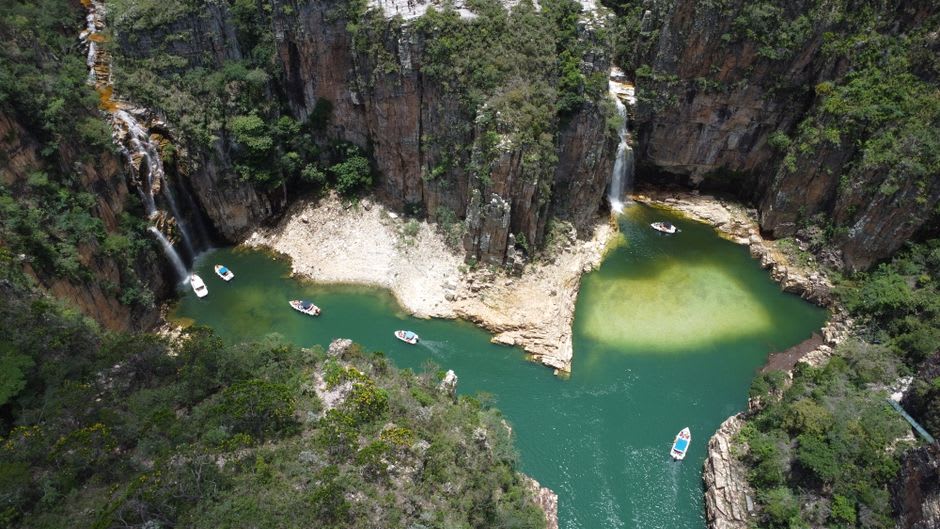
The best part of the day, though, was the swim stop. The Xingó dam upstream has slowed and cleared the water so much that where the current would once have been murky and fast, it’s now still and almost turquoise, pooling right up against the base of the cliffs. I jumped in first, Lia complained about the temperature for a full minute before jumping in after me, and we floated there for a while just looking up at rock that must be a hundred meters tall in places, swallows cutting across the face of it. Someone on the boat said you could also do the canyon by schooner or by speedboat if you wanted more speed and less shade — I liked the slowness of the catamaran, honestly, it gave the whole canyon time to sink in.
We ended up talking to the boat’s captain on the way back, and he told us the river changes completely depending on when you come — something I wish I’d known before booking. When to go: aim for the dry season, roughly September through January, when the São Francisco runs calm and low and the boat tours can get right up against the cliffs without the current making things choppy.