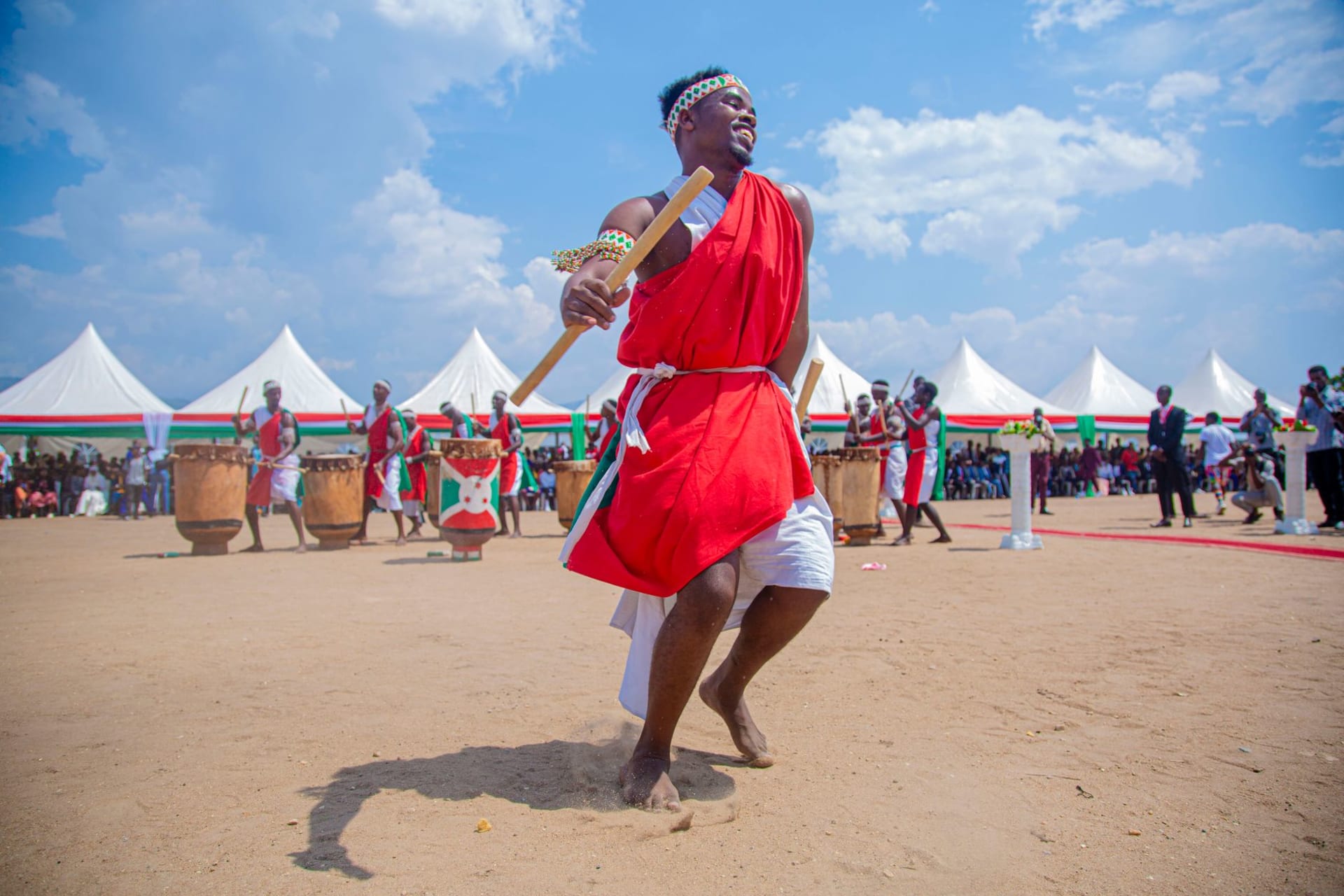
Gishora Drum Sanctuary
"The drums move through you before your brain has time to form an opinion about them."
Gishora sits on a hill about ten kilometers from Gitega, and even before reaching it I could hear something low and rhythmic threading through the air — not a sound I could have identified without context, but one that arrived in the chest before the ears confirmed it. The site is marked by a modest sign at a red dirt track that leads uphill through banana trees and eucalyptus to a compound where several traditional huts cluster around the sanctuary enclosure. The grass was freshly swept. A man in his seventies, moving with the unhurried authority of someone who has never been in a rush in his life, came out to meet me.
The ingoma drums of Burundi have been declared UNESCO Intangible Cultural Heritage, and the Gishora sanctuary is one of the few sites where they are still maintained in their original ceremonial context rather than as museum specimens. The drums here are not on display — they are housed, fed (in a ritual sense), guarded, and played by hereditary drummers who inherit the role the way a family might inherit land. The man who met me was one of these hereditary keepers. He spoke no French and my Kirundi was nonexistent, but a younger man from a nearby village who knew some French acted as intermediary.
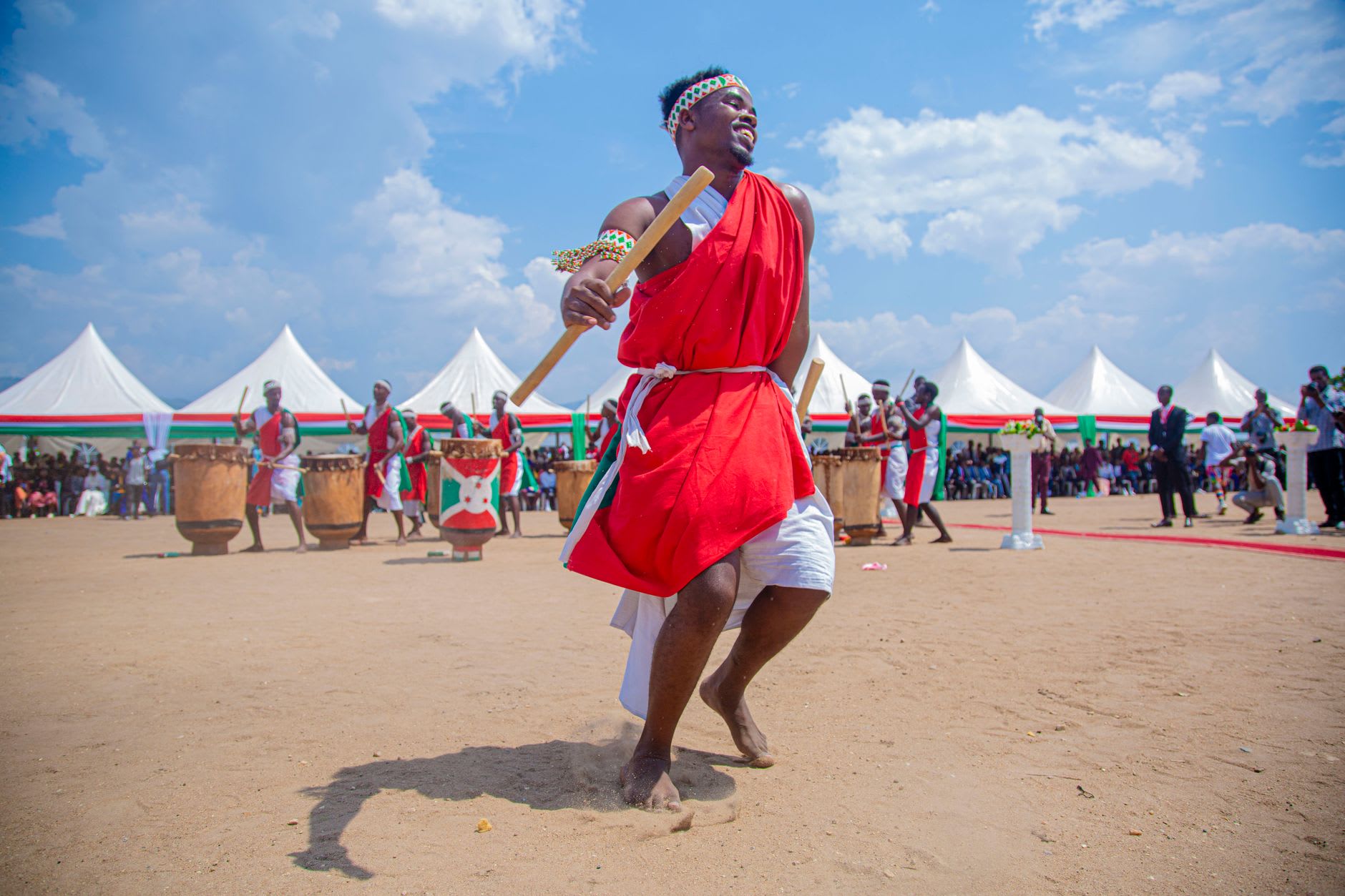
What followed was a ceremony that the French-speaking intermediary described, with careful precision, as “not for tourists but also not not for tourists.” The drummers — six men, ranging from perhaps twenty to perhaps sixty — took positions around the drums and began. The sound was immediate and total. These are large instruments, chest-height when upright, and they are struck from above with open hands in patterns that are built up in layers, each drummer adding to a rhythm already established, the whole thing rising in complexity until it becomes something that doesn’t register as music in the conventional sense but as a physical phenomenon. I stood in the dust of the compound feeling it in my ribcage and sternum.
The dancers moved with the drums rather than to them — a distinction that is easy to miss but significant. They were not performing choreography in response to music. They were part of the same process as the drummers, the movement and the sound expressing the same thing through different bodies. At one point a young drummer leaped over his drum while continuing to play it, landing and not missing a beat, and the older drummer beside him didn’t react with any particular expression — it was the expected thing, the correct thing, the thing that had always been done.

I left Gishora with the particular feeling of having witnessed something that exists on its own terms — not for me, not against me, simply in a register I was invited to observe. That invitation was not nothing. The hill was bright and wide under the afternoon sky, and the sound of the drums followed me down the track to the road and then dissolved into the sound of the wind in the eucalyptus trees, and I couldn’t tell you exactly where one ended and the other began.
When to go: Gishora is accessible year-round but the dry season (June to August) makes the dirt track reliable. Performances are not scheduled daily — it’s worth coordinating through the Office Burundais du Tourisme or your accommodation in Gitega to ensure the drummers are available. A respectful donation is expected; the drummers and keepers maintain the sanctuary without significant formal funding.