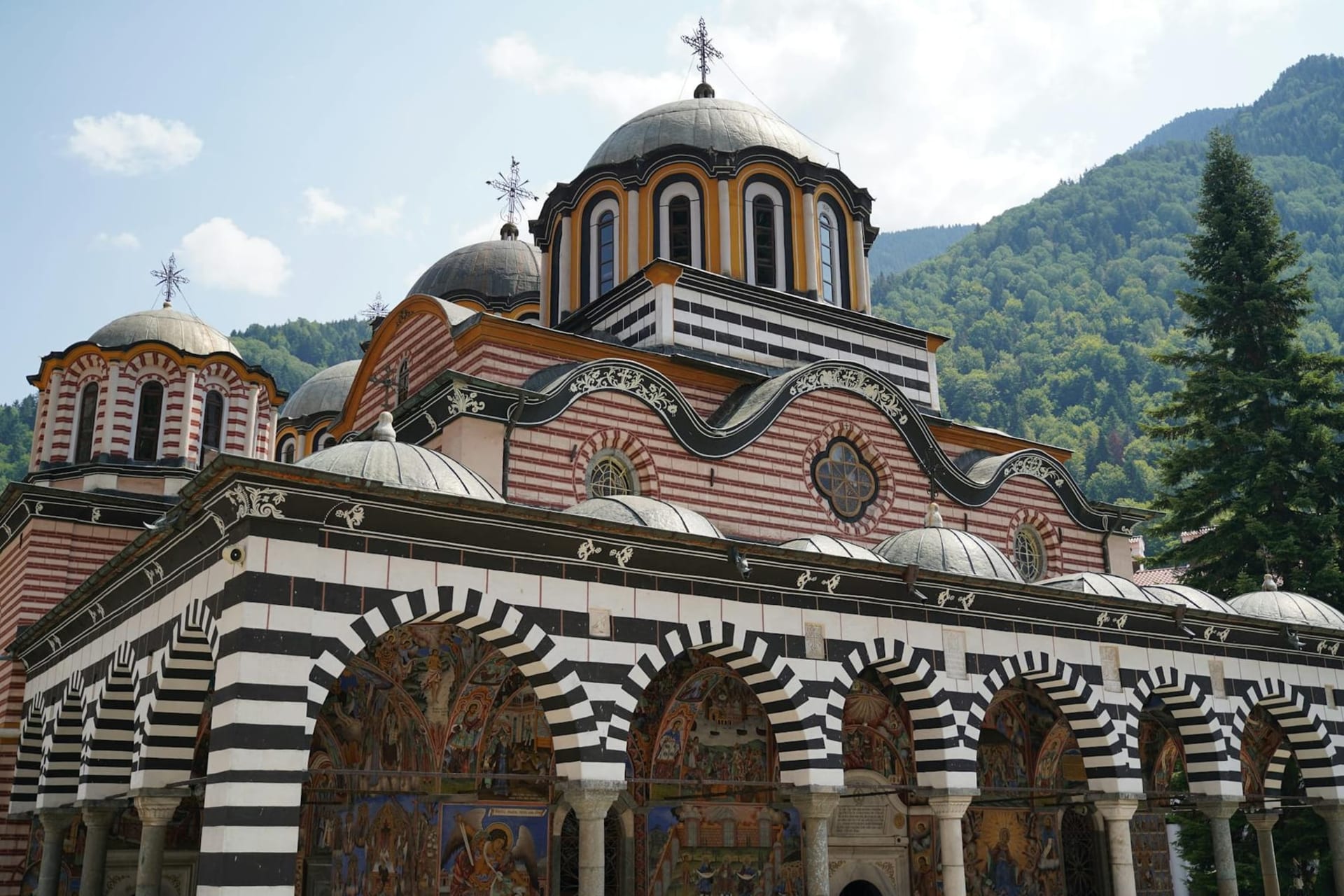
Rila Monastery
"The silence of the Rila mountains is broken only by the colors of the monastery."
Nestled in forested mountain gorges, Bulgaria's spiritual heart blazes with striped arches and frescoes that stun even the most secular visitor.
We drove up from Sofia in a rental car that smelled of pine air freshener and old cigarettes, the road climbing through spruce forests dense enough to block the morning light. I had seen photographs of Rila Monastery — everyone has — but photographs do something dishonest to it. They flatten the geometry, erase the scale, and most of all they cannot render the way the complex materializes at the end of a valley like an argument against solitude.
The Striped Arches and the Frescoes
Nothing quite prepares you for the courtyard. The arches that ring it alternate black and white in tight horizontal bands, Moorish in their rhythm but Orthodox in their purpose, and every surface above the stone floor is painted. Not decorated — painted, in the way that medieval builders understood painting as theology rather than ornament. The frescoes depict hellfire and judgment in colors so saturated they seemed to vibrate in the thin mountain air: cobalt, vermillion, a green the exact shade of oxidized copper.
Lia stood in the middle of the courtyard for a long time without speaking, which is unusual for her. Later she said it was the only place she had been where the visual noise was so overwhelming it became a kind of silence.
The Hrelyo Tower, the oldest surviving structure on the grounds, dates to 1335. I climbed it partly because the view is supposed to be good and partly because I wanted a moment away from the frescoes — from the weight of all that pigment and intention.
What Surprised Me
I expected the monastery to feel like a museum. It does not. Monks still live here. In the late afternoon, after the tour groups had loaded back into their buses on the main road outside, I heard chanting from the katholikon — the central church — and sat on a stone step listening for nearly half an hour. The smell of incense drifted through the archway. A cat, enormous and grey, walked across the courtyard with complete indifference to the sacred geometry around it.
That is the thing Rila does that photographs cannot show: it is still in use.
The Gorge and Getting There
The Rilska River runs alongside the access road, fast and cold, snowmelt green. We stopped twice on the drive in because the gorge is genuinely beautiful apart from the monastery — limestone walls, water noise, the kind of forest that smells like cold and resin. If you have the legs for it, the hiking trail from Rila village to the monastery takes about three hours through that same gorge and arrives at the complex from above, which I am told changes everything about the first impression.
When to go: Late spring (May–June) and early autumn (September–October) offer the best balance of mild temperatures and manageable crowds. July and August bring peak tourist traffic; the monastery remains open but the courtyard loses its contemplative quality entirely.